
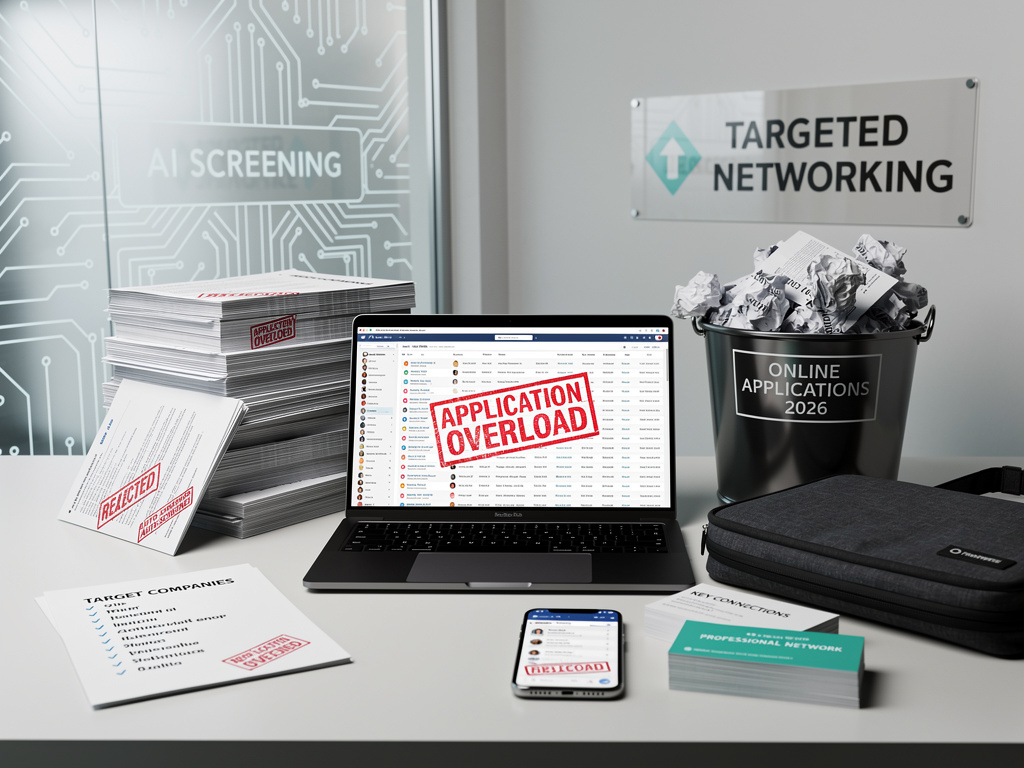
In a job market increasingly dominated by artificial intelligence and applicant tracking systems, a veteran recruiter with three decades of experience is delivering a stark message: stop submitting resumes through online portals. “If I was looking for a job in 2026, I would honestly stop applying online,” declares Shane Arthur, founder of CNBC featured recruiting expert. Mr. Arthur’s advice, rooted in observing thousands of hires, underscores a shift back to human connections amid record application volumes.
Online platforms like Indeed and LinkedIn now drown recruiters in hundreds of submissions per role, with AI filters rejecting 75% of candidates before human eyes ever review them. Mr. Arthur notes that cold applications yield response rates below 3%, a figure corroborated by career coaches tracking 2026 trends. Instead, he advocates targeting decision-makers directly via personalized outreach on professional networks.
This pivot reflects broader hiring dynamics. A recent CNBC analysis reveals cold applying remains dominant, yet inbound recruiting and referrals are surging, comprising 40% of hires in tech and finance sectors last quarter.
The Applicant Flood Crisis
Job seekers face unprecedented competition. Business Insider reports in a January 2026 article that white-collar roles attract 500+ applications on average, up 25% from 2025. Economists label this a ‘hiring recession,’ with flat job growth projected through mid-year per CNBC.
AI exacerbates the issue. LinkedIn’s UK Country Manager Janine Chamberlin warns in CNBC that 2026 marks widespread AI adoption in screening, prioritizing keyword matches over skills. Recruiters spend mere seconds on resumes that pass filters, favoring referrals who bypass the queue entirely.
Posts on X echo this frustration. Users like The Random Recruiter lament that passive candidates and layoffs have flooded the market, making cold apps futile—a sentiment shared across thousands of interactions since late 2025.
Networking’s Resurgent Power
Mr. Arthur prescribes building relationships with hiring managers via LinkedIn messages referencing shared connections or recent company news. “Send a note saying, ‘I saw your post on X about scaling engineering teams—here’s how I solved a similar challenge at my last role,'” he advises in the CNBC piece. Success stories abound: one client landed a director role after three targeted outreaches, skipping applications altogether.
Referrals now account for 50% of hires at Fortune 500 firms, per LinkedIn data cited in industry reports. Jobipo’s 2026 guide emphasizes optimizing profiles for recruiter searches, using skills-based keywords that AI tools favor in inbound sourcing.
Cold applying persists as the top method but is evolving. CNBC notes its share holding steady while recruiter-sourced placements climb, signaling a hybrid approach for insiders.
AI Tools as Double-Edged Swords
Candidates must adapt to AI dominance. Ms. Chamberlin recommends tailoring resumes with precise job-description phrasing and showcasing quantifiable achievements. “AI will dominate hiring in 2026,” she states, urging video introductions to humanize applications where portals allow.
Yet over-reliance on tech backfires. A Job Search Guide newsletter details how 2026 searches favor skills-based hiring, with 60% of roles filled via networks rather than boards. Reddit threads in r/interviews highlight experienced professionals doubling efforts on networking post-2025 layoffs.
X discussions reinforce this: Recruiters like Jason Levin predict a return to “Lindy hiring”—favoring known quantities—after AI rendered mass applications pointless.
Mastering Direct Outreach
Practical steps include identifying 10-20 target companies weekly, researching via earnings calls and X activity, then crafting bespoke InMails. Mr. Arthur’s firm achieved 28% placement rates this way versus 2% for portal applicants. Track outreach in spreadsheets, following up politely after 10 days.
Upskilling bolsters credibility. Platforms like Coursera report 35% hiring boosts for certified candidates in data analytics and AI ethics—fields exploding per 2026 forecasts. Business Insider advises niche positioning: “Choose strategies matching your odds,” focusing on high-response channels.
In-person events regain traction post-hybrid normalization, with CNBC citing conferences yielding 15% conversion rates for attendees who follow up digitally.
Navigating the Hiring Recession
Economists anticipate subdued growth through June, per CNBC’s recession coverage. Job seekers counter by diversifying: 40% blend networking with selective applications to smaller firms less reliant on ATS.
Scam vigilance is paramount amid desperation. Job Search Guide warns of fake postings on fringe sites, advising verification via company domains. X users report HR curators noting online applications declining for the first time in a decade, per recent posts.
Success demands persistence. Mr. Arthur’s mantra: “Hiring managers hire people they like and trust.” In 2026, that trust builds offline or through genuine digital rapport, not faceless submissions.
Future-Proofing Your Search
Long-term, cultivate a personal brand. Publish LinkedIn articles on industry pain points; one executive secured offers after viral posts. CNBC’s cold-applying report projects referrals hitting 45% of hires by year-end.
Insiders track metrics: Aim for 50 outreaches weekly, 20% response rate via personalization. Tools like Hunter.io for emails and Clearbit for firmographics streamline targeting.
Ultimately, 2026 rewards proactive relationship-builders. As Mr. Arthur concludes, “The best jobs go to those who make themselves known before the requisition posts.”


 WebProNews is an iEntry Publication