

SpaceX throws away the second stage of every Falcon 9 it launches. On Saturday afternoon, it caught the second stage of a Starship and brought it home.
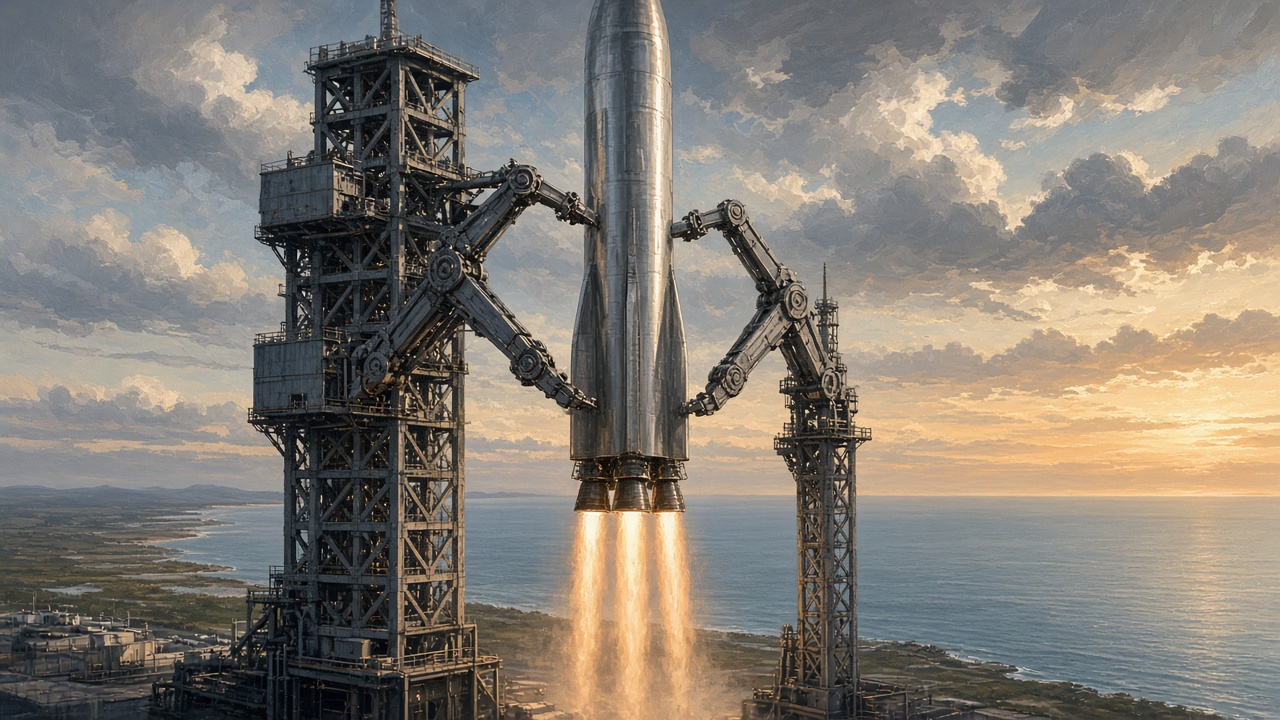
Ship 42 came back to Starbase, Texas, after 14 trips around the planet and settled between the arms of the launch tower SpaceX calls Mechazilla, roughly 22.5 hours after it lifted off on Friday evening. It was the first recovery of a Starship upper stage at its launch site, Aerospace America reported. SpaceX’s flight summary says three Raptor engines lit for a landing flip before the tower “closed to catch Starship for the very first time.”
“That was the missing link, the holy grail of spaceflight,” SpaceX’s Dan Huot said at the end of the livestream, Aerospace America reported. The company has caught three Super Heavy boosters before, Spaceflight Now noted, but the ship has to come back from orbit and through reentry first. On the Oct. 20 earnings call, Elon Musk said SpaceX would try to catch both the booster and the ship on this flight. “If we succeed, it will be the first time that an orbital launch vehicle has been fully recovered,” he said.
The booster didn’t make it. Super Heavy cut its boostback burn short, aborted the catch on its own and diverted to the Gulf, where its flight termination system fired after the landing burn. “Early indications are that the booster ended its boost back early due to a low fuel mass alarm. The team is still investigating the root cause on that,” Kate Tice, SpaceX’s director of quality management and training, said on the livestream.
Starlink is the first customer
Ship 42 released 26 Starlink V3 satellites, and SpaceX said it made contact with every one. Those satellites are built to fit Starship’s payload bay, not the top of a Falcon 9, Space.com has reported. Musk told analysts in October that the previous flight’s V3 batch added 26 terabits per second of bandwidth, “equivalent to 10 Falcon 9 launches,” on a Starship he described as about half loaded.
Customers won’t notice right away. Gwynne Shotwell, SpaceX’s president and chief operating officer, said on the same call that the network needs “a few hundred V3 satellites for people to really feel the impact,” a level she expects to reach by the middle of next year. The company has been building out Starlink’s business on other fronts too, including picking Qualcomm chips for Starlink Mobile’s ground network.
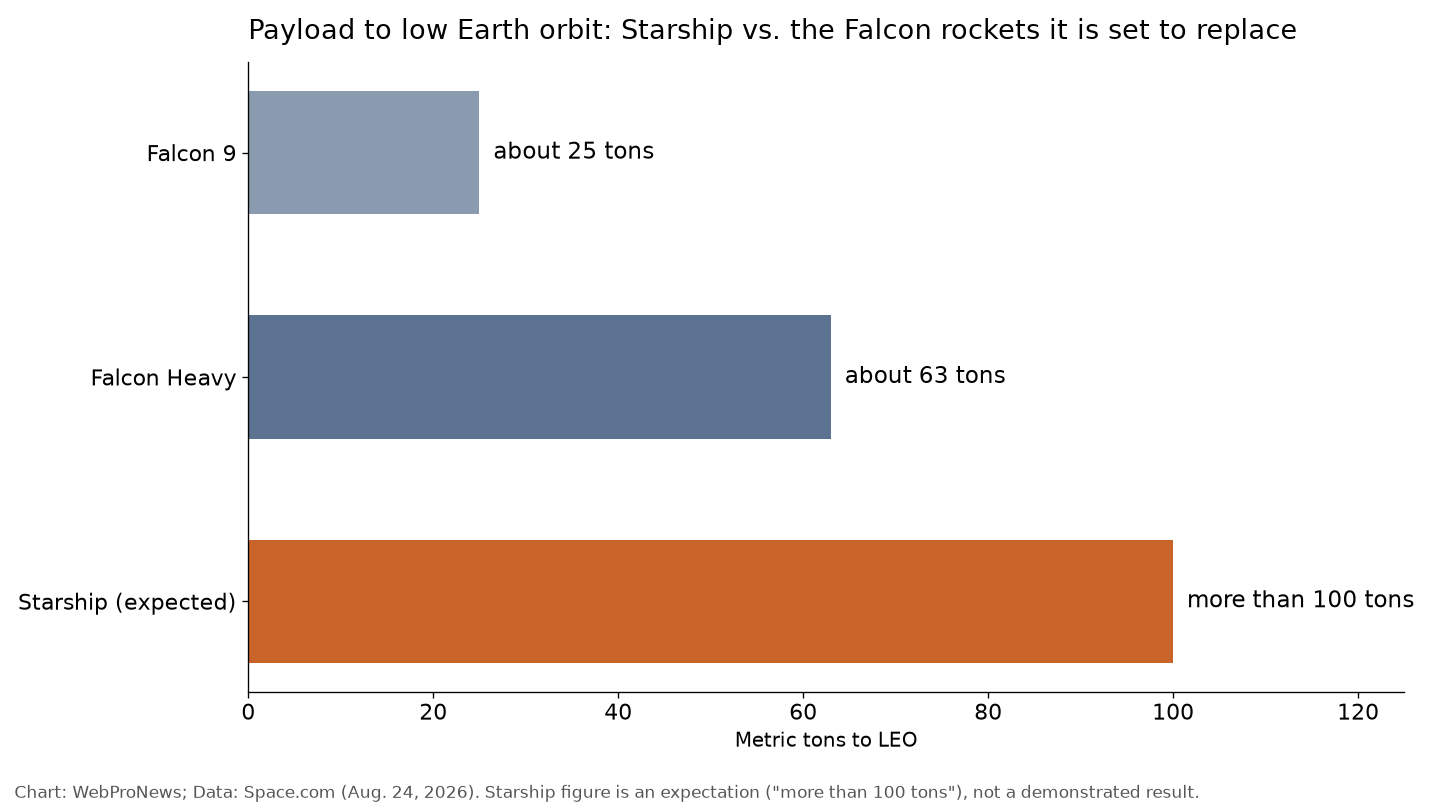
Starship is also meant to replace the rocket that became the workhorse of the launch business. Musk wrote on X on Aug. 22 that once Starship is flying “reliably several times per week,” it makes sense to shift “super scarce SpaceX engineering and production resources” to it, “which means winding down Falcon,” Space.com reported. SpaceX has already stopped taking commercial orders for Falcon 9 launches after 2028, Ars Technica reported, though launches for government customers such as NASA and the Space Force are expected to continue.
Turnaround is the next test
Catching a ship is only worth as much as how fast it can fly again. Musk said in October he expects Starship to launch weekly at some point in the first half of 2027 and twice weekly or more by year-end, with the aim to “immediately land the rocket and launch it again, just like an airplane.” Tice said SpaceX has studied and modified the 18,000 tiles on the heat shield in hopes they won’t need replacing between flights.
Shotwell’s stated plan from the October call puts the next milestones close together: reflying a second stage by early next year and an attempt at on-orbit refueling in the same window. The cause of Friday’s booster abort is still under investigation.


 WebProNews is an iEntry Publication