
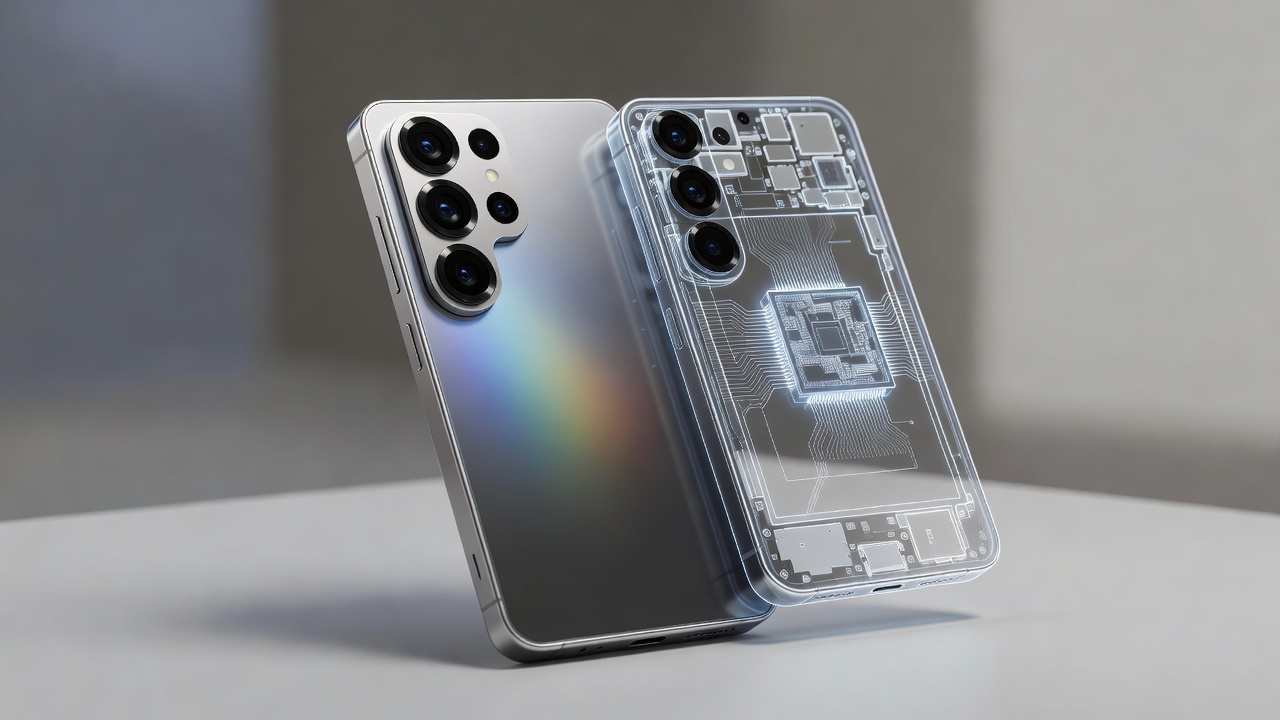
Samsung’s Fan Edition phones have long walked a careful line. They promise flagship touches at prices that feel reachable. Yet fresh details on the Galaxy S26 FE show the company sticking with the same camera hardware that left some buyers wanting more from the S25 FE.
The leaks point to a 50-megapixel main sensor, an 8-megapixel telephoto with 3x optical zoom, and a pair of 12-megapixel modules for ultrawide and selfie duties. Those numbers match the previous model almost exactly. Android Authority reported the specifics after reviewing information from a trusted source. The main camera relies on Samsung’s ISOCELL S5KGN3. The telephoto uses OmniVision’s OV08A1. One 12-megapixel unit is a GalaxyCore GC12A2. The other is Sony’s IMX825. Which sensor ends up on the back versus the front remains unconfirmed, though patterns from the S25 FE suggest the Sony chip for selfies.
Buyers had hoped for progress. The tiny 1/4.4-inch format on that 8-megapixel telephoto drew particular criticism. Notebookcheck called the setup disappointing, especially given the sensor size. “This is quite disappointing, especially with regard to the telephoto camera,” the publication wrote, noting the unchanged 1/4.4-inch OV08A1. Samsung appears ready to bet on software instead.
And the bet makes sense on paper. Newer processors can sharpen detail. They improve noise handling at night. High-dynamic-range shots develop faster. Colors look more natural. The S26 FE is expected to carry an Exynos chipset that should deliver those gains without fresh glass or bigger pixels. Video recording stays capable too. Sources indicate 4K at 60 frames per second across all cameras and 8K at 30 frames per second on the main sensor. SamMobile listed those exact figures alongside the sensor breakdown.
Still. Hardware reuse carries risks. Competitors push larger sensors or higher resolutions in midrange devices. The 8-megapixel telephoto has lingered across multiple generations now. Its small size limits low-light performance and detail at zoom. Owners of the S25 FE already voiced frustration on forums and social platforms about results that fell short of true flagship quality. The S26 FE could face the same complaints.
Samsung follows a clear formula here. The original report that sparked wider discussion noted the decision fits the Fan Edition approach. Digital Trends highlighted how the phone, internally coded r14, reuses the 50MP GN3 with its 1/1.57-inch size, f/1.8 aperture, dual-pixel autofocus and optical stabilization. The telephoto keeps its 3x zoom, f/2.4 aperture and stabilization. Only minor tweaks to the 12-megapixel pair appear possible.
Other changes aim to sweeten the package. Charging jumps to 45 watts in many leaks. The camera bump receives a polish to better match the standard S26 models, shifting slightly higher on the rear panel according to recent case renders shared on X. A larger battery or refined display could arrive too. Those upgrades matter. They don’t erase the camera conversation.
Recent coverage reinforces the pattern. Gizmochina confirmed the S5KGN3 appears again, the same unit found in both the S25 FE and even the S24 FE. The article stressed reliance on image processing over sensor swaps. No major hardware jumps. No dramatic pixel count increases. Samsung clearly calculated that the existing array, tuned by updated algorithms and a faster chip, will satisfy enough buyers.
Price becomes the deciding factor. Early indications suggest the S26 FE will cost more than its predecessor in some markets. Notebookcheck pointed to European figures starting around €799 for the base model, a noticeable increase. If that holds, consumers may question the value. Why pay extra for recycled camera components?
The strategy reflects broader pressures. Memory and component costs have climbed. Samsung warned of potential price adjustments across its lineup. The Fan Edition absorbs some of that tension by avoiding expensive new camera modules. Flagship S26 models receive the latest sensors and larger batteries. The FE version borrows what works and focuses engineering effort elsewhere.
But markets evolve quickly. Chinese brands deliver strong zoom performance and bright ultrawide shots at similar price points. Google’s Pixel series leans on computational photography to overcome modest hardware. Apple maintains consistency with smaller but well-integrated sensors. Samsung’s approach feels conservative by comparison.
Of course software can close gaps. Enhanced night mode. Better edge detection. Improved portrait effects. The Exynos 2500, if it arrives with stronger neural processing, could lift image quality without touching the lenses. Early tests on similar hardware suggest measurable gains in color accuracy and dynamic range. Those improvements will appear in reviews once devices ship.
Launch timing adds urgency. The phone could appear in late August or early September. That places it among the final major Android releases of the year. Interest runs high because the FE line sells in volume. Many shoppers treat it as their introduction to the Galaxy ecosystem or an affordable upgrade from older models.
Recent posts on X captured the mixed reaction. One prominent leaker shared the sensor list and noted Samsung’s focus on software optimization rather than hardware changes. Another account posted renders showing the vertical triple-camera layout with a repositioned bump. Enthusiasts debated whether the 8-megapixel telephoto would finally receive an upgrade only to learn it had not.
Analysts watch closely. The decision signals confidence in computational methods over brute-force hardware. It also reveals constraints. Developing new camera stacks takes time and money. Samsung may have prioritized other features such as battery life or thermal performance for the FE variant.
Longer term the company could shift. Future FE models might adopt 200-megapixel sensors or periscope zooms if costs fall. For now the S26 FE stands as a practical device. Solid main camera performance. Adequate zoom. Competent ultrawide results in good light. Selfies that hold up for social media.
Expectations matter. The original Digital Trends piece captured the sentiment well. Anyone hoping for a substantial camera upgrade may leave disappointed. The hardware tells that story clearly. Yet the full picture depends on real-world samples and final tuning. Processing power has grown powerful enough to mask some limitations.
Samsung built its reputation on iteration. The Galaxy S26 FE continues that tradition. It refines rather than reinvents. The cameras stay the same. The experience could feel noticeably better. That tension defines the Fan Edition formula. It keeps the lineup accessible. It leaves some observers asking for more.


 WebProNews is an iEntry Publication