
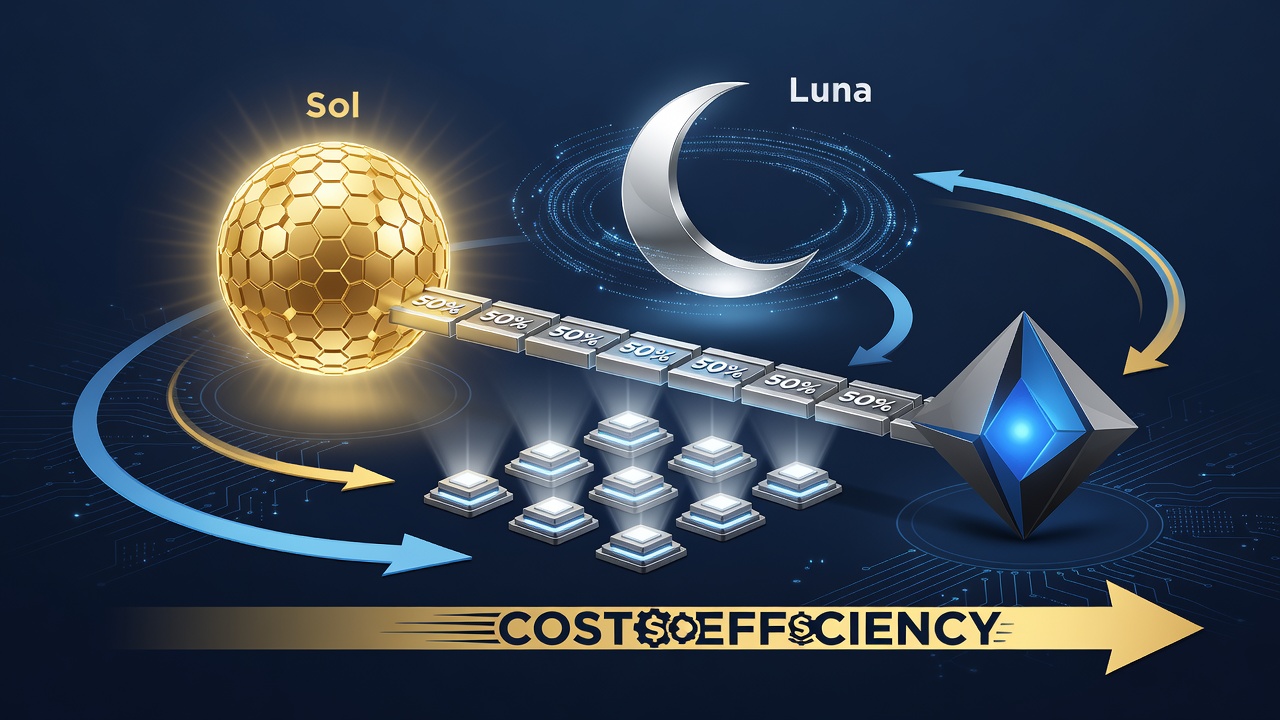

OpenAI filled out its GPT-6 lineup on Tuesday with new versions of its smaller Sol and Luna models, priced at half what their GPT-5.6 predecessors cost. The release landed about 90 minutes after Anthropic shipped Claude Opus 5.5, TechCrunch noted, and both companies made price the headline.
“GPT-6 Astra introduced a new generation of intelligence; these models extend its benefits by making that intelligence more efficient and accessible,” OpenAI wrote. Sol is aimed at complex work like coding and multi-step agent tasks. Luna is meant for “high-volume tasks with a clear goal, like summarizing documents, extracting information, or answering quick questions.” Astra, launched earlier in September, stays on top for the hardest problems.
Half the price
GPT-6 Sol costs $2 per million input tokens and $10 per million output tokens, down from $4 and $20 for GPT-5.6 Sol, CIOL reported. Luna drops to $0.10 and $0.50. OpenAI credits better caching and inference for the cut. Prompt caching now hits more often by default, cached input reads are discounted 90%, and developers get tools to see and control what gets cached. Both models offer a 1.05-million-token context window and up to 128,000 output tokens through the API.
On cost per task, the gap with Anthropic is wide even when the scores are close. On DeepSWE v1.1, a test of long software engineering jobs in real codebases, Sol at maximum effort scored 68.8% against 69.9% for Claude Fable 5, at about 80% less per task, according to OpenAI. Luna scored 66.6%.
Fewer mistakes, plainer answers
“On our internal factuality evaluation, which is based on de-identified real-world conversations where users flagged mistakes by our models, GPT-6 Sol makes about half as many mistakes as its predecessor, reaching Astra-level reliability at much lower cost,” OpenAI said. The company also promised a change in tone: “Expect to see more clarity, less jargon, fewer odd turns of phrase, fewer low-value details, and slightly shorter answers overall without losing substance,” it wrote, as quoted by Gizmodo.
The models were trained with “similar methods as GPT-6 Astra” and the same alignment safeguards, and OpenAI added an appendix on them to the Astra system card.
Sol and Luna are available in ChatGPT Work and Codex for most paid accounts and in the API as gpt-6-sol and gpt-6-luna. Free and Go users get Luna in the desktop app, with the wider ChatGPT rollout following gradually.


 WebProNews is an iEntry Publication