
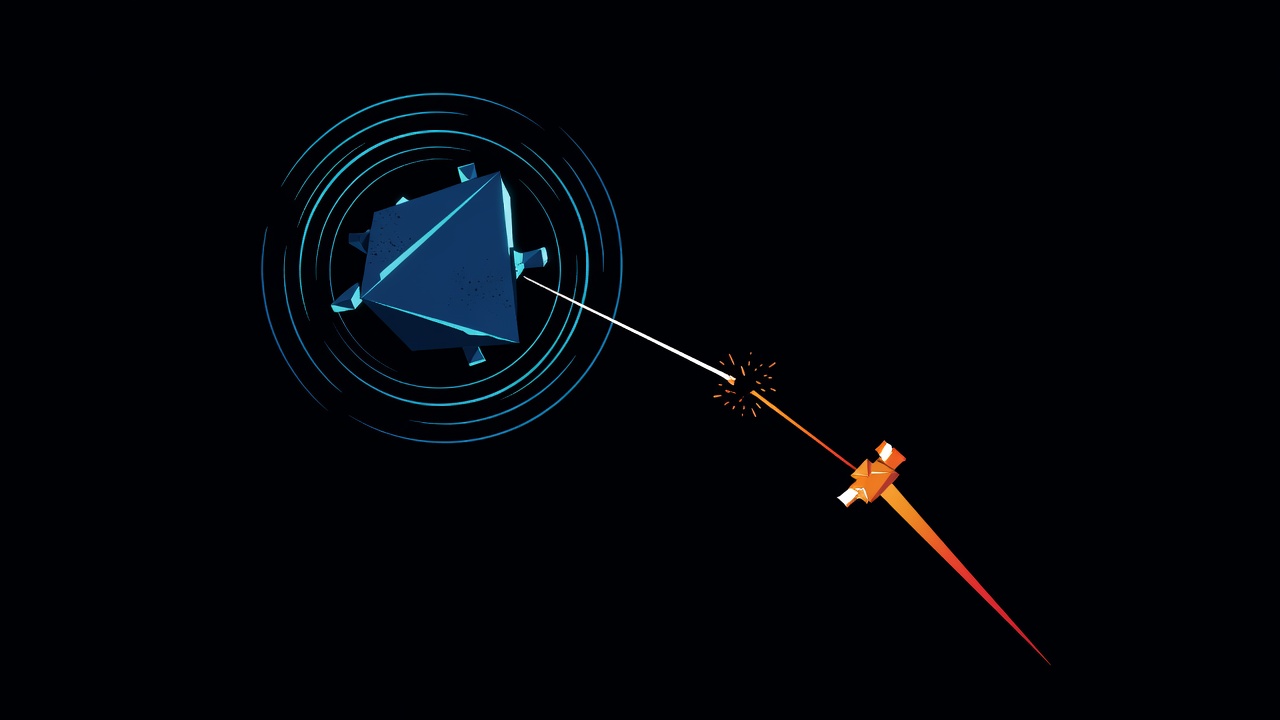
Katalyst Space’s LINK spacecraft launched on July 3. Barely a month later, it sits in a multi-axis tumble. Two of its three reaction wheels failed during commissioning. The spin hit 9 degrees per second. Engineers cut that rate in half with a thruster firing. Yet the rendezvous with NASA’s Neil Gehrels Swift Observatory now slips to late August.
Engineers Battle Unexpected Spin While Time Runs Short for the Aging Observatory
The setback comes at a delicate moment. Swift, launched in 2004 as a gamma-ray burst hunter, has operated far beyond its planned life. Solar maximum activity swelled Earth’s upper atmosphere. Drag intensified. NASA models from January 2025 pointed to reentry by summer 2026. (NASA Science)
Operations paused in February. Teams shifted pointing to minimize drag. They bought precious altitude. Recent forecasts suggest the observatory could drop below 300 kilometers around November. Below that threshold, any boost grows far more difficult. (The Register)
LINK must close the gap first. The spacecraft needs to stabilize. Then survey its target. Grapple with three robotic arms. And fire xenon ion thrusters over months to lift both vehicles higher. Failure isn’t abstract. Swift has no propulsion of its own. No docking port designed for visitors.
“Everything about this mission is so crazy,” said NASA astrophysicist Regina Caputo, laughing during an interview. “This is a lot of firsts stacked on top of each other,” added Shawn Domagal-Goldman, director of NASA’s astrophysics division. (The Brighter Side News)
The contract itself tells the story of urgency. NASA awarded Katalyst the $30 million task in September 2025. Less than a year to design, build, test and fly. The startup delivered. LINK stands roughly 6 feet tall, weighs 880 pounds, carries 20-foot solar arrays and three gimbaled thrusters. It rode to space on a Northrop Grumman Pegasus XL dropped from a modified L-1011 aircraft over the Kwajalein Atoll. (NASA Science)
But commissioning exposed limits. Reaction wheels, the primary tools for fine attitude control, dropped to one working unit. Katalyst turned to electric propulsion. A thruster burn slowed the rotation from 9 degrees per second to about 4. More burns lie ahead. Teams now craft a new attitude controller matched to the damaged hardware. They test every step in simulators first. “We’re focused on stabilizing the spacecraft and restoring core system functionality,” Katalyst stated in its latest update. Any approach to Swift depends on that success. (Katalyst Space mission page, katalystspace.com)
NASA echoed the caution yet held optimism. “Katalyst Space has slowed the spin of their LINK spacecraft and will continue to attempt to restabilize it in the coming days. There are still potential paths forward for the robotic spacecraft to boost our Swift observatory, and LINK is now expected to approach Swift around the end of August,” the agency posted on July 31. (Live Science)
Consider the odds. Observers inside the project put success at maybe 50-50. Swift was never built for capture. Its rear structure remains partly a mystery after two decades in orbit. LINK will approach slowly. Survey for viable grapple points. Then latch on with small grippers at the end of three arms. One wrong move and the two could collide. Or the thrusters might fail to overcome combined drag.
Yet the payoff matches the risk. Swift functions as NASA’s multitool for transient events. Gamma-ray bursts. Supernovae. It responds faster than almost any other asset. “If we let Swift reenter, we would lose that telescope. We would lose a lot of capability,” said Nicky Fox, NASA science mission chief. S. Bradley Cenko, Swift project scientist, calls it the agency’s first responder. (The Brighter Side News)
This mission tests more than one satellite. It probes whether commercial firms can extend the life of government observatories on tight budgets and timelines. Original Swift development ran $250 million. The rescue costs roughly one-eighth that. Katalyst CEO Ghonhee Lee sees broader implications. The company views the effort as possible start of a new model for on-orbit servicing. Hubble sits on their longer-term radar. Company VP Robert Lamontagne agrees the approach could reshape how aging assets receive help. Only China has pulled off a comparable boost of an aging satellite years earlier.
Progress continues despite the spin. LINK has already demonstrated solar array deployment, communications, power systems, avionics and initial thruster firings. Those xenon engines will do the heavy lifting later, raising the orbit gradually once capture succeeds. But first the vehicle must stop its unwanted dance. Engineers upload commands. Monitor telemetry. Refine the control software for reduced capabilities.
Time remains tight. Swift continues its slow descent. Each week without stabilization narrows the window. November looms as a rough deadline for effective intervention. Katalyst and NASA must secure approval for the revised plan. Then execute the rendezvous, survey, capture and multi-month burn sequence without error.
The episode highlights broader shifts in space operations. Private players now handle tasks once reserved for government flagships. Speed matters. Katalyst moved from contract to launch in under a year. That pace brings risk. Hardware decisions optimized for cost and schedule sometimes reveal limits only in orbit. Reaction wheels fail. Thrusters become primary actuators. New controllers must be invented on the fly.
Success would validate the model. Swift gains years of additional science. The servicing industry gains proof that uncooperative targets can be rescued. Future missions to other observatories become thinkable. Failure would still teach. Data on spin dynamics, thruster performance under load and software workarounds would inform the next attempt.
For now the focus stays narrow. Stabilize LINK. Restore functionality. Only then turn attention to the 22-year-old observatory drifting lower each orbit. The coming weeks will decide whether Swift receives its boost or becomes another bright streak across the predawn sky.
And the stakes extend past one telescope. They touch the question of how the United States sustains its orbital science infrastructure when budgets stay flat and solar cycles turn hostile. LINK’s recovery effort, however delayed, represents one answer in progress.


 WebProNews is an iEntry Publication