

One of the world’s top suppliers of the coatings used to print chip circuits is changing hands again. Mitsui Chemicals said Monday it has agreed to buy JSR, the Tokyo-based maker of photoresists, from funds run by JIC Capital for 1.84 trillion yen, or about $11.6 billion, with the Development Bank of Japan putting 200 billion yen into the deal.
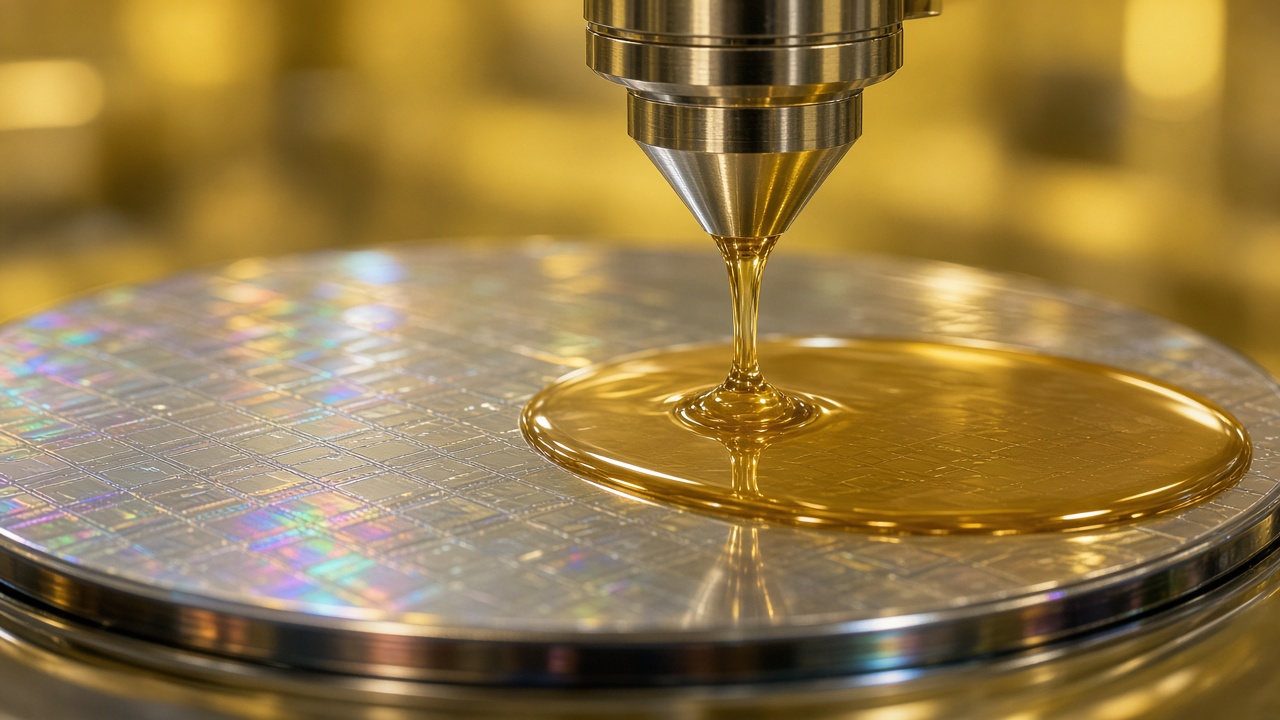
Photoresists are the light-sensitive coatings that let lithography tools print circuit patterns onto silicon wafers. In an investor presentation on the deal, Mitsui Chemicals described JSR as No. 2 in the global market for ArF and EUV photoresists and “the only company capable of offering both CAR and MOR solutions for EUV.” JSR’s semiconductor materials sales rose from 157.9 billion yen in fiscal 2024 to 196.0 billion yen in fiscal 2025, the presentation shows.
Reuters, in a report carried by CNA, called the purchase among the largest in the sector and more than double the $4.55 billion paid for Hitachi Chemical in 2020.
A second sale in three years
JSR has already been through one buyout. A tender offer for the old, listed JSR by JICC-02, the company that later took the JSR name, closed in April 2024, and the shares were delisted from the Tokyo Stock Exchange that June, Mitsui Chemicals said in its timely disclosure. JIC, which is overseen by Japan’s finance ministry, paid 900 billion yen and said at the time it planned to use the business to promote consolidation in semiconductor materials, Reuters reported.
The filing says JSR has “advanced photoresists with world-class competitiveness” and will sit at the center of Mitsui’s ICT Solutions unit. Mitsui already sells chip materials of its own, including MITSUI PELLICLE for front-end processes and ICROS Tape for back-end work, and it plans to combine those product lines and customer bases with JSR’s. The company is targeting about 40 billion yen in additional annual profit from growth and cost synergies by fiscal 2035.
Demand from AI is part of the pitch. The presentation projects that “AI data centers will become established as social infrastructure” and cites World Semiconductor Trade Statistics forecasts that put the market around $1.5 trillion to $1.9 trillion.
Paying for it
The price breaks down into 1,392.1 billion yen of equity value, including DBJ’s stake, and 447.9 billion yen of interest-bearing debt and other items. Mitsui will fund 1,640 billion yen with a bridge loan from its main banks, then refinance it with bank loans, bonds, equity and mezzanine financing. It plans to sell up to 150 billion yen in common shares, partly from treasury stock, and says it wants to keep an issuer credit rating in the “A” category. DBJ’s common shares will be converted into non-voting preferred shares after closing.
Mitsui Chemicals shares were trading down around 13% on Monday at about 1,500 yen, after falling more than 10% last week when Reuters first reported Mitsui as the buyer. Its market value was 664.6 billion yen, according to LSEG data cited by Reuters, well below the deal’s price tag.
JSR reported revenue of 440.7 billion yen and core operating profit of 62.3 billion yen for the fiscal year ended March 2026, and had 6,951 employees on a consolidated basis. JSR said its contract research (CRO) and contract development and manufacturing (CDMO) businesses remain non-core and that it will keep exploring all options for them.
Mitsui is also widening a planned split-off of its petrochemicals-heavy Basic & Green Materials business to include its Mobility Solutions unit. The JSR deal still needs competition and foreign-investment clearances in Japan and other countries, and Mitsui aims to close it in the second half of the fiscal year ending March 2028.


 WebProNews is an iEntry Publication