

Update, Oct. 20: Microsoft has since pointed Project Perception at companies’ own AI agents, adding Guardian Agents and per-agent risk scoring to watch what it calls “agentic insiders.” Our coverage of that expansion is here.
Microsoft’s Project Perception, a security system built around teams of specialized AI agents, went into public preview on Monday inside Microsoft Defender. The company announced it on July 27 along with MAI-Cyber-1-Flash, its first AI model built specifically for cybersecurity.
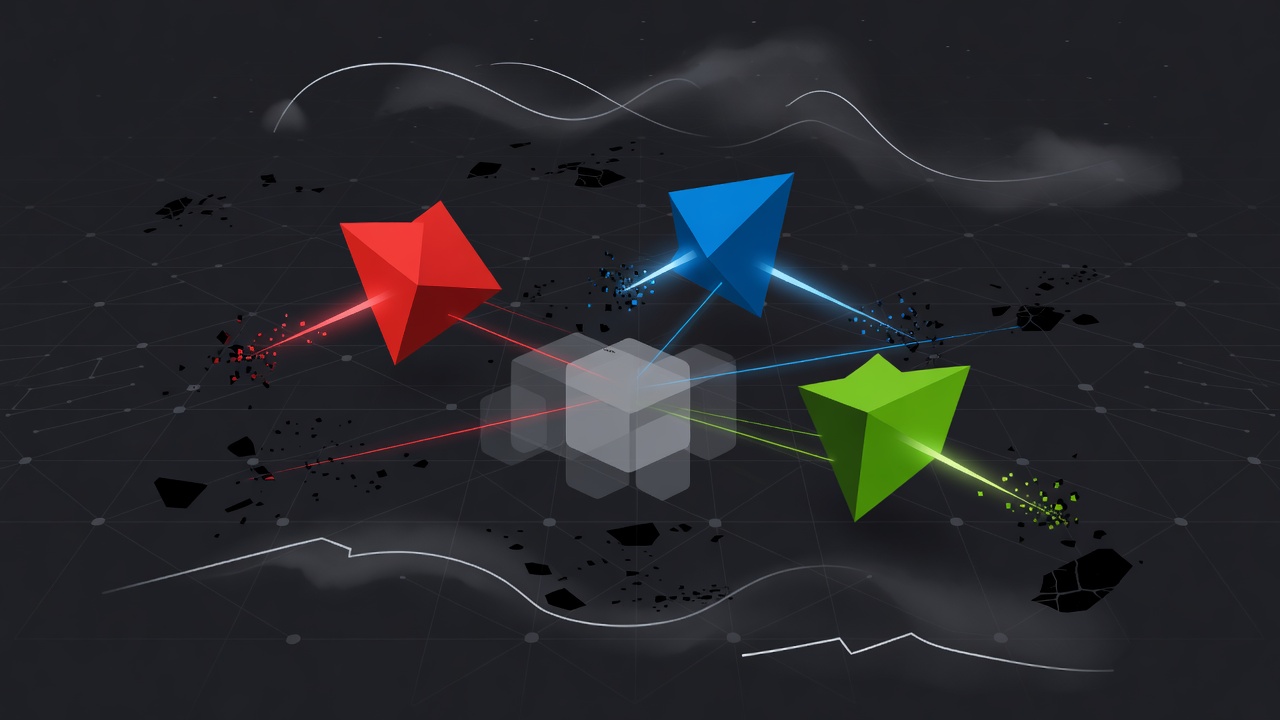
Perception coordinates three classes of agents. Red team agents identify potential paths to compromise before an attacker can use them, blue team agents investigate findings and decide which ones represent meaningful risk, and green team agents take corrective action and strengthen defenses. According to an analysis by Futurum Group, an orchestrator agent routes the work, a message bus passes context between agents, and identity and governance run through Microsoft’s Agent 365, with human approval required for consequential actions.
“Security has always been a race between attackers and defenders. AI changes the speed, scale and economics of that race,” Hayete Gallot, Microsoft’s executive vice president of security, wrote in the announcement. “Defenders need systems that can continuously perceive, reason and act alongside them.”
A cheaper model for vulnerability work
The first job for MAI-Cyber-1-Flash is software vulnerability management inside MDASH, Microsoft’s multi-agent system for finding and fixing software flaws. Microsoft says MDASH with the new model scored 96% on the CyberGym benchmark, measured as an “any-crash” score, and outperforms competitors such as Anthropic’s Mythos on the CyberGym leaderboard. It also says the configuration costs almost 50% less than the MDASH setup it sells today.
TechRepublic reported that the model can handle up to 90% of MDASH tasks, with GPT-5.4 taking the hardest ones, and pointed out that the benchmark and cost figures apply to MDASH, not to Project Perception pricing. Microsoft says the model “delivers world-class performance at 50% of the cost of leading models,” The Verge noted. The company plans to use it for more security workflows beyond vulnerability management.
Where the humans stay in charge
Perception is sold on a consumption basis, and autonomous remediation isn’t part of the preview. Futurum’s Fernando Montenegro wrote that reversible steps such as isolating a machine come later this year, while riskier ones such as patching a host stay under human approval.
Montenegro called the move “from surfacing information to taking action” the genuine advance, and cited Microsoft’s claim that one workflow compresses about 146 hours of specialist time. “We would temper the enthusiasm in the same place where the value lives,” he added. He also noted that an ETR survey in January found roughly half of enterprises were already buying or piloting Microsoft’s Security Copilot, and that ETR’s July survey puts Microsoft’s pervasion in information security at about 77%.
TechRepublic suggested teams start with narrowly scoped permissions, keep human approval for actions that change protections or touch production systems, and track investigation accuracy, false-positive rates, analyst review time and how often recommendations need correction during a pilot. Microsoft hasn’t published simple public pricing, detailed eligibility requirements or a general availability date.


 WebProNews is an iEntry Publication