
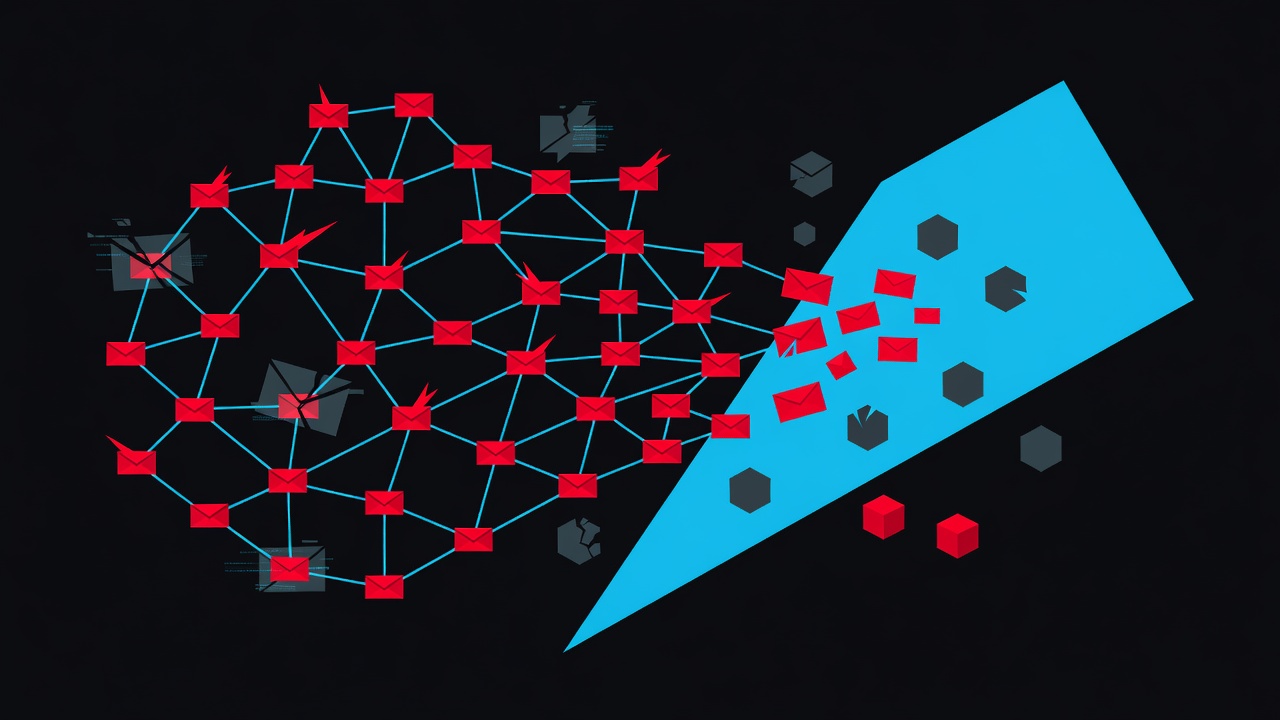

Microsoft has taken down EvilTokens, a phishing service sold on Telegram that broke into corporate email accounts and then used an AI chatbot to work out where fraud was most likely to pay off. Working with partners, the company’s Digital Crimes Unit seized 50 websites that ran the service and disabled more than 150 other domains tied to it, after obtaining authorization from the U.S. District Court for the Eastern District of Virginia, Axios reported.
The service launched in February and within months was linked to more than 12,000 compromised inboxes at over 10,000 organizations, Steven Masada, general manager of the Digital Crimes Unit, wrote on Tuesday. Victims were concentrated in the U.S., Canada, the U.K., Australia, India and France, across wholesale distribution, construction, financial services, real estate, higher education and healthcare.
In the U.K., the Metropolitan Police Service’s cybercrime team arrested two men on suspicion of offenses tied to the operation. Microsoft named the suspects as Felix Utomi and Waidi Segun Adams in its complaint, which also targets five unnamed people, SecurityWeek reported.
From a device code to a wire-fraud plan
EvilTokens got in through device-code phishing. The trick abuses the sign-in flow built for TVs, printers and other hardware without a normal login screen: the attacker starts the flow, sends the code in a phishing lure, and a victim who enters it on a real Microsoft page hands over an access token without ever giving up a password. Subscribers paid $1,500 up front and $500 a month and could choose from 44 themes for lures and landing pages.
The chatbot did the rest. “While EvilTokens helped cybercriminals access email accounts, at the center of the service was an AI-style chatbot that could analyze a victim’s inbox and help criminals identify trusted relationships, payment authorizations, and sensitive responsibilities, as well as other circumstances where fraud was most likely to succeed,” Masada wrote. Preset prompts offered to find wire-transfer discussions, pick out a company’s “money movers,” locate vendor invoices and choose the best people to impersonate, and the tool could draft the impersonation messages too.
Investigators also found that large parts of the platform had been “vibe coded,” with AI helping its creators build it, and that it pulled on several AI models. “The same technology was lowering barriers at both ends of the operation: helping criminals build malicious tools more quickly and helping their customers turn compromised accounts into actionable opportunities for fraud,” Masada said. The service came with customer support, management dashboards and subscription pricing.
SpyCloud, TRM Labs, Coinbase, Health-ISAC, Cloudflare, OpenAI, Railway and the Shadowserver Foundation all contributed to the takedown, according to SecurityWeek.


 WebProNews is an iEntry Publication