
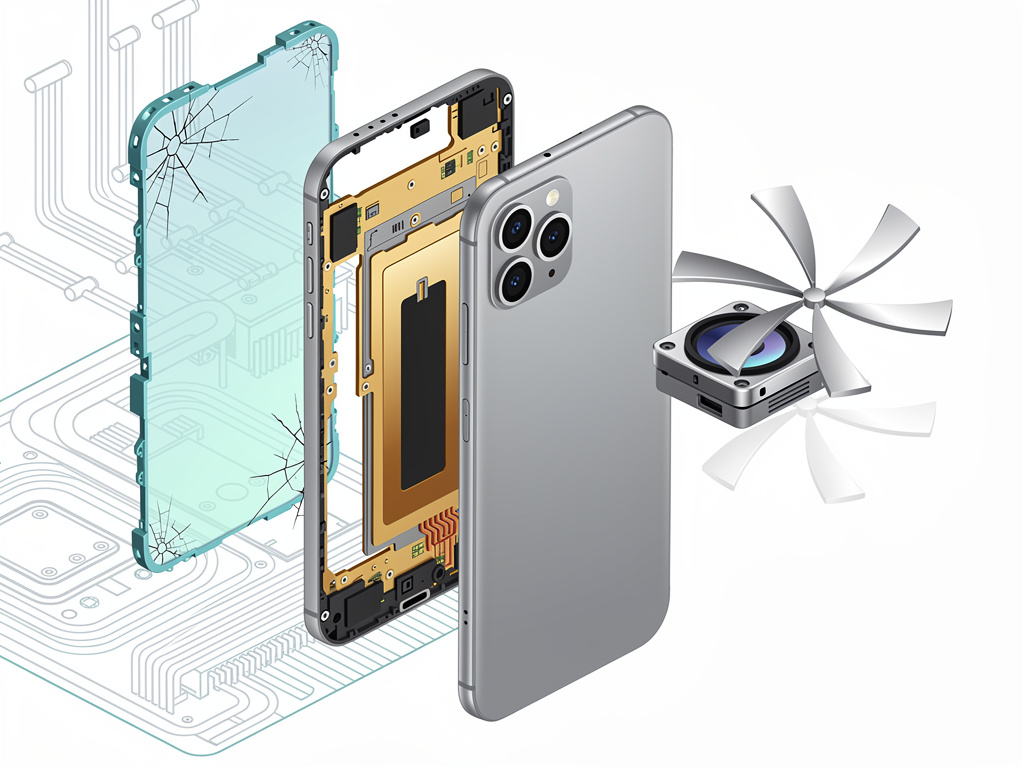

iFixit’s teardown of the iPhone 18 Pro and Pro Max went sideways at the screen. The plastic frame around the display cracked or pulled away on three of the four phones the repair group opened, and Apple doesn’t sell that frame on its own, so damage means replacing the whole display module.
“Four phones are too few to establish a failure rate. Adhesive strength, heating, technique, or a difference in the plastic could all matter,” iFixit wrote in its teardown report. The frame has been in iPhones since the 15 Pro without causing this much trouble, and iFixit wondered whether the much better cooling is pulling heat away from the seam and keeping the adhesive from softening. The one screen that came off cleanly needed 15 minutes at 70 degrees Celsius and another 10 at 72. Zach Nelson of JerryRigEverything had no such problem in his own teardown and gave Apple a “thumbs up for repairability” after removing the display, CNET noted.
The variable aperture
The headline feature is the main camera’s new variable aperture, the first on an iPhone. Six overlapping polymer-composite blades, each about as thin as a human hair, sit in the same camera footprint as last year and are driven by magnetism. The camera app offers four settings: f/1.48, f/1.8, f/2.8 and f/4.0. When iFixit pried the lens cover off, blades flew across the teardown room.
The group called an aperture-only repair close to impossible. “If your aperture gets stuck, you’ll be looking at replacing the entire main camera assembly,” it said. Apple hasn’t published parts prices yet. The 17 Pro’s camera assembly costs $249, and iFixit expects the new one to cost more. The camera module itself is modular and easy to swap.
iFixit was skeptical of the feature’s value. With a sensor a little under half an inch diagonal and a 6.8 mm focal length, the f/1.48 opening is just 4.6 mm across, so background blur stays limited. Samsung put variable apertures in the Galaxy S9 in 2018 and later dropped them, citing “limited functional benefit at smartphone camera levels.”
Cooling, Face ID and the battery
Inside, the A20 Pro has moved to the outside of the logic board sandwich, with memory beside it, so the chip presses against a vapor chamber Apple says has three times the surface area. The tradeoff is that NAND storage now sits inside the board sandwich, which makes board-level repair and data recovery harder.
Face ID’s infrared camera has moved beneath the display toward the upper-left corner, where every other row of pixels is missing over the sensor. The selfie camera and dot projector stay in the Dynamic Island. The battery still sits in a metal tray held by 13 screws, with no adhesive to fight, but getting to it means going through the screen first.
iFixit gave both phones a provisional repairability score of 7 out of 10, the same as the 17 Pro and 16 Pro lines. The frame failures haven’t lowered the score yet because the group doesn’t know how widespread or repeatable they are.


 WebProNews is an iEntry Publication