
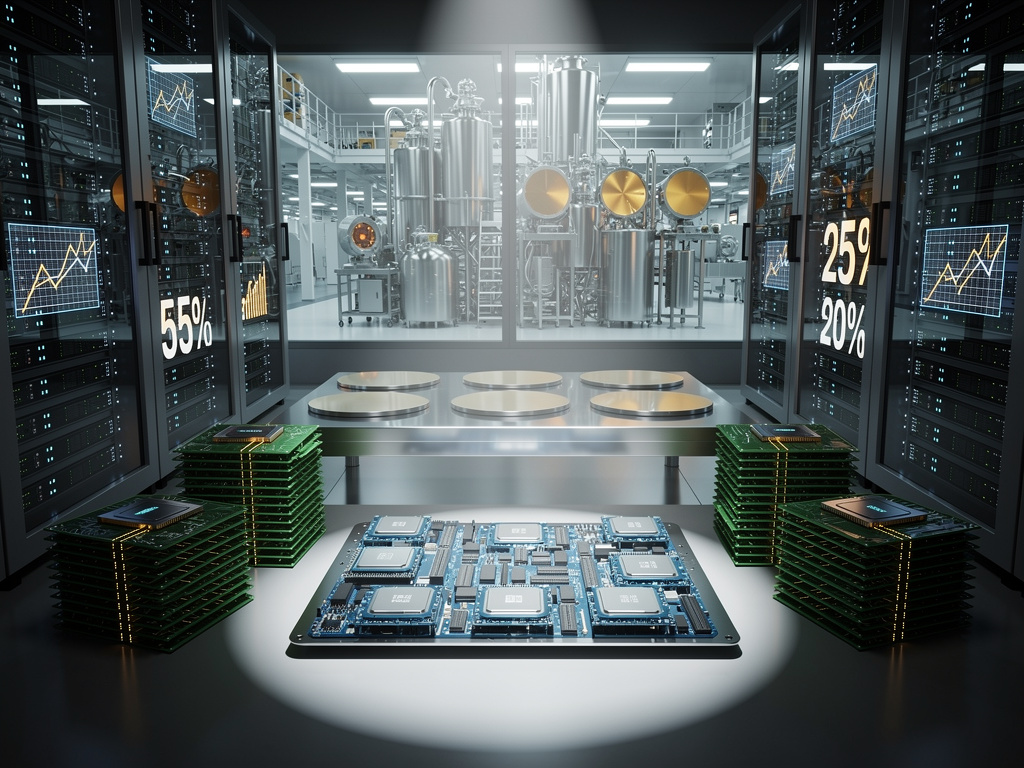

Intel can’t build processors fast enough. “CPU demand is so high that we can only supply 50% of customers,” CEO Lip-Bu Tan said in a conversation with Cisco President Jeetu Patel at Splunk’s conference in Denver, Ctech reported. Tan said many CEOs have called him about supply, and that he has had to tell them Intel can’t produce enough, according to the Seoul Economic Daily.
That’s a sharp change for a company that spent years fighting manufacturing delays. Intel’s second-quarter revenue rose 25% from a year earlier to $16.1 billion, its strongest quarterly growth in 15 years, and the company said demand was outpacing its growing supply.
Agents need CPUs
Tan ties the demand to AI moving beyond model training into inference and agents. GPUs handle training, but CPUs orchestrate the GPUs, the applications and the rest of the computing stack. “There are numerous agents, and in the future millions or trillions of agents will require resources,” he said. “Sufficient computing power and security are needed to respond to this.”
He also flagged other bottlenecks. Memory prices are already up five- to sevenfold, and the memory crunch he warned about early last year has delayed projects and could deepen, TrendForce reported, citing SeDaily. After memory, he expects power and cooling to be the next constraints, and Intel is investing in liquid and microfluidic cooling.
Packaging and substrates
Tan called advanced packaging the industry’s future “Holy Grail” and named substrates as one of Intel’s tightest supplies. Four major suppliers dominate, two in Japan and two in Taiwan, and Intel “has to prepay to get their attention,” he said. Japan’s Ibiden plans to turn idle fab space into a dedicated line for Intel’s EMIB-T substrates, a project valued at roughly 2 trillion won and reportedly backed by advance payments from Google, Amazon and Intel. Analyst Jeff Pu estimates EMIB substrate yields have climbed to around 45%, up from 20% to 25% in the second quarter.
That’s part of why Intel is staying in manufacturing. “Packaging that puts CPU, memory, I/O devices, and silicon together is not easy and requires a lot of technology,” Tan said. “Everything is increasingly changing to a system approach and packaging, and this is the future. That’s why I think relying 95% on one company, especially one based in Taiwan, is very dangerous.”
Prices and the roadmap
Tight supply is showing up in prices. Intel is reportedly preparing to raise PC processor prices by about 10% on Oct. 5, which would be its third increase since late 2025, according to Notebookcheck as cited by TrendForce. On the manufacturing side, 18A is in mass production, and Tan said the next-generation 14A process is slated to enter production in the first quarter of 2027, ahead of high-volume manufacturing in 2028.
Under Tan, Intel has also cut its vice president ranks from about 450 at the peak to roughly 200 and reduced management layers from 12 to six. “It’s not easy and you have to approach it very carefully and it requires a lot of capital expenditure,” he said of the foundry business. “The good news is that the situation has improved over the past 18 months.”


 WebProNews is an iEntry Publication