
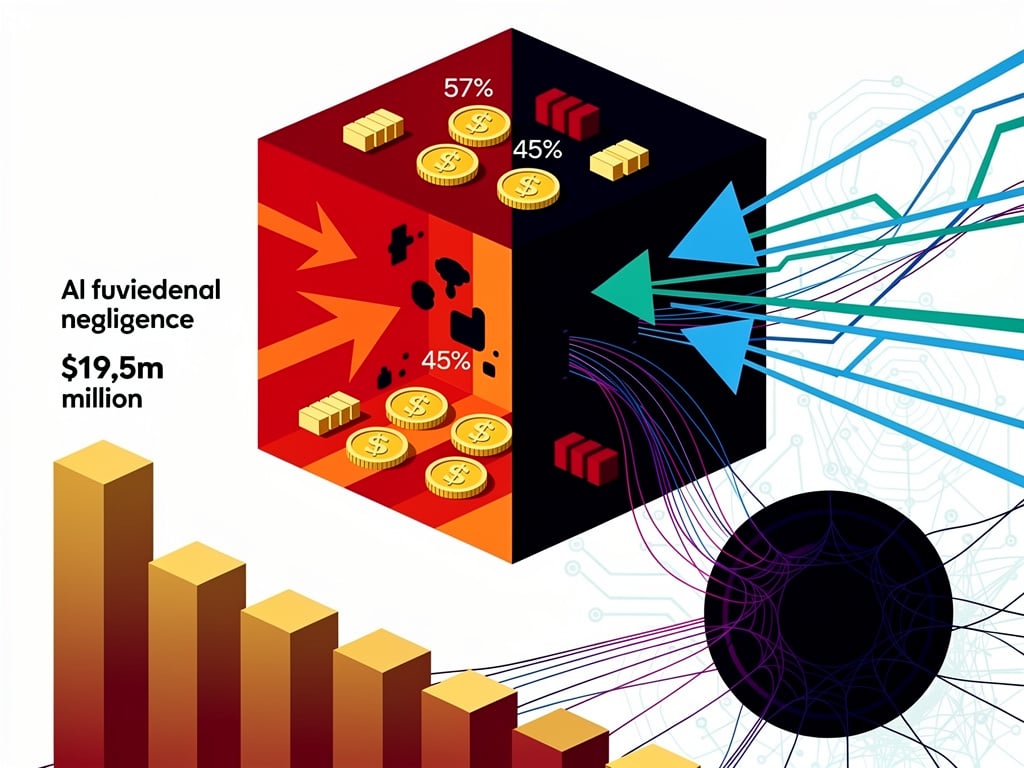
Corporate firewalls block hackers daily. Yet the real breaches often start inside boardrooms and cubicles. New data reveals a stark reversal: employees pose a bigger danger to companies than external attackers. Internal threats now claim 57% of incidents, up from 47% in under a year, according to Orange Cyberdefense’s analysis of 139,000 security events through August 2025. Employee misuse alone drives 45% of cases, surging from 29%, while hacking lingers at 31%. TechRadar.
This shift isn’t abstract. Frustrated workers grab unapproved apps—shadow IT in action. They paste sensitive data into public AI tools. Laptops and mobiles figure in 53% of incidents, up from 39%. Identity attacks jumped from 10% to 17%. “While not inherently malicious, employee misuse can be just as damaging as a sophisticated breach,” says Carl Morris, senior security researcher at Orange Cyberdefense. Attackers spot these workarounds. They turn them into gateways. CIR Magazine.
And costs mount fast. Organizations face $19.5 million in annual insider risk losses, per the Ponemon Institute’s 2026 Cost of Insider Risks Global Report, based on 354 firms hit by material incidents. Negligent insiders—think careless clicks or weak passwords—rack up $10.3 million yearly, with 13.8 events per company at $747,107 apiece. Malicious actors add $4.7 million. Credential theft? Another $4.5 million. Containment alone devours $247,587 per incident. Health firms suffer $28.8 million; tech outfits $24.2 million. Help Net Security.
Costs Explode as Negligence Meets AI
Negligence ruled incidents last year, its tab rising from $8.8 million to $10.3 million. Now AI amplifies the mess. Employees feed legal docs, code, and strategies into ChatGPT or Gemini. AI meeting bots spit out transcripts laced with secrets. Visibility? Scarce. Few firms govern these agents like human users. “To mitigate shadow AI risks without stifling productivity, organizations must shift from a block first approach to an audit and educate model,” advises Raj Koo, CTO at DTEX. Real-time nudges inspect prompts, flag patterns. Formal programs slash incidents by seven yearly, saving $8.2 million. They cut containment from 81 to 67 days. Help Net Security.
Budgets follow suit. Firms now devote 19% of IT security spending to insiders, doubled from 8.2% in 2023. Most plan hikes for 2026. Yet 42% use AI for detection, praising fewer false positives. Privileged access management saves $6.1 million; behavior analytics $5.1 million.
But malice evens the score. Mimecast’s State of Human Risk 2026 report shows malicious insiders matching accidents at 42% of events—first time ever. Firms reporting rises climbed from 35% to 44% in two years. Expect six threats monthly, costing $13.1 million cumulatively. “Insider risk has become one of the most consequential and underestimated threats facing organizations today,” warns Mimecast CISO Leslie Nielsen. “As AI makes it easier for insiders to exfiltrate data at scale, security must meet users at the point of risk.” Mimecast. Infosecurity Magazine.
Malicious Turn: Dark Web Lures Workers
Layoffs sting. Cost-of-living squeezes hit harder. Employees hit dark web forums, hawking logins. Accenture’s Cyber Intelligence team logged a 69% jump in insiders peddling access in 2025 versus 2024. Hackers recruiting them? Up 127% since 2022. Credentials dominate 30% of cases. “The numbers are alarming,” says Ryan Whelan, Accenture’s Global Head of Cyber Intelligence. “Whether due to industry layoffs or the cost-of-living crisis, insiders are going to the dark web in droves.” No longer just finance—manufacturing, logistics, pharma now targets. Cybernews.
Cybercriminals flip scripts. “Insider-as-a-service” booms on dark markets. Rent a worker for data grabs or malware drops. No perimeter smash needed. They blend approved tools for stealth. Small firms suffer 43% misuse rates; giants 45%. Medium outfits draw hackers at 47%. Endpoints everywhere. XDR tools catch some—but flag benign habits too. Resilience Forward.
Remote work widens gaps. Global teams share freely. Context trumps passwords. Behavioral analytics spot odd hours: 2 a.m. file pulls from strange devices. Metadata rules—no prying. Unify email, endpoints, identity signals. HR flags discontent early. Off-boarding revokes access instantly.
Firms act. 63% run formal programs. 59% deploy behavior tools, per Mimecast. Gaps persist. 66% brace for worse. Boards demand lifecycle controls: vet hires, monitor tenure, scrub exits. Phishing-proof MFA. Role splits. Train relentlessly.
The tide turns on basics. Boost hygiene. MFA everywhere. Least privilege. Cyber literacy. Employees aren’t foes—they’re the front line. Arm them right. Hackers wait outside. But the door? Often swings from within.


 WebProNews is an iEntry Publication