
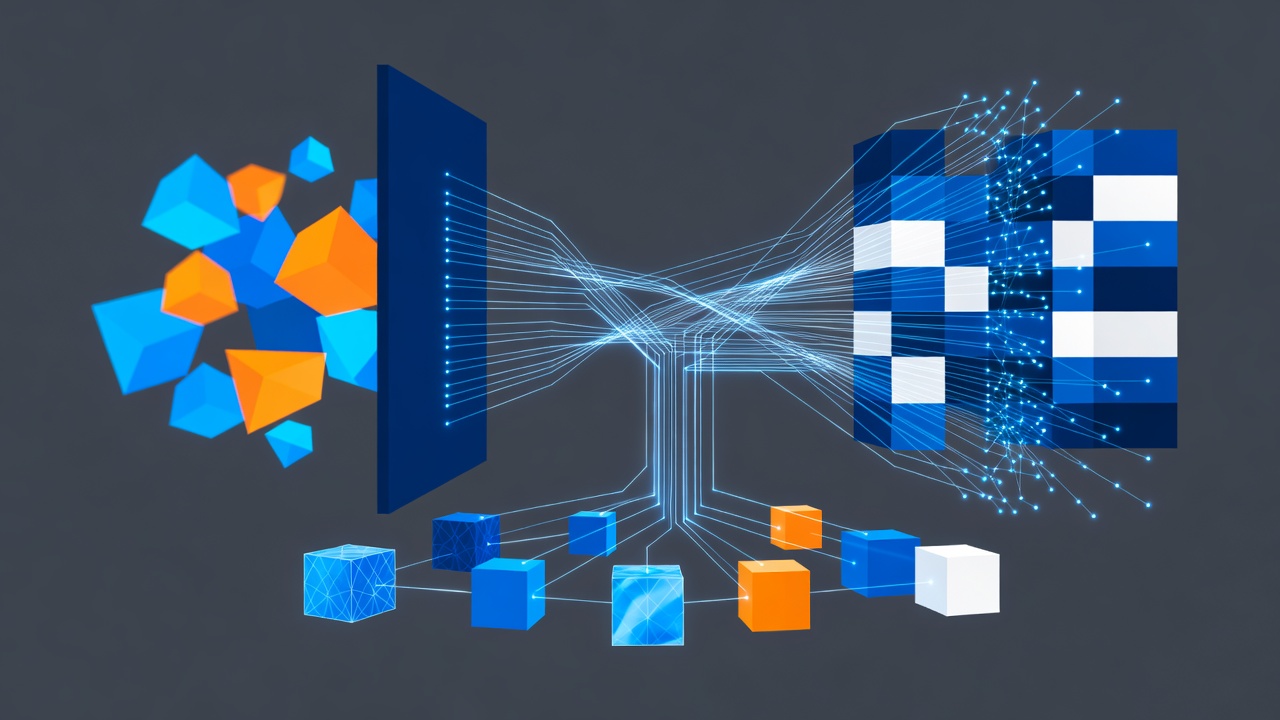

Google Cloud is previewing a way for AI agents to query live production data in AlloyDB, its PostgreSQL-compatible database, without competing with the workloads that run the business. The feature, called PostgreSQL for agents, gives agents their own read-only database instances that start in seconds and shut down to zero when the agents are done, according to Google’s announcement.
The problem Google is going after is load. “When even a few agents execute dense reasoning loops, the unpredictable surge in queries can easily overwhelm traditional architectures,” Raj Pai and Sujatha Mandava wrote in the announcement post. Their answer is to keep agents off the primary, standby and read replica instances entirely. “AlloyDB scales by dynamically provisioning sandboxed database instances in seconds against fresh production data,” they wrote. “Unlike traditional architectures where agents compete for operational resources, agentic database compute remains completely isolated from the primary database clusters.”
A companion engineering post by Amit Ganesh lays out three requirements Google says an agent-ready database must meet: isolation with real-time data access, sub-millisecond baseline I/O, and compute that can scale to thousands of nodes and back to zero. “An agentic database architecture must satisfy all three, or it isn’t really agentic,” he wrote, and Google claims AlloyDB is the first system to do so.
Under the hood, the production cluster stays on dedicated, pre-provisioned infrastructure. Agents connect through the Model Context Protocol (MCP) to a separate pool of AlloyDB nodes, each running in its own microVM. Those nodes read directly from Colossus, Google’s distributed storage system, using storage segments kept apart from production, and see data with sub-second freshness. Billing is per second of agent-node activity.
Google’s own benchmark numbers are big. In index-lookup tests on a dataset larger than available memory, throughput grew from 3,900 queries per second on one agent node to 3 million on 1,000 nodes, with no measurable impact on the primary cluster, Ganesh wrote. A separate full-table-scan test across 2,100 nodes topped 1 terabit per second. Google also tested an unnamed commercial service built on object storage with shared block servers: adding read replicas raised throughput less than twofold, and the primary’s throughput dropped by more than 75%.
Agents get the full PostgreSQL engine, including every index, vector, full-text and spatial search. They can also run federated queries through BigQuery and Lightning Engine for Apache Spark that join live AlloyDB data with lakehouse datasets, without building ETL pipelines. Security relies on existing Google Cloud controls such as IAM authentication, VPC Service Controls and customer-managed encryption.
Manhattan Associates, the supply chain software company, is an early user. “We can now deploy networks of agents collaborating simultaneously to help us analyze inventory and order data with sub-second freshness, while ensuring our core transactional processing remains entirely untouched,” CTO Sanjeev Siotia said in Google’s announcement.
The feature is in preview under Google’s pre-GA terms, and access requires joining the preview. Google hasn’t published pricing or a general availability date.


 WebProNews is an iEntry Publication