
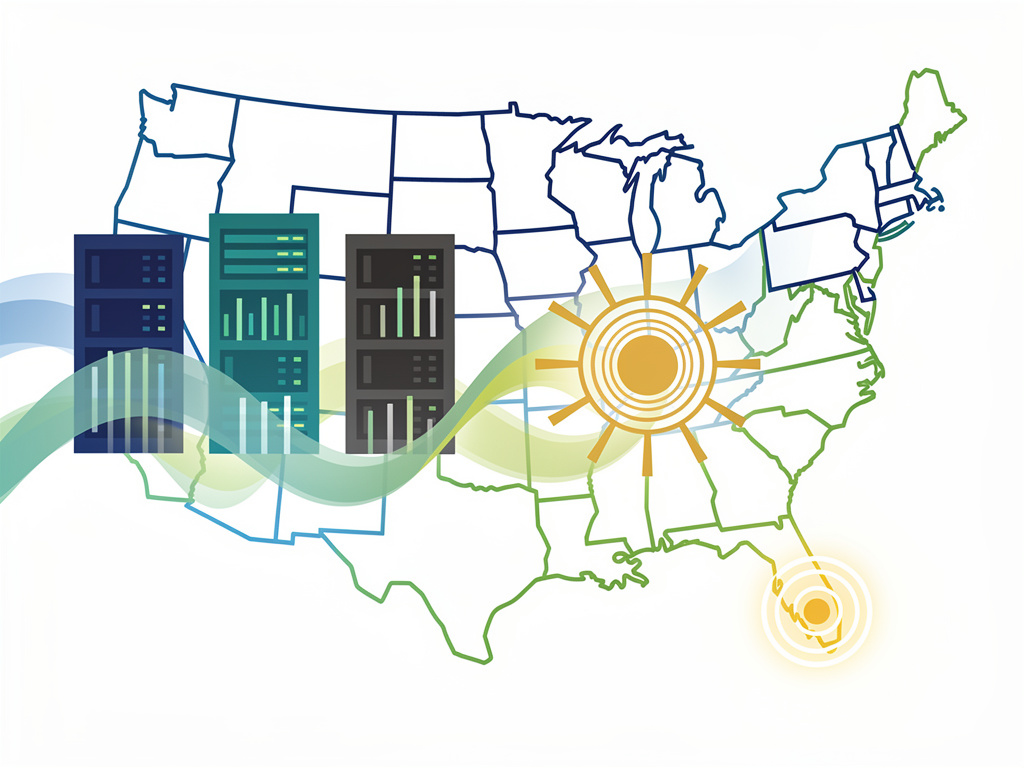

Emerald AI, Google and Nvidia have launched the AI Energy Management Alliance (AEMA), a coalition pushing for data centers that can adjust their electricity use in response to grid conditions. The pitch is that flexible facilities could get bigger grid connections faster. “Today, the limiting factor for new digital infrastructure isn’t capital or silicon; it’s power,” Tyler Norris, Google’s head of energy market innovation for AI and infrastructure, told Latitude Media.
Data centers as grid resources
Interconnection processes were designed for facilities with flat, steady demand, Nvidia wrote in its announcement. A flexible data center can change what it draws from the grid by shifting computing workloads, discharging storage, using paired generation or responding to system contingencies. That makes it a controllable resource rather than an inflexible load, which can make better use of existing grid capacity and avoid or defer costly upgrades.
AEMA says it is technology-neutral and performance-based, focused on response speed, duration, predictability and behavior during emergencies. Its principles call for:
- Defining ride-through, curtailment and contingency-response obligations before a facility connects
- Standardizing technical requirements, performance metrics and operational data sharing
- Faster, risk-adjusted interconnection pathways for customers that make credible, verifiable flexibility commitments
- Allocating interconnection costs based on actual system impacts and benefits, such as avoided upgrades
Who’s involved
The alliance revives the Advanced Energy Management Alliance, a demand-response group launched in 2014 that had gone largely dormant. Emerald AI founder and CEO Varun Sivaram came up with the idea for the coalition. Launch partners include Anthropic, Analog Devices and energy companies AES, Constellation, National Grid, NRG and Germany’s RWE. “There is no opportunity cost” for communities, Sivaram said, describing flexible data centers as “good grid citizens.”
The companies already have experience to point to. Google has a gigawatt of flexible load under management, and Nvidia and Emerald AI have run six demonstrations together. Their first data center designed for flexibility at scale, a 100-megawatt facility in Manassas, Virginia, is on track to come online before the end of 2026. A February 2025 paper co-written by Norris, then at Duke University, found that a small amount of data center flexibility could free up about 100 gigawatts of room on the US grid.


 WebProNews is an iEntry Publication