
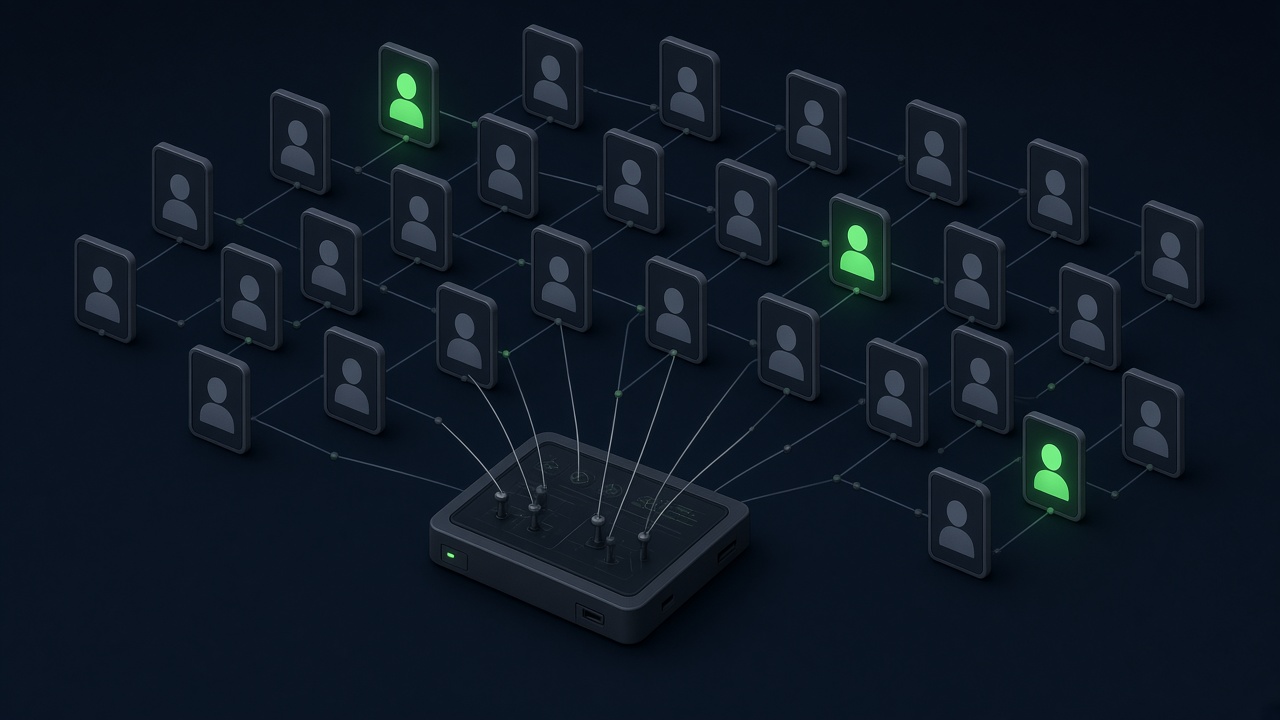

When Nvidia CEO Jensen Huang came under a board investigation earlier this month, the internet did what it always does: It picked sides. Some of the tech world’s wealthiest and most influential figures, including Elon Musk, Sequoia Capital partner Shaun Maguire and Bill Ackman, publicly rallied behind him. They were joined by what looked like a groundswell of ordinary people.
As it turns out, a sizable chunk of that groundswell wasn’t real.
According to The Washington Post, research from the nonprofit Midas Project found that at least 400 of the accounts were fake. The accounts posed as everyday people, including a chef, a stock trader, a Hebrew teacher and several environmental activists, and had links to a public relations firm involved in previous so-called sockpuppet campaigns.
The episode is a stark reminder of just how difficult it has become to know what, and who, to believe online. For businesses that rely on public sentiment to make decisions, that is a serious problem.
How We Got Here
Nvidia’s board opened an independent review on Nov. 8. Four days later, Nvidia announced that Huang had resigned as president, CEO and board member, effective immediately, ending a 33-year run at the company he co-founded. Chief Financial Officer Colette Kress is serving as interim CEO, and Harvey C. Jones was named the board’s first-ever chair.
A Chorus That Wasn’t Real
Tyler Johnston, executive director of the Midas Project, published his findings Nov. 10, two days before Huang resigned.
According to the research, the accounts weren’t simply defending Huang. Over the past year, the network made thousands of posts promoting Nvidia, pushing the company’s position on selling advanced AI chips to China and attacking lawmakers who support export controls. The accounts frequently replied to journalists, former U.S. officials and members of Congress, including Sen. Elizabeth Warren, D-Mass., Republicans on the House Foreign Affairs Committee and the House select committee focused on China.
The evidence of coordination is compelling. The Midas Project found that the vast majority of the accounts were created, renamed or given new profile pictures in the same sessions as other accounts in the network, often minutes apart. Many also appeared to use scheduling software, with posts going live within the first half-second of a new minute.
The Midas Project traced the network to Koios, a small Israeli company that presents itself as an online financial fraud detection firm. Haaretz previously reported that Koios ran fake accounts in an earlier influence campaign, and the company claims to have gone out of business. Nonetheless, the accounts kept right on posting. Koios has denied any connection, IntellACT, a firm that may be its successor, didn’t respond to the Midas Project, and it remains unclear who paid for the campaign.
Nvidia, for its part, told the Midas Project it has “no relationship” with the companies linked to the accounts and is trying to identify the source.
To be fair, the campaign’s reach appears to have been limited. According to the Post, the most-viewed post drew roughly 8,000 views and 32 likes. Some accounts rushed to delete posts after Johnston published his findings, and X has deactivated or suspended at least 260 of them.
When Seeing Is No Longer Believing
That limited reach might make it tempting to dismiss the whole thing. That would be a mistake.
The goal of a sockpuppet campaign is rarely to go viral. It is to manufacture the appearance of consensus in front of the people who matter. When a lawmaker, a reporter or an analyst checks the replies under a post and sees a steady stream of seemingly ordinary Americans voicing the same opinion, it creates the impression that public sentiment leans a certain way, even when it doesn’t.
Technology is making that easier than ever. Building a believable fake persona once took real time and effort. Today, generative AI can produce a realistic profile photo, a convincing bio and an endless supply of on-message replies in seconds. In this case, the Midas Project concluded the accounts were likely run by people rather than bots, often with the help of AI. One account slipped up and posted what appeared to be an AI prompt asking for a reply that would get engagement “while still sounding like a real human.” But the tools are cheap, widely available and getting better by the day, which means campaigns like this one will only become harder to spot.
For businesses, the implications are significant.
- Sentiment is a business input. Boards, investors, communications teams and executives all watch online reaction to gauge how a crisis is playing out. With Nvidia’s stock swinging on every new report, plenty of people were watching the public response to Huang closely, and some of what they saw was manufactured. Decisions built on polluted data are bad decisions waiting to happen.
- A company can be damaged by a campaign it didn’t commission. Nvidia says it has no connection to the accounts, yet the network pushed the very positions the company has been lobbying for in Washington. That alone hands critics an easy way to cast doubt on the company’s legitimate advocacy and on every genuine supporter it has.
- Real voices get drowned out or discredited. Once people learn a crowd was partly fake, they tend to discount the entire crowd. Genuine customers, shareholders and employees who speak up risk being lumped in with the bots.
The Voices Inside Nvidia
That brings us to a very different kind of support for Huang, one coming from inside the company.
As WebProNews reported, some Nvidia employees have been pressing the board to bring Huang back. According to Wired, which reviewed internal correspondence, a longtime engineer submitted a post to an internal “suggestion box” before Huang resigned, urging the board to consider employee sentiment before taking action. The post has since drawn more than 1,600 comments, several of them asking the board to find a way to reinstate Huang.
One employee went further, sending a companywide email that declared, “I stand by Jensen.” Within hours of the resignation, roughly two dozen employees posted messages supporting Huang on LinkedIn, and Wired said it could not find any employee posts backing his departure over the same period. Similarly, in an anonymous poll on the workplace app Blind taken Nov. 9 and 10, before Huang resigned, 88% of the 232 Nvidia employees who responded said he should remain CEO.
The contrast with the fake accounts could not be clearer. These are real people with names, badges, careers and, in many cases, significant equity on the line. They are speaking through company channels or under their own names, and they will live with the consequences of the board’s decision. One can certainly debate whether they are right, and the board evidently reached a different conclusion, but there is no question that their voices reflect a real constituency.
The sockpuppets, on the other hand, borrowed the credibility of ordinary people without any of the accountability or the stake.
Even so, the internal side of the story isn’t entirely immune to the same verification challenge. A public website, StandWithJensen.com, hosts an open letter to the board from what it describes as self-identified current and former Nvidia employees, partners, shareholders and supporters, and it notes that the letter is not endorsed by Nvidia or Huang. There is nothing to suggest the effort is anything but genuine. Still, self-identified signatures on a website are a far cry from verified internal correspondence, and that is precisely the point. Unless a voice can be tied to a real, accountable person, it’s increasingly difficult to know how much weight it deserves.
The Trust Problem Isn’t Going Away
In the end, Huang’s fate was decided by a board weighing an investigation, not by reply counts on X. But the episode should serve as a warning to every company, investor and journalist who treats online sentiment as a reliable barometer of public opinion.
The lesson is a simple one, even if putting it into practice is not. Online reaction should be treated as unverified until proven otherwise, and voices that can be tied to real, accountable people, such as employees, customers and shareholders, deserve far more weight than an anonymous crowd. As fake personas become cheaper and more convincing, the ability to tell the difference may become one of the most valuable skills a business has.


 WebProNews is an iEntry Publication