
Designing a protein that latches onto a chosen target has typically taken a specialist weeks or months. Anthropic says its models did it for 14 of 15 targets in a campaign that ran for 48 hours with no scientific guidance after the first prompt, and that two outside companies confirmed the results in the lab.
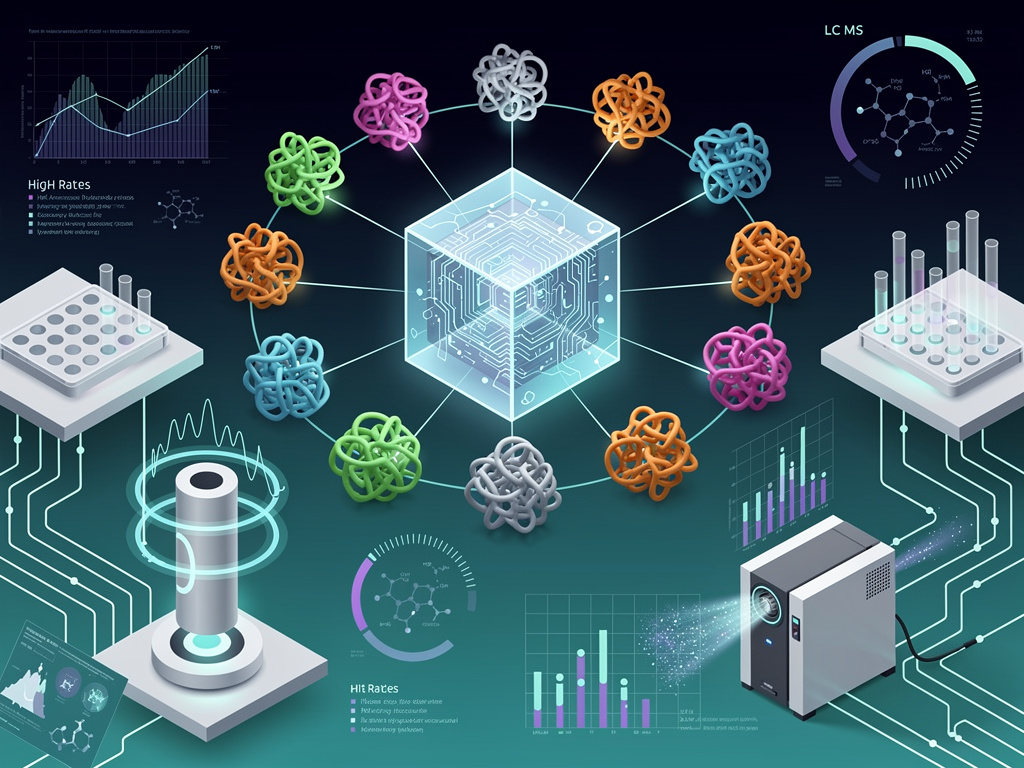
The research post covers two experiments. In the first, Claude Mythos Preview and Claude Opus 4.8 designed minibinders, small proteins built to bind a target, the mechanism behind a large share of modern medicines. Adaptyv Bio and Twist Bioscience independently produced and tested the designs. Working on all targets at once, Mythos Preview’s designs had an overall hit rate of 26.7% and Opus 4.8’s 22.6%, against the 10% to 15% Anthropic calls typical for protein design campaigns. When Mythos Preview worked on one target at a time, in parallel 24-hour sessions, its hit rate rose to 35.1%.
Claude didn’t invent new design algorithms. It orchestrated existing open-source structure and sequence design models, choosing epitopes, running the tools, scoring candidates and ranking the results inside Anthropic’s Claude Science environment. The multi-target runs used up to 12,500 Nvidia H100 hours of compute; single-target runs got up to 2,500 H100 hours each. Anthropic said its only involvement after the prompt was approving access requests and watching the infrastructure.
The best and worst targets
RBX1 was the standout. Mythos Preview reached a 40% hit rate against it, compared with 3.7% among participants in an Adaptyv Bio design competition on the same target. Opus 4.8 produced TNFα binders that worked on the human, cynomolgus monkey and mouse versions of the protein, which matters for animal studies. Anthropic said it isn’t sure why Opus 4.8 succeeded there when Mythos Preview did not.
Maltose-binding protein was the failure: none of 90 designs was confirmed to bind, though one showed a weak, reproducible signal. Against BBF-14, a target with little surface to grab, Claude produced three binders with modest affinity. To limit the chance that Claude was recalling known answers, the team included two novel targets from Adaptyv Bio’s recent competitions and required Claude to check that its designs were original.
A chemistry check in 20 minutes
The second test used Claude Opus 5, Anthropic’s most capable generally available model. Given a contract lab’s raw NMR and LC-MS files and a short plain-language prompt, with no vendor software, it returned processed results in 23 and 19 minutes. Its purity figure, 96.4%, matched the lab’s 96.33%, and its hydrogen counts agreed. Claude also proposed the heavy-water check the lab had independently run, and caught an overstatement in its own first pass: it had reported that four flagged peaks disappeared, when its self-check showed only two had.
Coverage such as India Today’s stressed the time savings. Binders are an early step, not drugs, and the most capable model’s life-science features stay blocked for public use. Anthropic said launching an access program for scientists is “one of our highest priorities,” and that it expects to share more soon.


 WebProNews is an iEntry Publication