
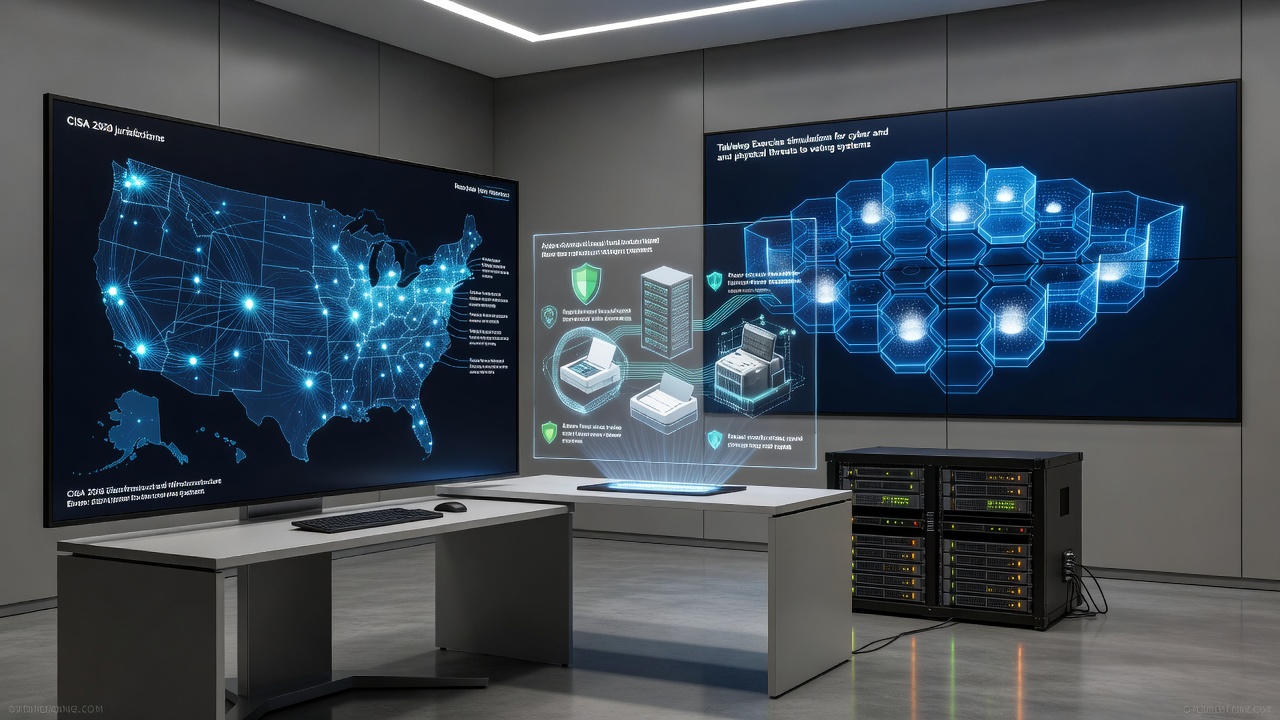

The Cybersecurity and Infrastructure Security Agency has released its 2026 Election Infrastructure Security Plan, known internally as “Securing the Next 250.” The document outlines a voluntary program that offers free scanning, risk assessments, tabletop exercises, and tailored guidance to state and local election officials responsible for voter registration databases, electronic voting systems, tabulation equipment, and the physical facilities that house them. According to the official resource page at CISA’s website, the initiative targets the roughly 250 jurisdictions that together administer most of the nation’s ballots, aiming to raise baseline defenses ahead of the 2026 midterms and the 2028 presidential contest.
The timing of the announcement, coming only weeks before early voting begins in many states, has drawn attention from national security reporters. A detailed account published by Politico at Politico.com notes that agency leaders chose to roll out the plan in late September to maximize participation before poll workers begin intensive preparations. The article also places the new effort in context with earlier congressional decisions that trimmed CISA’s election-security budget and staff in fiscal 2024 and 2025. Those reductions had prompted warnings from career officials that gaps in technical support could leave smaller counties exposed to both cyber intrusions and physical threats.
Under the plan, participating jurisdictions can request network vulnerability scans without cost or obligation to act on the findings. CISA technicians will examine internet-facing systems that manage voter rolls or transmit results, looking for outdated software, weak authentication controls, or misconfigured firewalls. The agency has emphasized that all scanning activity requires explicit written consent and that raw data will not be shared with federal law enforcement unless officials request assistance. This approach reflects lessons learned from previous cycles when some localities hesitated to engage because they feared federal overreach or negative headlines.
Beyond scans, the program supplies on-site or remote risk assessments that combine technical reviews with operational analysis. Teams evaluate how election workers handle chain-of-custody procedures for memory cards, how access to server rooms is logged, and whether backup paper records are stored securely. The assessments produce prioritized recommendations that officials can implement using existing budgets or apply for supplemental grants. CISA has prepared templates for after-action reports so that lessons from one jurisdiction can be adapted quickly by others facing similar equipment or staffing constraints.
Tabletop exercises form another pillar of the plan. These guided simulations place local officials, poll managers, and vendors in realistic scenarios ranging from ransomware locking up tabulation servers to coordinated physical protests blocking access to counting facilities. Facilitators from CISA and partner agencies such as the Election Assistance Commission introduce new wrinkles each round, including supply-chain compromises of voting-machine firmware and disinformation campaigns timed to coincide with ballot transmission. The exercises conclude with structured debriefs that generate concrete improvements to continuity-of-operations plans. Many counties have already expressed interest because the sessions satisfy audit requirements from state legislatures while requiring minimal travel.
The guidance documents accompanying the plan address a range of persistent challenges. One module focuses on securing voter registration systems that remain connected to the internet for real-time updates. Another offers checklists for air-gapping tabulation networks during canvassing periods without disrupting required data transfers. A third section provides sample language that localities can insert into contracts with voting-system vendors to mandate timely patching and independent security audits. These materials draw on after-action reviews from the 2020 and 2022 elections, where officials identified recurring weaknesses in vendor support and in the integration of new equipment with legacy infrastructure.
Critics have pointed out that the voluntary nature of the program limits its reach. Counties with tight budgets or skeptical leadership may simply ignore the offer. The Politico story highlights that CISA’s earlier budget cuts reduced the number of field representatives who normally build relationships with local clerks, potentially lowering uptake. Agency Director Jen Easterly acknowledged the concern during a recent briefing, stating that the plan includes a new outreach campaign using regional fusion centers and professional associations to reach officials who rarely interact with federal cyber programs. She also noted that participation rates in similar voluntary initiatives climbed steadily once initial adopters shared positive experiences.
State officials have offered mixed reactions. Election directors in Michigan and Georgia, which have faced sustained legal and technical scrutiny in recent cycles, welcomed the additional resources. Both states have already scheduled assessments for their largest counties and plan to integrate findings into upcoming certification reviews. In contrast, some secretaries of state in jurisdictions with smaller populations expressed worry that federal scanning could create new compliance burdens or expose them to unfunded mandates if vulnerabilities are discovered. CISA has responded by promising that no jurisdiction will face penalties for declining services and that all findings remain the property of the requesting official.
The plan also addresses physical security more explicitly than previous iterations. Election infrastructure now includes drop boxes, polling places, and warehouses that store ballots and equipment. CISA is offering free physical security assessments that evaluate camera coverage, access-control systems, and perimeter lighting. These reviews incorporate threat intelligence about increasing incidents of tampering or vandalism reported during the 2024 cycle. By combining cyber and physical perspectives, the agency hopes to encourage holistic planning rather than treating digital defenses in isolation.
Technical experts have praised the focus on smaller jurisdictions that often lack dedicated information-technology staff. Many county clerks double as election administrators and rely on part-time help or outside consultants. The free scanning and assessment services lower the barrier to entry for these offices. One county information officer in rural Pennsylvania told local media that the last time his office received comparable support was during a 2018 pilot program; the new plan feels like a return to consistent federal partnership after years of uncertainty.
Looking ahead, CISA intends to measure success through several indicators. The agency will track the number of jurisdictions that complete at least one service before Election Day 2026. It will also monitor whether participants adopt recommended controls and whether those controls correlate with fewer reported incidents. Because many vulnerabilities take months to remediate, the real test may come in 2028 when larger presidential turnout stresses systems further. The plan therefore includes provisions for continued support across election cycles rather than treating each contest as a standalone event.
The release of the 2026 plan arrives at a moment when election security remains politically charged. Lawmakers on both sides of the aisle have cited different threats—foreign interference, domestic disinformation, or concerns about centralized federal influence. Against that backdrop, CISA has tried to position its offerings as strictly technical assistance available to any jurisdiction that asks. The voluntary framework and emphasis on local ownership appear designed to reduce accusations of partisanship while still addressing documented weaknesses.
Funding for the initiative comes from reallocated resources within CISA’s existing budget after earlier reductions. The agency has redirected personnel from other infrastructure sectors during peak election months, accepting temporary strain elsewhere to prioritize voting systems. Officials have indicated they will seek additional appropriations in the next fiscal cycle to sustain momentum beyond 2026. Until then, the plan relies on efficient use of current staff, pre-existing contracts with cybersecurity vendors, and partnerships with the Multi-State Information Sharing and Analysis Center.
Election administrators who have reviewed the materials say the greatest value may lie in the personalized guidance that follows each assessment. Rather than generic best-practice lists, CISA teams produce roadmaps calibrated to the specific voting technology, state laws, and staffing levels of each jurisdiction. This customization addresses a frequent complaint that federal advice often assumes resources or authority that smaller offices simply do not possess.
As ballots begin moving through the system in the coming weeks, the test of the new plan will be how many officials actually raise their hands. Early indications from state election conferences suggest interest is higher than anticipated, driven in part by fresh memories of close races and persistent rumors that circulated after the last national election. Whether that interest translates into measurable security improvements will become clearer over the next several months, as scanning reports are delivered, exercises are conducted, and recommendations are either implemented or set aside.
The 2026 Election Infrastructure Security Plan represents a pragmatic attempt to close known gaps without creating new political friction. By making services free, optional, and locally controlled, CISA hopes to build trust and technical resilience simultaneously. Success will depend on sustained engagement from the very officials who bear the daily responsibility for running fair and accurate elections. If the program gains traction, it could establish a repeatable model for supporting critical infrastructure that is both decentralized in operation and nationally coordinated in defense.


 WebProNews is an iEntry Publication