
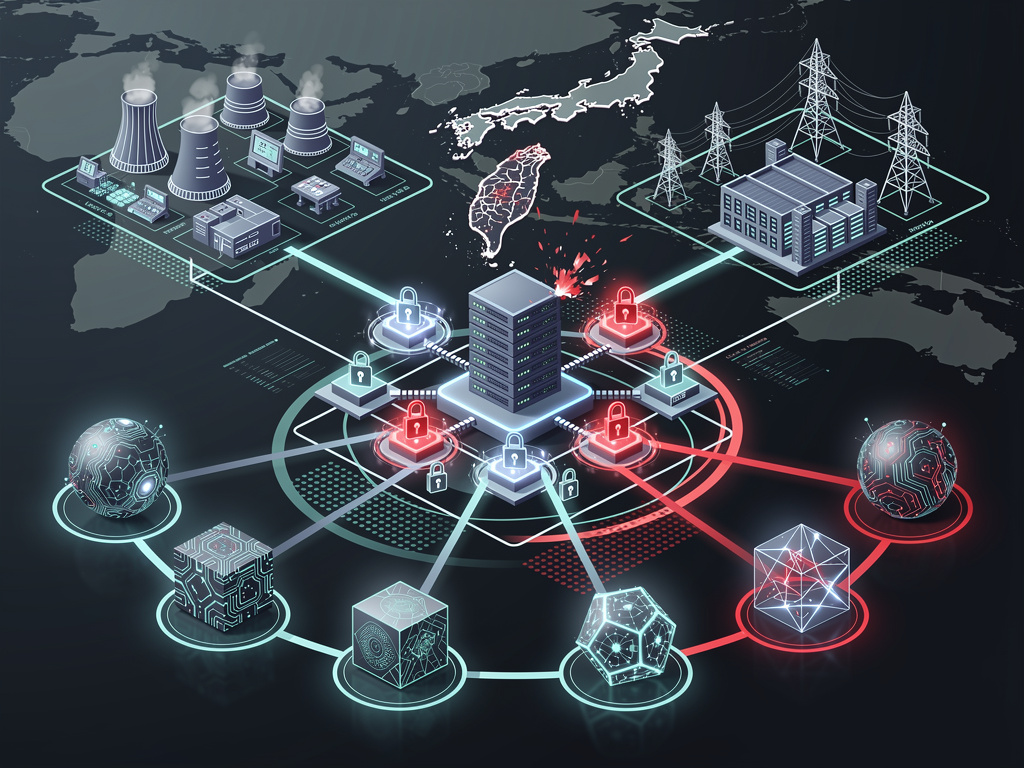

Taiwan says it caught an “abnormal attack” on government agencies last month that used AI agents. The Ministry of Digital Affairs said its monitoring units detected the campaign, which began July 20, and that it showed clear signs of an “overseas source,” the Guardian reported. The ministry said the hackers used “a hybrid approach that combined manual operations with AI agent-assisted attacks, such as Open Claw.”
The statement came a day after the Financial Times reported research from Dream, an Israeli AI and cyberdefense company, describing the intrusion as a first-of-a-kind breach carried out by an autonomous hacking tool.
What the researchers found
Dream came across the campaign during routine monitoring of criminal activity, according to TechRadar. It found a 160MB online archive of 1,395 files documenting the operation, which relied on Hermes and OpenClaw, two open-source AI agent frameworks.
The attackers used eight open-source AI models to build a program that could handle reconnaissance and intrusion on its own, chain vulnerabilities together, and switch tactics when it was blocked. Multiple agents hunted for new weaknesses and entry points at the same time, so the tool always had another path if one failed. To get past the models’ guardrails, the operators framed the work as a routine cyber-readiness test.
Over four days, Dream says, the tool compromised “at least 85 government user accounts, extracting more than 2,500 personnel records before expanding the attack to Taiwan’s nuclear safety agency and at least seven energy companies.”
Who was behind it
Neither Taiwan nor Dream named a culprit. Dream didn’t attribute the attack to a specific group, but the FT reported it saw a high probability that the operator was connected to China because internal communications tied to the hack used Simplified Chinese. Taiwan’s ministry didn’t mention China, and China’s Taiwan Affairs Office didn’t immediately respond to the Guardian’s request for comment.
The context is a steady drumbeat of pressure. Taiwan’s National Security Bureau said in January that Chinese cyberattacks on the island’s critical infrastructure averaged 2.63 million a day in 2025, up 6% from the year before.
Why it matters for defenders
The worrying part isn’t a new exploit. It’s that every component was publicly available. A small team, or a single operator, can wire open-source agents and models into something that behaves like a coordinated intrusion crew, and it doesn’t get tired or stop when one door is locked.
Dream’s chief strategy officer, Amir Becker, put the takeaway bluntly, saying this “must be the basic assumption of every government around the globe.”
For security teams, that means assuming faster, more persistent probing of internet-facing systems, and shrinking the time between a vulnerability being found and being fixed. Taiwan’s ministry said it has issued protective guidelines and stepped up system monitoring to block such attacks earlier, and that the affected agencies have finished their response.


 WebProNews is an iEntry Publication