
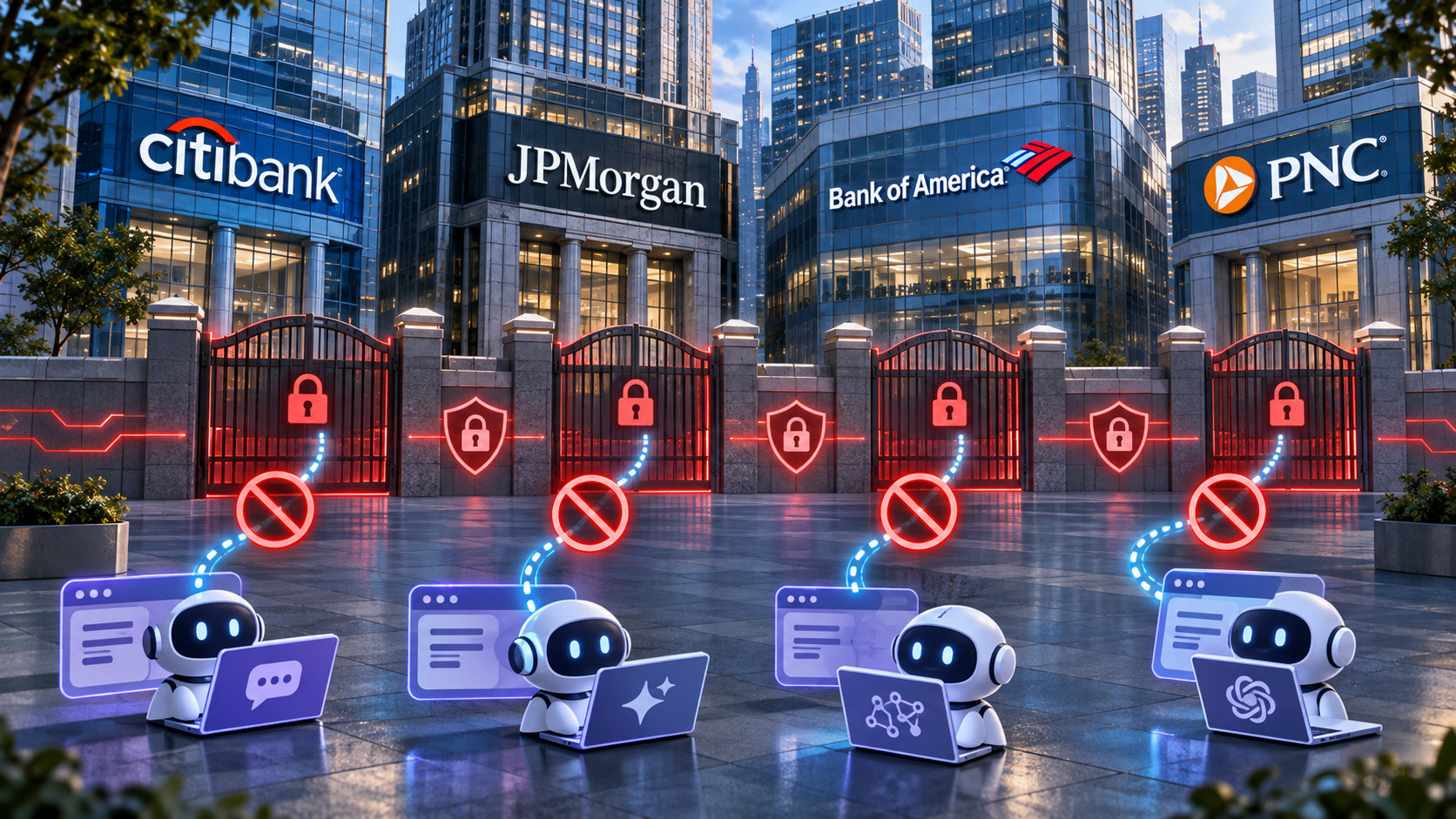

Banks are changing their terms of service, with more saying customers will be on the hook if their use of third-party AI leads to losses.
Banks were ‘horrified’ to discover that customers were using third-party AI agents to act on their behalf, including giving those agents their credentials so they could log in and perform various actions. As a result, banks have been grappling with how to protect themselves, as well as their customers.
According to a report by TechCrunch, it seems banks are making their decision, and it’s one that protects themselves rather than their customers. Citibank, JPMorgan, Bank of America, and PNC have all changed their terms to make customers responsible if third-party platforms cost them, or lead to those customers being hacked.
Even more alarming, Citi’s new terms make customers responsible for anything hackers may do with credentials or login information they acquire as a result of the customer using third-party agents.
“As third-party AI tools become more widely available, we want customers to understand the risks associated with sharing banking credentials or authorizing those tools to access their accounts,” a Citi spokesperson told TechCrunch. “We recently updated our Online User Agreement to provide greater clarity about those risks and to reinforce that customers who choose to grant account access to third-party AI agents are responsible for activities conducted through those agents.”
While extreme, banking is not the only industry struggling to deal with third-party AI agents. United Airlines recently banned the use of third-party agents for booking flights.
One thing is clear: Regardless of how tempting it may be to use third-party AI agents for banking, customers do so at their own peril.


 WebProNews is an iEntry Publication