
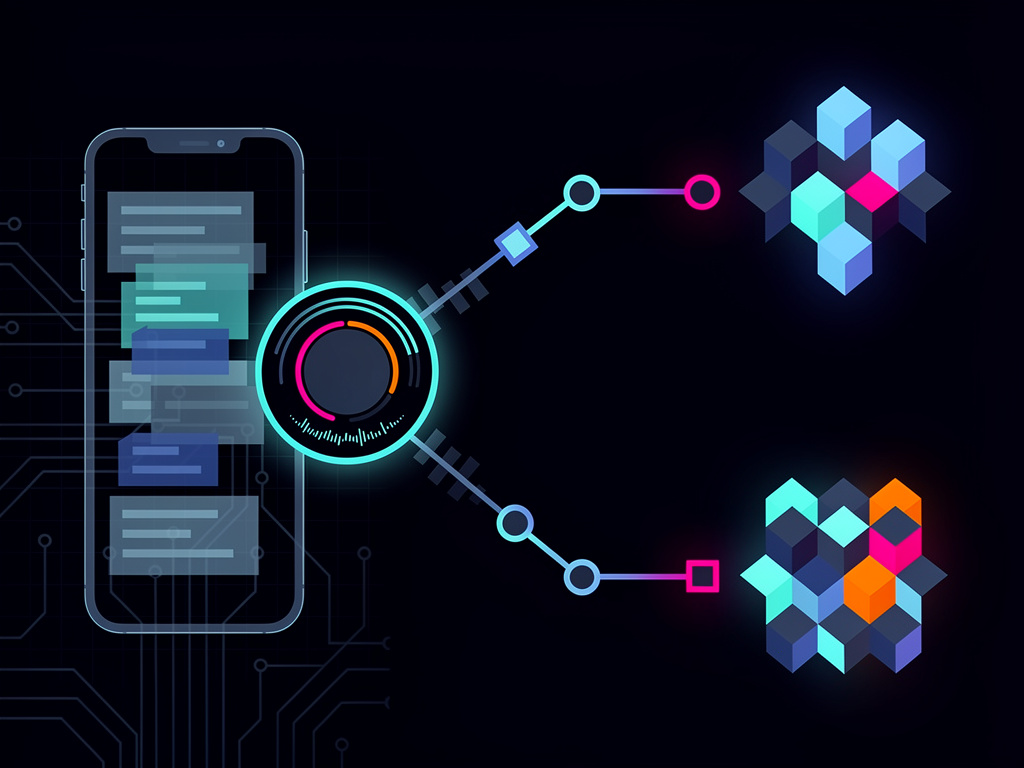

Code in Apple’s iOS 27 and macOS Golden Gate betas shows Siri AI is built so that third-party models such as Anthropic’s Claude or OpenAI’s GPT can take over some or all of its work. The hooks are private and switched off for now.
The finds come from pdfu, a developer who regularly surfaces unreleased Apple code and who earlier spotted the watchOS Readiness app before it was announced. “iOS 27 and macOS Golden Gate have private hooks that let apps add Siri Extensions and replace Siri AI’s server backend with third-party models,” pdfu wrote on X, posting videos of both, as reported by AppleInsider and CNET.
Two ways in
The first is delegation. Using the Model Delegation API in App Intents, Claude shows up in Siri’s “Ask…” menu, and Siri can hand it a task. In pdfu’s demo, Siri passes Claude a request to create a reminder. Responses carry the “Claude” label but otherwise look like the Siri AI interface, and anything that needs iOS or macOS system access, such as setting an alarm, goes back to Siri to complete. That keeps Apple’s own model as the one touching personal data, AppleInsider noted.
The second goes much further. An app extension uses the Inference Providing protocol in Model Manager Services to replace Siri AI’s server model outright. In pdfu’s video, GPT-5.6 Terra receives Apple’s native Siri planner prompt and tool definitions, then makes tool calls that perform system actions through the Siri UI and voice. CNET described the model searching on-device email for specific information and using it to send iMessages, with that activity logged in OpenAI’s web interface.
Both demos appear to run on a Mac, according to AppleInsider. Apple, OpenAI and Anthropic didn’t respond to CNET’s requests for comment.
Groundwork laid earlier
Bloomberg’s Mark Gurman reported in March that iOS 27 would include an “Extensions” feature letting users choose chatbots such as Google’s Gemini or Claude to fetch replies for Siri, much as Siri already hands some queries to ChatGPT, The Verge reported. Apple said in January that it is working with Google to power its overhauled Siri.
What’s new in the code is the depth of the replacement option. CNET pointed to the European Union’s Digital Markets Act, which requires Apple to give third-party developers equal access to hardware and software features, as a likely reason. 9to5Mac‘s Ben Lovejoy wrote that there’s a strong chance the feature will only be enabled in the EU, where Apple has made similar accommodations before.
Users seem to want it. In an earlier 9to5Mac poll, two-thirds of readers said Apple should let them pick their own chatbot to replace Siri, another 15% leaned that way, and 6% were strongly opposed. For now, nobody can turn it on.


 WebProNews is an iEntry Publication