

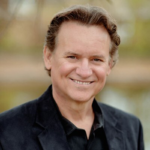
Anthropic has set up a wet lab for physical biology experiments in the San Francisco Bay Area, Reuters reported, citing two people familiar with the matter. Eric Kauderer-Abrams, Anthropic’s head of life sciences, confirmed the lab in an interview. “We believe that to do biology, the final test is still and will be for a while in real lab work,” he said. “We absolutely are doing that today, and I would describe our approach as being typical of what you would see in most biotech companies, where there’s some amount of that that we’re doing in our own facilities and some amount of that that we’re working with external partners on,” he told Reuters, as published by CNA.
A spokesperson later clarified that the lab isn’t for drug discovery specifically, without elaborating. Anthropic said at a June event in San Francisco that it would run preclinical drug programs in areas traditional pharma companies don’t find financially attractive, and Kauderer-Abrams said life sciences is already one of the company’s biggest investment areas by headcount and resources.
Automation, with people in the loop
Like other biotech companies, Anthropic wants to see how far Claude can direct robotic units to carry out experiments with limited human intervention, one of the sources said. The company’s spokesperson said human oversight remains essential for safety. “We’re in the very early innings of using AI to automate the execution of lab work,” Kauderer-Abrams said.
The lab builds on several recent moves. Anthropic launched Claude Science software, added Novartis CEO Vas Narasimhan to its board and bought startup Coefficient Bio, reportedly for about $400 million in stock. Recent job postings sought a leader to ramp up procurement and an expert in protein and nucleic acid characterization. “There’s some things that we can do much faster in our own hands,” Kauderer-Abrams said.
Faster biology models
The same week, Anthropic reported that Claude, working in Claude Science, optimized more than 30 open-source biomolecular models in just under four weeks, speeding them up roughly 4x on average with minimal loss of precision and nearly 2x with identical outputs. It also built a low-memory mode that can predict biomolecular systems larger than 10,000 tokens on a single Nvidia GPU node. Anthropic open-sourced the optimized code and is co-sponsoring a protein design competition with Adaptyv Bio, with up to $1 million in Claude credits, $250,000 in Modal compute credits and wet lab validation for more than 5,000 designs.
Kauderer-Abrams acknowledged the balance the company is trying to strike given its warnings about AI misuse in biology. “In our life-science work, we’re always balancing these things,” he said, “making models better in ways that we think will uplift and accelerate developing medicines, and being thoughtful and careful about how we deploy it to limit the risk.”


 WebProNews is an iEntry Publication