
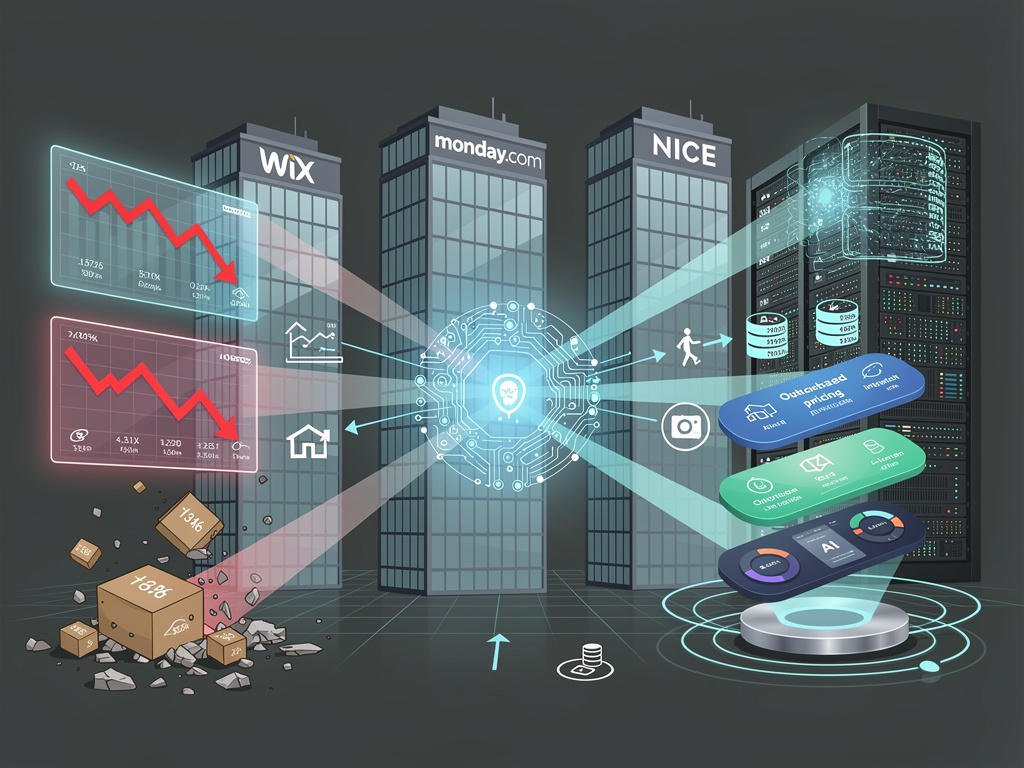
Software-as-a-service, once the darling of venture capital and global markets, confronts an existential threat from AI agents that replicate features in minutes via natural language prompts. A viral CTech analysis declares, “SaaS is dying as a business category,” spotlighting Israeli powerhouses Wix, monday.com and Nice as they grapple with plummeting valuations and commoditized tools. Investors like Dean Shahar of DTCP warn, “The SaaS world is dying, not software itself, but SaaS as a business category. AI has turned software into a commodity where sustainable competitive advantage is nearly impossible.”
The shift echoes Marc Andreessen’s 2011 proclamation that software was eating the world, but now AI devours software. Tools like Anthropic’s Claude Code and Base44 enable “vibe coding,” where users describe needs in plain English, spawning custom applications that displace multimillion-dollar contracts. One customer axed a $350,000 Salesforce deal after Base44 built a replacement, per a tweet from its founder Maor Shlomo cited in CTech.
Israeli firms, once global leaders, have shed tens of percent in market value through 2025 into early 2026. Nice posted the sole negative return among TA-35 stocks last year, while chipmakers like Tower Semiconductor and Nova surged ahead. The broader SaaS index dropped 6.5% in 2025 against the S&P 500’s 17.6% gain, with median revenue multiples for software plunging below 5 from over 7, as hardware valuations eclipse them.
Valuation Plunge Signals Deeper Upheaval
Wix, monday.com and Nice dominated Wall Street rankings for Israeli tech three to five years ago, trailing only Check Point or Teva. Now displaced by semiconductors, their stocks reflect investor flight from cloud-dependent models vulnerable to AI disruption. Nice, a CRM giant, faces irony: a former Amazon executive coded a rival CRM over a weekend using AI agents.
Grove Ventures’ Lior Handelsman notes, “SaaS isn’t dead, but it faces real challenges in sustaining growth. The market is changing, and the rules are becoming more complex.” He urges startups to possess “uniquely inaccessible data or a truly differentiated algorithm,” as AI erodes barriers to entry and prompts in-house builds over subscriptions.
Team8 partner Alon Huri, who sold Next Insurance for $2.6 billion, emphasizes organizational redesign: “CEOs of companies with over 500 employees must rethink… what functions are still necessary… AI must create a ten-to-one productivity multiplier.” Yet programmers foresee a 2027 reckoning, cleaning AI-generated code bugs en masse.
Commoditization Erodes Moats Overnight
AI agents consolidate tasks across paid tools—building websites, planning trips, managing workflows—for near-free via ChatGPT, Gemini or Claude. Sticky enterprise systems like ERP endure due to sunk costs, but AI surges demand: one firm tripled marketing inquiries, straining legacy CRMs. BetterCloud predicts 2026 architectures prioritizing “computational intelligence and autonomy over human interaction,” splitting apps into AI-enabled add-ons and native-AI builds.
Salesforce’s Agentforce exemplifies “all-you-can-eat” agentic licensing, per Constellation Research, as CxOs resist seat-based models amid cost controls. Gartner forecasts 40% of agentic AI projects canceled by 2027 for poor ROI, yet Digital Applied sees 50+ AI-native firms hitting $250 million ARR by year-end, compressing SaaS timelines from 5-10 years.
On X, George Tru observes, “this doesnt kill SaaS revenue it kills SaaS as a category… agents can generate the workflow you need on demand… making it disposable.” Greg Isenberg predicts a “great SaaS die-off,” with survivors pivoting to outcomes like “qualified meetings on your calendar instead of a CRM.”
Pricing Paradigms Shift to Outcomes
Traditional per-user subscriptions crumble as AI slashes headcount needs. Monetizely charts usage-based models mainstream since 2022, with outcome-based nearing 30% adoption. Ibbaka foresees credit-based dominance, API generalization and agent pricing rising as enterprise apps deflate.
Incumbents adapt aggressively: Nice spent $1 billion on a German AI startup; Wix acquired Base44 and unveiled an AI website builder for Super Bowl hype; monday.com layered AI atop workflows. SaaStr’s Jason Lemkin replaced most sales staff with 20 AI agents named like “Quali for qualified,” declaring on Business Insider, “We’re done with hiring humans.”
Thoma Bravo’s Orlando Bravo spies “unimaginable buying opportunities,” per CNBC, as private equity eyes profitable but slowed growers. Hypergrowth yields to single-digit expansion, ARR-per-employee metrics and PE exits over IPOs, says DTCP’s Shahar: “Instead of selling a product, they’ll sell a result.”
Israeli Tech’s Pivot to Deep Advantages
Israel’s ecosystem, fueled by 2015-era unicorns leveraging SaaS’s online scalability, risks contraction as customers—often tech-savvy—craft AI solutions internally. The pivot favors “hardware-in” plays like chips, demanding capital and geography, over cloud’s borderless appeal. Huri asserts, “We didn’t invent the internet, the cloud, or AI, but we’ve always been exceptional at exploiting change.”
Foundation Capital warns incumbents like Salesforce and ServiceNow legitimize agents, spurring enterprise pilots to production. Bain & Company concurs agentic AI disrupts selectively: growing some markets, commoditizing others, favoring data-rich incumbents or nimble entrants.
X chatter amplifies: Peter Diamandis highlights McKinsey’s 20,000 AI agents for 40,000 staff, while vasuman critiques single-function AI SaaS for failing enterprise customization, pushing bespoke agents. Logan adds, “95% of SaaS is just an internal tool… Now with AI coding… they need an agent and a design doc.”
Survivors Bet on Data and Integration
Melius Research’s Ben Reitzes declares on CNBC, “Whoever owns the data is the winner… the ability to do an agent and the coding ‘will be a commodity.’” SiliconANGLE envisions service providers thriving as SaaS squeezes under immature agent tooling, with contextual intelligence key to scaling.
SAS predicts a 2026 “Great AI Reality Check,” exposing irresponsible adopters to credibility loss from “commoditized AI slop.” Forbes foresees multi-agent orchestration for supply chains, while WebProNews projects SaaS at $299 billion, led by agentic pioneers. Meritech Capital counters SaaS isn’t dead—AI expands it via whitespace agents.
VCs shun pure SaaS pitches; entrepreneurs target non-replicable niches like mortgage advisory. As Shahar notes, tech giants’ agents obsolete categories wholesale. Israeli high-tech’s deep-tech roots position it to exploit, not invent, this shift—building resilient, outcome-driven engines amid AI’s relentless advance.


 WebProNews is an iEntry Publication