
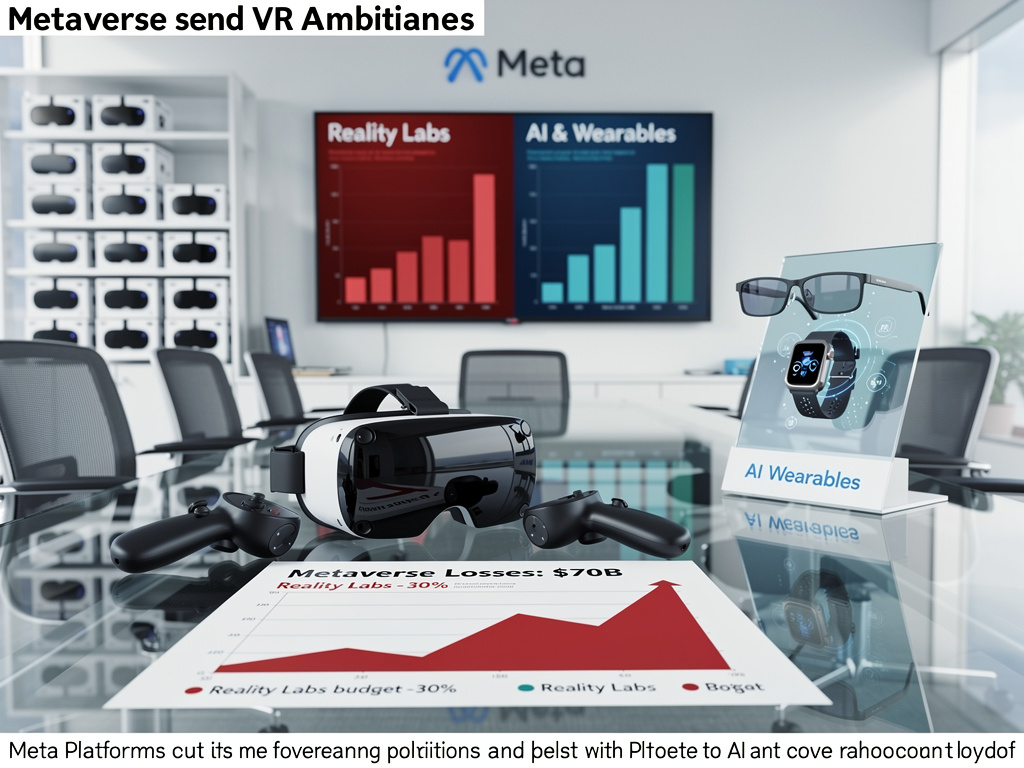
Mark Zuckerberg’s audacious bet on the metaverse, once heralded as the successor to social media, is undergoing its most severe retrenchment yet. Meta Platforms Inc. is preparing to slash budgets for its Reality Labs division by as much as 30% in 2026, according to multiple reports, signaling a pivot away from expansive virtual reality ambitions toward more pragmatic investments in artificial intelligence and wearables. The move comes after years of mounting losses exceeding $70 billion since the company’s 2021 rebrand from Facebook, forcing even the CEO to recalibrate his vision.
Executives have been discussing these cuts internally, with potential layoffs looming as early as January, people familiar with the matter told Bloomberg. The reductions target core metaverse products like Horizon Worlds and the Quest VR headset line, which have struggled with low user adoption despite heavy marketing. Instead, resources will shift to AI-driven initiatives such as Llama models and Ray-Ban smart glasses, reflecting investor pressure for profitability.
Roots of the Financial Drain
Reality Labs, Meta’s innovation arm housing metaverse efforts, reported operating losses of $4.7 billion in the third quarter alone, contributing to cumulative deficits surpassing $70 billion since 2021, as detailed in Business Insider. Zuckerberg’s 2021 name change to Meta was a bold declaration that virtual and augmented reality would define the company’s future, but tepid consumer interest in VR headsets has exposed the risks of such concentration.
Quest headset sales, while growing modestly, have failed to ignite mass-market demand. Horizon Worlds, Meta’s flagship virtual social platform, has seen engagement dwindle, with monthly active users hovering below one million. These shortfalls have drawn scrutiny from Wall Street, where Meta’s stock initially dipped on metaverse hype but has since rallied on AI successes.
Internal Debates and Leadership Shifts
Discussions around the cuts intensified after Zuckerberg reportedly acknowledged the metaverse push ‘is not working’ in private meetings, echoing sentiments in The Times of India. The CEO, who once committed to spending $10 billion annually on Reality Labs, is now prioritizing wearables like Orion AR glasses, hiring talent from Apple to bolster hardware design.
Meta’s broader efficiency drive, including prior layoffs totaling 21,000 jobs since 2022, sets the stage for targeted reductions in Reality Labs’ 10,000-plus workforce. Bloomberg sources indicate budget trims could save billions, allowing reallocation to AI infrastructure where Meta competes fiercely with OpenAI and Google.
Market Reaction and Investor Sentiment
News of the impending cuts propelled Meta shares up 3% to around $620 on December 4, as reported by CNBC, underscoring relief among investors weary of metaverse sunk costs. Analysts view the shift as pragmatic, with some like those at Bank of America praising the focus on ‘higher-return opportunities’ in AI and consumer wearables.
Yet, the retrenchment raises questions about Meta’s long-term hardware strategy. While not abandoning VR entirely, the company plans to de-emphasize standalone metaverse worlds in favor of integrated AR experiences, per The New York Times.
Strategic Pivot to AI Supremacy
Zuckerberg has framed AI as the new cornerstone, with Meta investing heavily in open-source models like Llama 4 and agentic AI systems. Reality Labs’ recalibration aligns with this, preserving AR eyewear development while curtailing VR ecosystem builds. “We’re not walking away from the metaverse, but we’re being more disciplined,” one executive told Reuters, emphasizing wearables as the bridge to future immersive tech.
The division’s $20 billion annual spend, much of it on experimental hardware, will face scrutiny in upcoming budget reviews. Layoff preparations, including performance reviews, are underway, with impacts potentially hitting hundreds in engineering and content teams.
Broader Industry Ripples
Meta’s retreat reverberates across the XR sector, where competitors like Apple with Vision Pro and Microsoft with HoloLens grapple with similar adoption hurdles. Posts on X from tech insiders highlight sentiment that Zuckerberg’s pivot validates AI’s dominance, with one viral thread noting, “$70B lesson learned—VR isn’t ready for primetime.”
At Futurism, reports underscore the irony: Zuckerberg’s metaverse obsession, fueled by pandemic-era isolation hype, now yields to AI’s tangible revenue streams like ad targeting and enterprise tools. Meta’s ad business, generating over $150 billion yearly, provides the cash cushion for continued experimentation.
Future Horizons for Reality Labs
Despite cuts, Meta vows persistence in metaverse R&D, targeting lightweight AR devices for everyday use. Partnerships with EssilorLuxottica on smart glasses exemplify this evolution, blending AI assistants with subtle overlays rather than bulky VR rigs.
Wall Street forecasts suggest Reality Labs losses peaking in 2025 before tapering, contingent on cost controls. Zuckerberg’s upcoming earnings call will likely address the strategy, offering clues on the division’s trimmed footprint amid Meta’s $200 billion cash reserves.


 WebProNews is an iEntry Publication