
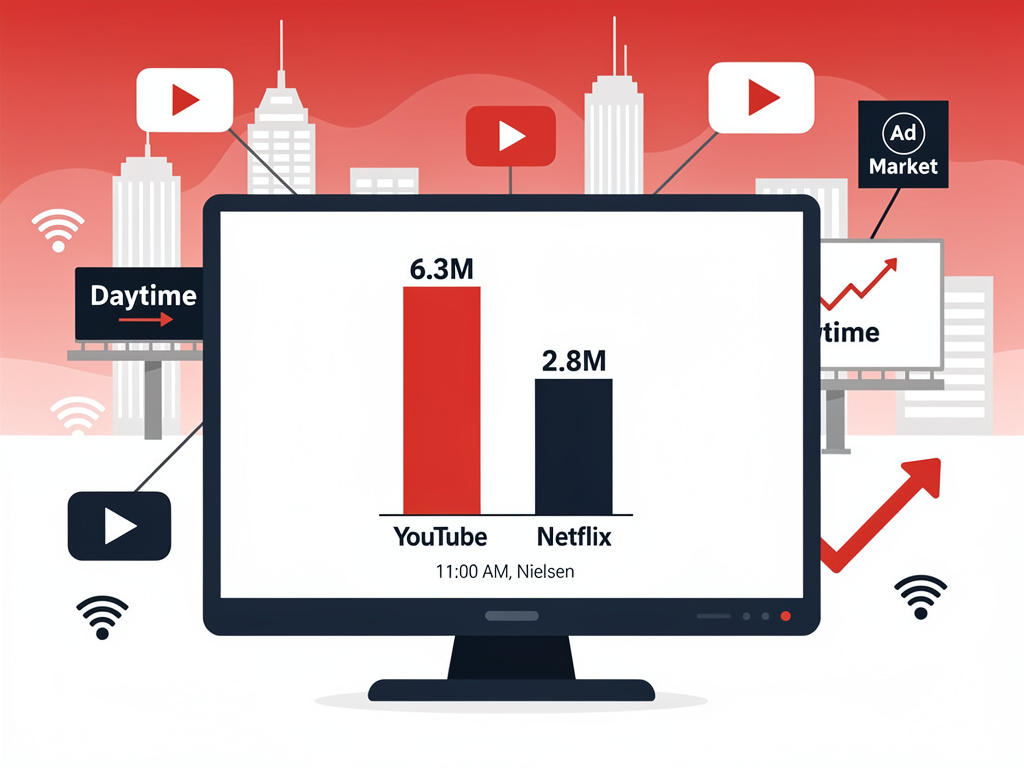
At Nancy Ann Ling’s house in Central Texas, the TV generally goes on around 5 a.m., and Mrs. Ling flips over to the same app each day: YouTube. This routine exemplifies a broader shift in viewing habits, where Alphabet Inc.’s video platform has seized control of daytime television screens across the U.S. Nielsen data reveals YouTube averaging 6.3 million viewers at 11 a.m. in October, surpassing Netflix’s 2.8 million, while prime-time audiences remain more balanced among rivals. (The New York Times)
The platform’s edge stems from its vast library of short-form content tailored for fragmented daytime schedules, drawing in audiences from homemakers to remote workers. In February, YouTube captured 11.6% of total TV viewing, its best monthly performance to date, according to Nielsen’s Media Distributor Gauge. This dominance extends into summer, with 13.4% share in one recent month, outpacing Netflix consistently. Posts on X highlight this trend, noting YouTube’s lead in daylight hours. (Nielsen; Nielsen)
YouTube’s Daytime Viewer Surge
Daytime viewing, traditionally the domain of soap operas and talk shows on broadcast networks, now belongs to YouTube. The platform’s algorithm serves endless streams of cooking tutorials, fitness videos, and kid-friendly clips, perfectly suiting morning and afternoon slots. Nielsen reports streaming hit a record 44.8% of total TV usage in May, with YouTube driving much of the growth, up 71% since 2021. Traditional media executives watch warily as linear TV erodes. (Nielsen)
Netflix, focused on premium scripted series for evening binges, lags in these hours. Its viewership peaks later, but YouTube’s anytime accessibility—bolstered by creator-driven content—fills the void. In May, YouTube’s U.S. TV share hit a record 9.7%, nearly 25% of all streaming, eclipsing Netflix. TechCrunch noted YouTube topping streaming with 8.6% of TV screens in January. (eMarketer; TechCrunch)
Decoding the Data Divide
Granular Nielsen metrics underscore the disparity: At 11 a.m., YouTube’s 6.3 million viewers dwarf Netflix’s 2.8 million, a gap that widens in early hours. Katherine Miller on X pointed to this stat from the Times piece, emphasizing YouTube’s daytime pull. Prime time evens out, with Netflix holding ground via hits like prestige dramas, but YouTube’s overall lead persists. (X)
This pattern aligns with podcast trends, where 75% of listening occurs between 6 a.m. and 6 p.m., per Edison Research, suggesting commuters and daytime users favor on-demand audio-video hybrids. YouTube’s mobile-first roots extend to smart TVs, capturing casual viewers ignored by appointment viewing models. Miller noted on X how this ties into commuting and breaks. (X)
Content Strategies Fueling the Lead
YouTube’s success hinges on user-generated and short-form videos, from MrBeast challenges to ASMR sessions, amassing billions of hours. Nielsen’s November gauge showed Paramount and Netflix gaining, but YouTube maintained top distributor status. Slashdot covered the Times report, amplifying YouTube’s grip. The platform now rivals broadcast in raw reach during daylight. (Slashdot; Nielsen)
Advertisers take note: Daytime ad inventory shifts to YouTube, where targeted ads on niche content yield higher engagement than broad linear buys. Netflix’s ad tier grows, but lacks YouTube’s volume in off-peak hours. Digiday charts YouTube as a genuine Netflix threat, citing watch time and user habits. Times of India reported YouTube beating Amazon Prime and Disney outright. (Digiday; The Times of India)
Industry Ripples and Ad Revenue Shifts
Broadcasters like FOX climbed into Nielsen’s top three, but streaming’s 44.8% milestone signals irreversible change. YouTube’s parent, Alphabet, benefits from diversified revenue as TV ad dollars migrate. Vulture’s 2025 streaming rankings place YouTube atop for attention wars. Executives at legacy networks scramble to launch FAST channels mimicking YouTube’s model. (Vulture)
Remote work and hybrid schedules amplify daytime streaming, with Nielsen noting YouTube’s consistent monthly gains. Reddit discussions among editors buzz over the platform’s edit-friendly short-form boom. Biztoc aggregated reports of YouTube’s 6.3 million peak, signaling investor interest. (Reddit; Biztoc)
Prime-Time Parity Masks Broader Gains
While evenings see closer races—Netflix buoyed by originals—YouTube’s daytime fortress secures its top spot. DNYUZ republished the Times story, detailing viewer anecdotes like Mrs. Ling’s. This hourly breakdown challenges one-size-fits-all streaming strategies, pushing rivals toward live and short-form experiments. YouTube’s lead portends a reordering of TV economics.


 WebProNews is an iEntry Publication