
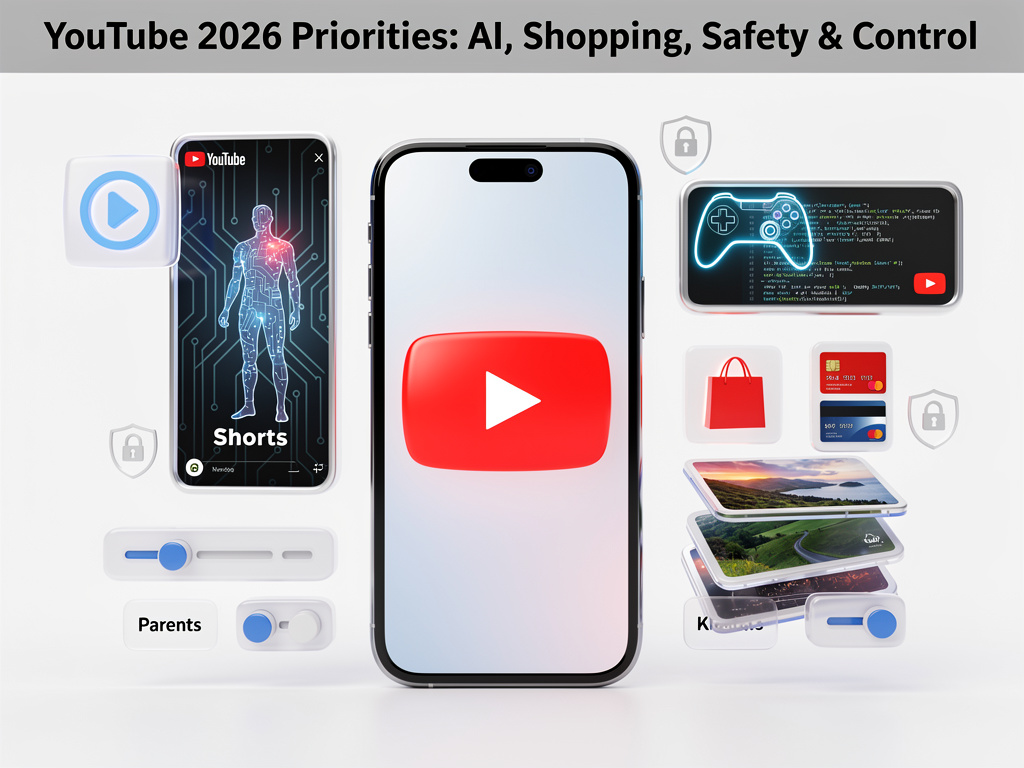
YouTube CEO Neal Mohan unveiled an ambitious 2026 roadmap in his annual letter, positioning artificial intelligence as a core engine for creator innovation while vowing to curb low-quality synthetic content. With Shorts now commanding 200 billion daily views, the platform aims to blend AI-driven tools, seamless commerce, and interactive formats to solidify its dominance across mobile and TV screens. “Just as the synthesizer, Photoshop and CGI revolutionized sound and visuals, AI will be a boon to the creatives who are ready to lean in,” Mohan wrote in the YouTube Blog.
Over one million channels already harness YouTube’s AI creation tools daily, as reported in December data from the letter. New features will enable creators to generate Shorts featuring their own AI likenesses, craft games via simple text prompts in the experimental Playables program, and experiment with music generation. These build on existing successes like auto-dubbing, which drew six million daily viewers for sessions exceeding 10 minutes, and the Ask tool used by 20 million to explore content, according to Search Engine Journal.
Yet Mohan emphasized safeguards against abuse. “Throughout this evolution, AI will remain a tool for expression, not a replacement,” he stated, highlighting investments in spam detection, clickbait filters, and deepfake identification to combat ‘AI slop’—repetitive, low-value machine-generated videos. The platform will label all in-house AI content and require disclosure for external alterations, as detailed in CNBC.
Shorts Evolution Blends Video, Images, and AI Power
Shorts, YouTube’s TikTok rival, will integrate image posts directly into feeds, mimicking Instagram’s hybrid approach to boost engagement. This format expansion accompanies AI likeness tools, allowing creators to produce personalized clips without constant filming. Vineet Malhotra, a top Shopping creator, already generated millions in gross merchandise value in 2025, per the CEO letter.
Monetization ties in closely, with brand partnership enhancements like adding links to sponsor sites in Shorts or swapping branded segments post-deal to revive old catalogs for recurring revenue. Over 500,000 creators participate in YouTube Shopping, and in-app checkout will let viewers buy without leaving the platform, reducing friction as noted in FoneArena.
YouTube has disbursed more than $100 billion to creators, artists, and media firms in four years, contributing $55 billion to U.S. GDP and 490,000 jobs in 2024 alone. Fan funding via Jewels and gifts, plus expanded Content ID for copyright management, will further diversify earnings, Mohan affirmed.
Commerce Friction Vanishes with In-App Checkout
In-app shopping represents a pivotal shift, enabling direct purchases from videos and Shorts. AI-powered product tagging and timestamps already streamline discovery; 2026’s checkout seals transactions on-platform. Brands gain tools to scout creators and manage campaigns, fostering sustainable deals as covered by TheWrap.
Creators like those in music and gaming stand to benefit from text-to-game features, expanding Playables into AI-generated interactive experiences. Music tools will aid discovery and artist storytelling, with Shorts image posts drawing static content into dynamic feeds. Nielsen data shows YouTube topping U.S. streaming watch time for nearly three years, fueling TV ambitions.
YouTube TV advances with fully customizable multiview for multi-stream viewing and over 10 specialized plans in sports, news, and entertainment, giving subscribers precise control. “Creators are the new prime time,” Mohan declared, citing creators purchasing Hollywood lots for premium production.
Safeguards for Youth Amid AI Surge
Family safety takes center stage with industry-first parental controls, including Shorts scroll timers settable to zero, simpler kids’ account setup, and easier supervised switching. These respond to concerns over endless scrolling, as parents gain tools to curate experiences, per The Indian Express.
Mohan’s vision frames YouTube as culture’s hub, where emerging talents—unknown today—will dominate in five to ten years. AI underpins recommendations, moderation, and creation, but openness demands quality vigilance. “It’s becoming harder to detect what’s real and what’s AI-generated,” he cautioned in Engadget.
Industry observers note the tightrope: empowering tools like Veo 3 integrations for prompt-based videos while demonetizing slop. Success metrics include sustained creator payouts and viewer trust, with Shorts’ 200 billion views as the battleground against rivals.
Creator Studios Rise in Hollywood’s Shadow
Creators evolve into studios, producing must-see content across formats. YouTube’s diversified economy matches every vision with revenue streams, from ads to commerce. Over four years’ payouts underscore scale, positioning the platform as a global business builder, as echoed in WebProNews.
Reactions on platforms highlight excitement for likeness tools but wariness of deepfakes. Mohan reiterated balance: accelerate creativity without eroding trust. As 2026 unfolds, these priorities will test YouTube’s ability to harness AI responsibly amid fierce competition.


 WebProNews is an iEntry Publication