
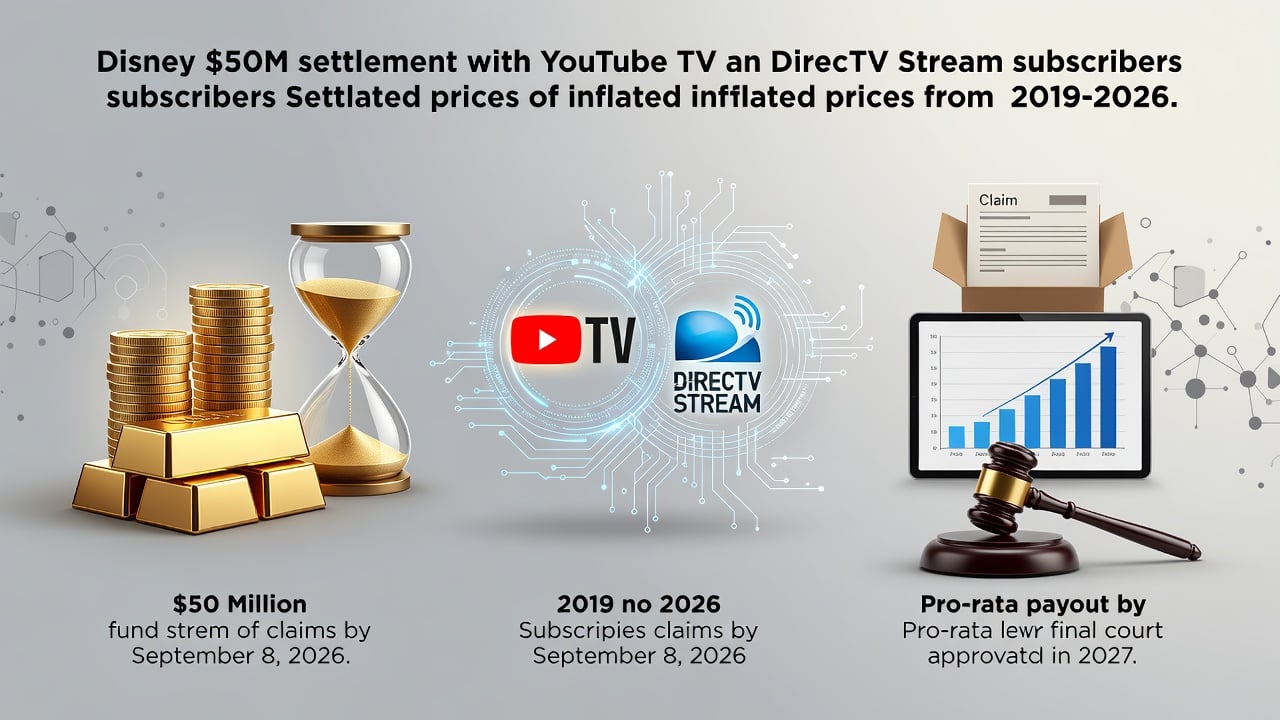
Millions of households that paid for live television streaming over the past seven years now have a narrow window to recover some of those costs. Disney has agreed to a $50 million partial settlement in a class-action lawsuit that accused the entertainment giant of using its control over popular channels to drive up subscription prices for services including YouTube TV and DirecTV Stream.
The case, filed in federal court in 2022, centered on claims that Disney forced distributors to include high-value networks like ESPN in base packages. That bundling allegedly left consumers with fewer affordable options and higher monthly bills across the industry. The Walt Disney Company denies any wrongdoing. Yet it chose to settle the YouTube TV and DirecTV Stream portions of the litigation.
But here’s the catch. Payments won’t arrive automatically. Eligible subscribers must file a claim by September 8, 2026. Miss that date and the opportunity vanishes. The final approval hearing sits on the calendar for January 14, 2027.
Anyone who purchased a YouTube TV subscription at any point from April 1, 2019, through March 31, 2026, qualifies for the YouTube TV Settlement Class. The same window applies to DirecTV Stream, DirecTV Now, and AT&T TV Now customers. People who subscribed to both services can submit claims for each. The official settlement site walks users through the process with an online portal or a printable form that can be mailed.
Payments will be calculated on a pro-rata basis. Longer subscriptions during the class period mean larger shares of the fund. Exact amounts remain unknown. They will depend on the total number of valid claims and the length of each person’s subscription. The settlement administrator will distribute funds only after the court grants final approval and any appeals are resolved.
The allegations painted a picture of market power. Disney’s ownership of ESPN, ABC, and Hulu gave it outsized influence, plaintiffs argued. Carriage negotiations often turned contentious. YouTube TV, for instance, saw its base package jump from $35 to $65 after it added Disney-owned channels, according to court documents reviewed by Ars Technica. Without those channels, the service could have been priced about $15 lower.
Similar dynamics played out with other distributors. Blackouts became a recurring threat during renewal talks. One such dispute reportedly cost Disney $110 million in lost revenue, a detail that underscored the high stakes for both sides. The lawsuit claimed these practices violated federal antitrust law and various state consumer-protection statutes. They inflated prices for streaming live pay television, the complaint said, harming subscribers who had few places to turn for live sports and local news.
Disney pushed back. The company maintained its negotiating positions were lawful. Still, it agreed to the $50 million payment plus certain non-monetary commitments. For three years after final approval, Disney said it would “consider” offering distributors the chance to carry fewer Disney channels, including ESPN, in future talks. That provision aims to give streaming services more flexibility. Whether it produces meaningfully cheaper options for consumers is an open question.
News of the settlement broke in late June 2026 and spread quickly. The Verge reported that four original YouTube TV subscribers brought the suit. Coverage from Fox Business and AL.com emphasized the broad eligibility net. Even people who canceled years ago could still qualify if they subscribed at any time in that seven-year span.
Recent updates show the story continues to draw attention. A July 6 report from WGN-TV reminded viewers that the fund covers subscribers of YouTube TV, DirecTV Stream, and originally FuboTV, though the FuboTV claims remain unresolved. Yahoo Finance Singapore published guidance yesterday on how to claim a share, noting the September deadline is approaching fast.
Industry watchers see this case as part of larger tension. Live TV streaming once promised to undercut cable. Yet channel costs kept rising. Sports rights, in particular, command massive fees. ESPN alone carries a hefty affiliate fee per subscriber. Distributors pass much of that expense along. When one player like Disney holds must-have content, the leverage tilts.
Plaintiffs hoped the litigation would force change. The settlement delivers cash relief but stops short of structural reform. No admission of liability. No guarantee of lower future prices. Still, for households squeezed by repeated rate hikes, even a modest payout offers some satisfaction. Small check. Real money back.
Claim filing looks straightforward. Visit onlinetvsettlement.com, enter basic information, and document subscription history if possible. Those without easy records can still file. The administrator will cross-check against available data. People who want to exclude themselves from the class must also meet the September 8 deadline. Doing so preserves the right to pursue separate litigation, though few are expected to take that path.
Objections to the settlement terms are due by December 1. The court will weigh those before the January hearing. Legal experts following the matter say approval is likely. Similar antitrust settlements in media have cleared final hurdles without major drama.
This episode fits a pattern. Tech and media giants increasingly face class actions over pricing power and consumer harm. Google, Amazon, and others have paid out in recent years. Here the focus lands on traditional entertainment content rather than algorithms or data. The outcome may influence how studios negotiate with streaming partners going forward.
Consumers face a simple choice now. Act before September 8 or forfeit the potential benefit. The fund is fixed. More claims mean smaller individual payments. Early filers won’t gain any advantage, but delay carries risk. Systems sometimes crash near deadlines. Records get lost.
So check your old statements. Log into the settlement portal. A few minutes of effort could return part of what higher bills took away. The case won’t reshape the industry overnight. It does, however, put a price tag on the years when streaming felt more like cable than the future once promised.


 WebProNews is an iEntry Publication