
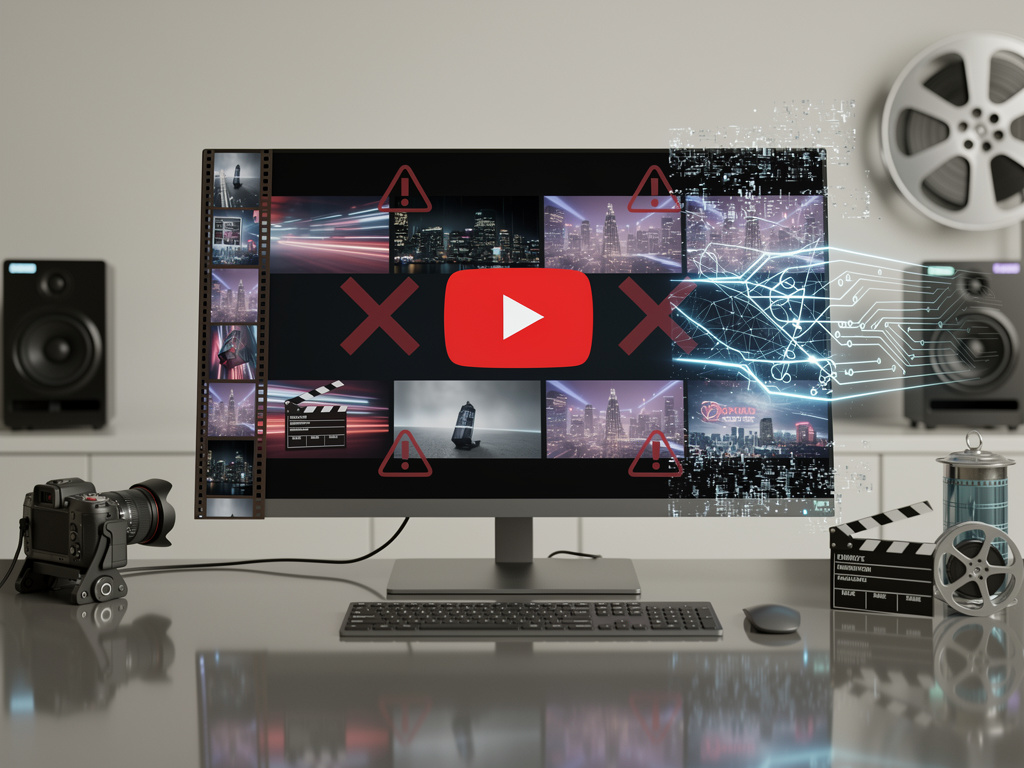
YouTube’s Crackdown on AI Phantoms: The Vanishing Act of Fake Trailer Empires
In the ever-evolving world of online video, YouTube has taken a decisive stand against content that blurs the line between reality and fabrication. This week, the platform terminated two major channels, Screen Culture and KH Studio, known for producing artificial intelligence-generated movie trailers that amassed millions of views and subscribers. These channels, which combined official film footage with AI-crafted elements to create misleading previews for non-existent movies, were shut down after repeated violations of YouTube’s policies on spam and misleading metadata. The move highlights growing tensions between technological innovation and content authenticity in the digital media sphere.
Screen Culture, boasting over 1.5 million subscribers, and KH Studio, with around 700,000 followers, had collectively garnered more than a billion views. Their videos often featured tantalizing “trailers” for imagined blockbusters, such as sequels to popular franchises or star-studded crossovers that never materialized. By leveraging AI tools to generate realistic imagery and voiceovers, these channels capitalized on audience curiosity, driving massive engagement. However, this success came at the cost of deceiving viewers and potentially infringing on intellectual property rights, as they incorporated clips from real films without proper authorization.
The terminations follow a pattern of enforcement actions. Earlier this year, in March 2025, YouTube initially demonetized both channels following an investigation by Deadline, which exposed how these operations were profiting from ad revenue while misleading audiences. Studios like Sony even stepped in, claiming portions of that revenue through YouTube’s content ID system. Despite the setback, the channels were temporarily reinstated after making adjustments, only to revert to their old practices, leading to their permanent removal.
The Rise of AI-Driven Deception in Video Content
The allure of these fake trailers lies in their ability to tap into fan desires for more content from beloved universes. For instance, KH Studio produced a viral “trailer” for a fictional “Barbie 2” featuring Margot Robbie and Ryan Gosling, blending AI-generated scenes with actual movie audio. Such creations not only confused casual viewers but also frustrated industry professionals who saw them as diluting the value of genuine marketing efforts. As reported by Ars Technica, YouTube’s spokesperson emphasized that while the platform supports AI innovation, it draws the line at content that misleads users or violates spam guidelines.
Industry insiders point out that this isn’t an isolated incident but part of a broader trend where AI tools democratize content creation, often at the expense of ethical boundaries. Channels like these operated from diverse locations—Screen Culture in India and KH Studio in Georgia—highlighting the global reach of such enterprises. They employed sophisticated AI software to manipulate visuals, creating seamless illusions that could fool even discerning eyes. This has sparked debates about the need for clearer regulations on AI use in media, especially as tools become more accessible.
Moreover, the economic incentives are undeniable. Before their demonetization, these channels earned substantial ad revenue from their high-viewership videos. An earlier Verge report detailed how some studios profited indirectly by claiming ad shares from the infringing content. This complex interplay between creators, platforms, and rights holders underscores the challenges in policing AI-generated material in a monetized ecosystem.
Policy Violations and Platform Accountability
YouTube’s policies explicitly prohibit misleading metadata, such as titles and thumbnails that promise content not delivered in the video. In the case of Screen Culture and KH Studio, their trailers were often labeled as “official” or “concept” previews, leading viewers to believe they were authentic. This deception not only erodes trust but also clutters search results, making it harder for legitimate content to surface. A statement from YouTube, as quoted in multiple outlets, clarified that after an initial suspension and reinstatement, the channels’ return to violative behavior prompted their termination.
The platform’s enforcement mechanisms rely on a combination of automated systems and human review, but critics argue that AI-generated content poses unique challenges. For example, detecting manipulated footage requires advanced algorithms, which YouTube is continually refining. Insiders familiar with the company’s operations note that recent updates to its AI detection tools have improved accuracy, yet false positives and negatives remain a concern. This balancing act is crucial as YouTube navigates pressure from creators who advocate for creative freedom.
Furthermore, the fallout extends to the broader creator economy. Many YouTubers fear that stringent rules could stifle innovation, particularly in fan fiction or speculative content. However, proponents of the ban argue that without such measures, the platform risks becoming a haven for misinformation. Recent posts on X reflect mixed sentiments, with some users lamenting the loss of entertaining “what-if” scenarios, while others applaud the crackdown on what they term “AI slop.”
Industry Reactions and Broader Implications
Hollywood studios have been vocal about the issue, viewing these fake trailers as a threat to their branding and revenue streams. By mimicking official marketing, such content can confuse audiences and diminish excitement for real releases. As detailed in a San Francisco Chronicle piece, this termination represents a victory for creatives battling AI encroachment. Executives from major studios have lobbied platforms like YouTube to enhance protections, leading to collaborative efforts on content verification.
On the flip side, defenders of the banned channels, including KH Studio’s founder, have argued that their work is akin to fan art or conceptual design, not intended to deceive. In interviews cited across media, the founder expressed disappointment, claiming significant personal investment in the content. This perspective raises questions about where to draw the line between harmless creativity and harmful misinformation, especially in an era where AI blurs those boundaries.
The incident also shines a light on international aspects, with channels operating from regions with varying copyright laws. This global dimension complicates enforcement, as YouTube must navigate diverse legal frameworks while maintaining uniform policies. Experts suggest that future solutions might involve watermarking AI-generated content or mandatory disclosures, ideas that are gaining traction in industry forums.
Economic Ripples and Future Safeguards
Financially, the bans disrupt a lucrative niche. With over a billion views, these channels represented a micro-economy built on viral deception. Ad revenue, estimated in the hundreds of thousands annually per channel based on viewership metrics, now evaporates, serving as a deterrent to similar ventures. Analysts predict a shift toward more transparent AI use, perhaps through dedicated labels or partnerships with studios for official concept art.
Looking ahead, YouTube’s actions could set precedents for other platforms. Competitors like TikTok and Instagram Reels face similar issues with AI deepfakes and manipulated media. Regulatory bodies, including those in the EU with its AI Act, are watching closely, potentially influencing global standards. Insiders speculate that YouTube might integrate more robust AI ethics training for creators as part of its partner program.
Public sentiment, as gleaned from recent X discussions, shows a divide: enthusiasts mourn the creative output, while skeptics highlight the risks of normalized deception. This controversy underscores the need for ongoing dialogue between tech giants, creators, and regulators to foster an environment where innovation thrives without compromising integrity.
Technological Evolution and Ethical Frontiers
At the heart of this saga is the rapid advancement of AI technologies. Tools like Stable Diffusion for images and voice synthesis software enable anyone to produce professional-grade content with minimal resources. This democratization empowers independent creators but also amplifies misuse. YouTube’s response, as covered in CNET, emphasizes the platform’s commitment to user trust, even as it promotes AI features in its own ecosystem, such as auto-generated captions.
Ethical considerations are paramount. Questions arise about consent for using actors’ likenesses in AI creations, echoing broader debates in Hollywood over deepfake protections. Unions like SAG-AFTRA have pushed for safeguards, and this ban could bolster their case. Moreover, the environmental impact of AI computation—often overlooked—adds another layer, with energy-intensive models contributing to carbon footprints.
In response, some creators are pivoting to ethical AI applications, such as educational content or genuine fan theories without misleading elements. This adaptation could redefine content strategies, encouraging transparency to build loyal audiences.
Navigating the Post-Ban Era
Post-termination, the digital void left by Screen Culture and KH Studio might be filled by copycats, prompting YouTube to ramp up monitoring. The platform’s algorithm, which once promoted these videos for their engagement, now faces scrutiny for amplifying deceptive content. Adjustments to recommendation systems could prioritize verified sources, altering visibility for niche creators.
For industry insiders, this event signals a maturation of the AI-content nexus. Workshops and guidelines from organizations like the Motion Picture Association are emerging to educate on responsible AI use. Collaborations between tech firms and entertainment entities might yield hybrid models, where AI enhances rather than fabricates marketing.
Ultimately, this crackdown reflects a pivotal moment in digital media governance. As AI capabilities expand, platforms like YouTube must evolve their defenses to preserve authenticity, ensuring that the thrill of discovery remains grounded in truth rather than illusion. The ongoing discourse will likely shape policies that balance creativity with accountability, influencing the future of online entertainment for years to come.


 WebProNews is an iEntry Publication