
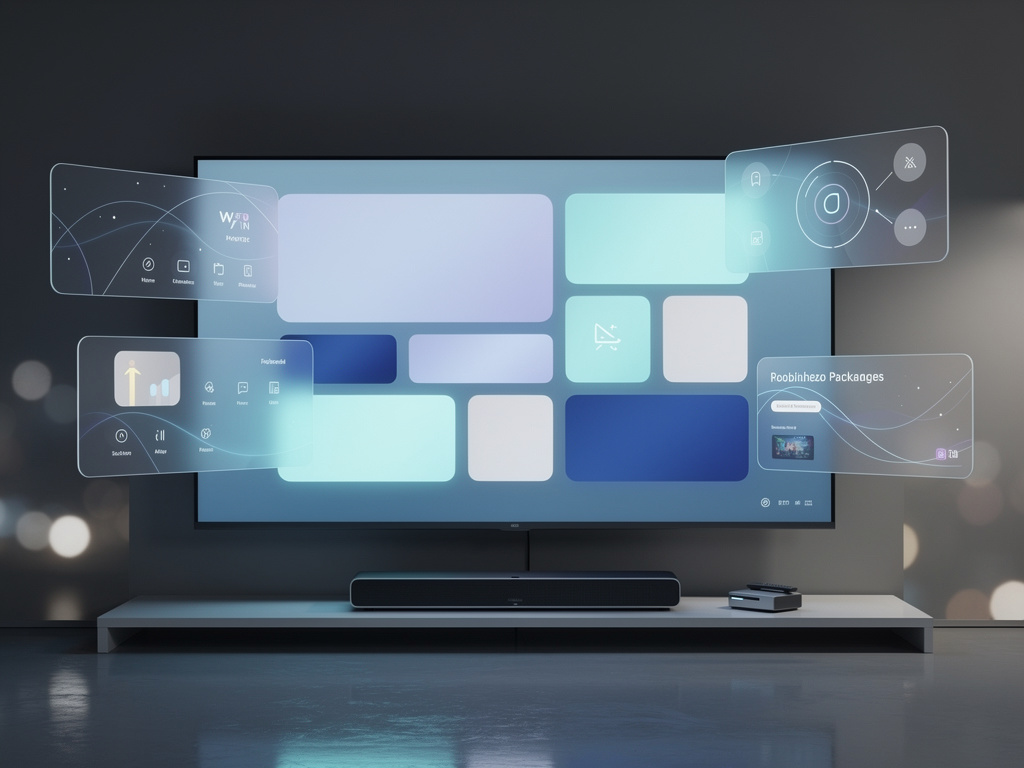
YouTube’s Living Room Revolution: Redesigning the Big Screen Experience
In an era where streaming services vie for dominance in home entertainment, YouTube has unveiled a significant update to its TV app, focusing on the watch screen to enhance user navigation and interaction. This redesign, announced recently, aims to make the viewing experience more intuitive, addressing long-standing complaints about clunky interfaces on larger screens. Drawing from user feedback and evolving viewing habits, the update introduces a cleaner layout that minimizes disruptions while watching videos, whether it’s a casual vlog or a live event.
The core of this overhaul lies in reorganizing on-screen controls into streamlined sections below the video scrubber, allowing users to access key features without pausing their content. As reported by The Verge, the new interface promises “a more intuitive experience with easier navigation,” featuring dynamic layouts that adapt to different types of content like music videos or sports broadcasts. This adaptive approach ensures that elements such as chapter markers, comments, and shopping options appear contextually, reducing clutter and improving accessibility on smart TVs.
Beyond aesthetics, the update incorporates subtle but impactful changes, such as improved button placements for likes, shares, and subscriptions, making it simpler to engage with content from the couch. Industry observers note that this move aligns with broader trends in connected TV platforms, where seamless integration is key to retaining viewers amid fierce competition from rivals like Netflix and Hulu.
Adapting to Viewer Demands
YouTube’s decision to revamp its TV interface comes at a pivotal time, as more consumers shift toward over-the-top services for their primary viewing. Recent data suggests that smart TV usage has surged, with households increasingly relying on apps like YouTube for everything from educational content to live sports. The update builds on previous enhancements, such as the ability to upscale standard-definition videos to 1080p, which was highlighted in posts on X from YouTube’s official accounts, emphasizing better quality for older catalogs without requiring high-end hardware.
TechRadar, in its coverage, outlined five key upgrades that make this redesign a “long-promised makeover,” including refined progress bars and gesture-based controls that feel more natural on remote-operated devices. According to TechRadar, these improvements address pain points like accidental pauses or buried menus, which have frustrated users for years. For instance, the new layout groups related actions—such as viewing descriptions or related videos—into collapsible panels, allowing for a fuller immersion in the content itself.
This isn’t just a cosmetic tweak; it’s a strategic response to analytics showing that TV viewing accounts for a growing portion of YouTube’s watch time. Insiders point out that with the platform’s vast library, optimizing for big screens could boost engagement metrics, particularly among families and casual viewers who prefer lean-back experiences over mobile swiping.
Echoes from Recent Updates
Looking back, YouTube TV has been on a roll with interface refinements. Just last month, as detailed by Android Police, the service refreshed its Live Guide on mobile apps, introducing a more visually appealing and informative layout for channel browsing. Android Police noted that while some users might resist the change due to familiarity with the old design, the update provides quicker access to program details, which could translate to higher retention during live events like sports or news.
Pocket-lint echoed this sentiment, urging users to update their apps immediately for what it calls a “free upgrade” with enhanced controls and a modern aesthetic. The piece from Pocket-lint highlights how the watch screen now integrates better with voice commands and smart home ecosystems, potentially setting a new standard for accessibility in streaming.
Moreover, Cord Cutters News compiled a roundup of November’s changes, including resolved contract disputes that restored full content access. As per Cord Cutters News, these updates collectively aim to make YouTube TV a more reliable alternative to traditional cable, especially as prices for the base service hover around $83 per month.
Strategic Implications for Content Creators
For creators, this redesign opens new avenues for audience interaction. Higher-resolution thumbnails, now supporting up to 50MB file sizes as announced in X posts by YouTube Creators, mean visuals can pop on larger displays, potentially increasing click-through rates. This ties into smarter search algorithms and immersive channel previews, which were teased in updates aimed at making content discovery more engaging on TVs.
The Street reported on subscriber feedback driving these changes, with users quickly noticing improvements like customizable multiview options for sports and non-sports content. The Street emphasized how such features fulfill long-standing requests, enhancing YouTube’s appeal in a crowded market where personalization is paramount.
From an industry perspective, this update positions YouTube against competitors investing heavily in user interface innovations. For example, while Apple TV+ focuses on cinematic quality, YouTube’s strength lies in its user-generated ecosystem, and this redesign leverages that by making navigation feel less like browsing a website and more like traditional TV channel surfing.
Looking Ahead to 2026 Expansions
Peering into the future, YouTube has bigger plans on the horizon. MacRumors revealed that starting in early 2026, the service will introduce over 10 genre-specific packages, beginning with a sports bundle featuring ESPN networks at a lower price point than the full subscription. This move, as covered by MacRumors, could democratize access to premium content, appealing to niche audiences like sports enthusiasts or news junkies.
Livemint expanded on this, describing it as a “major redesign” that offers flexibility in an increasingly fragmented viewing environment. According to Livemint, these themed plans aim to counter rising costs and subscriber churn by letting users tailor their packages, potentially reshaping how live TV is consumed.
USA Today noted the inclusion of family-oriented and entertainment bundles, signaling YouTube’s intent to capture diverse demographics. USA Today highlighted how this consumer-friendly approach could pressure other providers to follow suit, fostering more competition in affordable streaming options.
User Sentiment and Market Reactions
Social media buzz, particularly on X, reflects enthusiasm for these changes. Posts from tech influencers and official YouTube accounts praise the intuitive navigation and reduced interruptions, with one viral thread from vidIQ breaking down how creators can optimize for the new TV-friendly features. This sentiment underscores a positive reception, though some users express nostalgia for older layouts, as seen in scattered complaints about adaptation curves.
PCMag provided visuals of the rollout, confirming that the redesign, first teased during YouTube’s 20th anniversary, is now widely available. PCMag described the interface as sleeker, with on-screen elements that fade intelligently to keep the focus on the video.
In terms of market impact, analysts suggest this could bolster YouTube’s ad revenue, as better engagement on TVs translates to longer watch sessions. With connected TV advertising projected to grow substantially, these interface tweaks are more than skin-deep—they’re a calculated bet on where viewers will spend their time.
Technological Underpinnings and Challenges
Delving deeper, the technical backbone of this update involves advanced algorithms for dynamic content adaptation. For live sports, the interface might prioritize real-time stats, while music videos could highlight lyrics or artist info. This granularity requires robust backend processing, leveraging Google’s cloud infrastructure to deliver personalized experiences without lag.
However, challenges remain. Not all smart TVs may support the update seamlessly, particularly older models, potentially leading to fragmentation. MobileSyrup touched on this, noting that while navigation is easier, compatibility testing is crucial for widespread adoption. MobileSyrup praised the controls but cautioned that users should check for app updates to avoid glitches.
Comparatively, platforms like Roku or Amazon Fire TV have their own navigation paradigms, but YouTube’s integration across devices gives it an edge. Insiders speculate that future iterations might incorporate AI-driven recommendations directly into the watch screen, further blurring lines between passive viewing and interactive media.
Broadening Horizons in Streaming
As YouTube evolves, its TV app redesign signals a commitment to innovation in a maturing market. By prioritizing user-centric features, the platform not only retains its massive audience but also attracts cord-cutters seeking alternatives to pricey cable bundles. The upcoming 2026 packages, with their focus on affordability, could accelerate this shift, making high-quality content accessible without the full commitment.
Feedback loops from X and other forums will likely influence refinements, as YouTube has a history of iterating based on community input. For example, earlier enhancements like collaborative playlists and picture-in-picture for shorts, mentioned in posts by tech leakers, show a pattern of responsive development.
Ultimately, this update reinforces YouTube’s role as a versatile hub for entertainment, education, and more. As viewing habits continue to diversify, such adaptations ensure the platform remains relevant, bridging the gap between mobile-first origins and big-screen aspirations. With these changes, YouTube isn’t just updating an app—it’s redefining how we interact with video in our living rooms, one intuitive click at a time.


 WebProNews is an iEntry Publication