
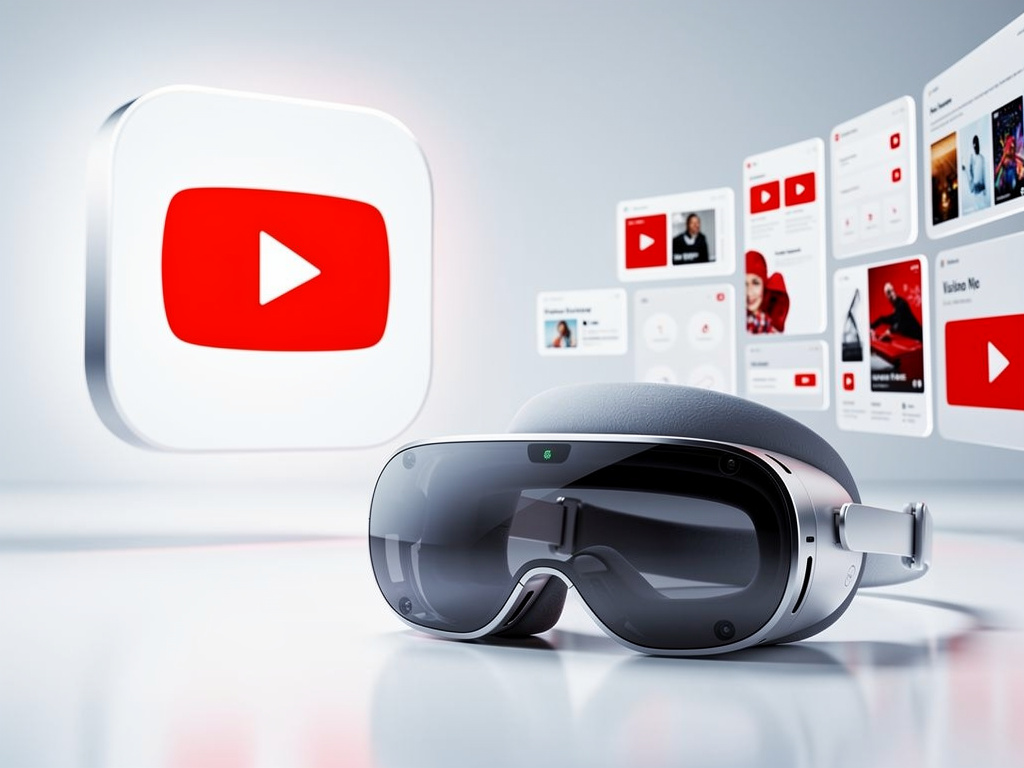
For more than 17 months, owners of Apple’s $3,499 Vision Pro headset have been forced into an awkward workaround just to watch YouTube — opening Safari, navigating to the website, and streaming videos through a browser window floating in their mixed-reality environment. That era is now over. Google has officially launched a native YouTube app for Apple Vision Pro, but the protracted delay tells a far more consequential story about the strategic chess match between two of the world’s most powerful technology companies.
The new YouTube app for visionOS, Apple’s spatial computing operating system, arrived in the App Store in late June 2025, as first reported by Lifehacker. The app brings the full YouTube experience to the headset, including access to subscriptions, YouTube Premium features, and the ability to watch videos on a large virtual screen — capabilities that were either degraded or entirely absent when users relied on the Safari browser workaround.
A Conspicuous Absence That Spoke Volumes
When Apple launched the Vision Pro in February 2024, the absence of a native YouTube app was immediately noticeable. YouTube is the world’s largest video platform, with more than 2.7 billion monthly active users globally. For a device whose primary selling proposition is immersive media consumption — watching movies, streaming content, and experiencing spatial video — the lack of YouTube was more than an inconvenience. It was an indictment of the fraught relationship between Apple and Google.
Google had declined to build a native YouTube app for visionOS, and it also blocked its existing iPad app from running in compatibility mode on the Vision Pro. Apple’s headset supports many iPad apps out of the box, but developers can opt out of this compatibility layer, and Google chose to do exactly that. The move was widely interpreted as a deliberate strategic decision rather than a technical limitation. Google also withheld its other major apps, including Google Maps and Gmail, from the platform at launch.
The Browser Workaround and Its Limitations
In the interim, Vision Pro owners had to make do with YouTube’s web interface through Safari. While functional, the experience was notably inferior to what a native app could provide. As Lifehacker detailed, the browser-based approach lacked the polish, performance optimizations, and deep system integration that a purpose-built visionOS application can deliver. Features like picture-in-picture, background playback for Premium subscribers, and seamless account management were either clunky or missing entirely.
The workaround also underscored a broader tension in the Vision Pro’s app ecosystem. At launch, Apple touted more than 600 apps and games designed specifically for visionOS, along with more than 1.5 million compatible iPad and iPhone apps. But the conspicuous absence of apps from Google, along with the lack of a native Netflix app (Netflix similarly opted out of compatibility mode), meant that two of the most important media platforms in the world were effectively boycotting Apple’s newest hardware category.
Why Google Finally Relented
Google has not publicly detailed its reasoning for the timing of the YouTube app’s release, but several factors likely contributed to the decision. First, Apple has continued to iterate on visionOS, releasing updates that improve developer tools and expand the platform’s capabilities. The upcoming visionOS 3, previewed at WWDC 2025 in June, introduces new spatial computing features that make the platform more attractive for content creators and app developers alike.
Second, and perhaps more pragmatically, Google may have recognized that withholding YouTube from Vision Pro was hurting its own platform more than Apple’s. YouTube generates revenue through advertising and Premium subscriptions, and every Vision Pro user watching YouTube through Safari rather than a native app represented a suboptimal monetization opportunity. Native apps allow for better ad targeting, more reliable playback analytics, and deeper integration with subscription services — all of which flow directly to Google’s bottom line.
The Platform Economics Behind the Standoff
The YouTube-Vision Pro saga is best understood within the context of the broader economic tensions between Apple and the companies that build apps for its platforms. Apple’s App Store takes a commission of up to 30% on in-app purchases and subscriptions, a policy that has drawn antitrust scrutiny, regulatory action in the European Union, and a landmark lawsuit from Epic Games. Google, which operates its own app marketplace with a similar commission structure on Android, is both a competitor to Apple and one of its most important app partners.
For Google, building a native YouTube app for Vision Pro means accepting Apple’s platform rules, including its commission structure and its control over the user experience. By delaying the app, Google may have been signaling its displeasure with Apple’s terms or simply waiting to see whether the Vision Pro would gain enough market traction to justify the development investment. The Vision Pro’s high price point has limited its adoption to a relatively small audience of early adopters, developers, and enterprise users, making the calculus different from building for the iPhone’s installed base of more than a billion devices.
What the Native App Delivers
The native YouTube app for visionOS offers a meaningfully better experience than the browser alternative. Users can browse their subscription feeds, access their library, and search for content using the Vision Pro’s eye-tracking and hand-gesture input system, which is far more natural than trying to navigate a web page designed for mouse and keyboard interaction. The app supports YouTube’s theater mode, allowing users to watch videos on a massive virtual screen that can be resized and repositioned in their physical space.
For YouTube Premium subscribers, the app delivers ad-free playback, offline downloads, and background audio — features that were unreliable or impossible through Safari. The app also supports spatial audio, taking advantage of the Vision Pro’s advanced audio system to create a more immersive viewing experience. These are not trivial improvements; for a device that costs $3,499, users rightly expect premium experiences from the world’s most popular content platforms.
Implications for the Spatial Computing Ecosystem
YouTube’s arrival on Vision Pro could have a catalytic effect on the broader visionOS app ecosystem. Google’s decision to build for the platform may encourage other holdout developers to reconsider their own positions. Netflix, which has steadfastly refused to build a native Vision Pro app, may face renewed pressure from users and from Apple itself to follow suit. The streaming giant has maintained that users can access Netflix through Safari, but the YouTube app’s launch makes that position increasingly untenable as a long-term strategy.
Apple is also reportedly working on a more affordable version of its spatial computing headset, potentially priced closer to $2,000, which could significantly expand the user base and make the platform more attractive to developers. A larger installed base would shift the economic calculus for companies like Google and Netflix, making the development investment easier to justify. Reports from Bloomberg’s Mark Gurman have suggested that a lower-cost Apple headset could arrive as early as 2026.
The Bigger Picture for Apple and Google
The YouTube app’s delayed arrival on Vision Pro is a microcosm of the complex, interdependent relationship between Apple and Google. Google pays Apple an estimated $20 billion per year to remain the default search engine in Safari, a deal that is itself under antitrust scrutiny following the U.S. Department of Justice’s case against Google’s search monopoly. The two companies compete fiercely in mobile operating systems, cloud services, and increasingly in artificial intelligence, yet they remain deeply intertwined economically.
For Vision Pro owners, the strategic maneuvering between these two giants has real consequences. For 17 months, they were denied a native YouTube experience on a device explicitly designed for immersive media consumption. The app’s arrival is welcome, but it also serves as a reminder that in the platform economy, users are often caught in the crossfire of corporate power struggles they have no ability to influence.
The YouTube app for Apple Vision Pro is available now as a free download from the App Store. Users who already have a YouTube Premium subscription can sign in to access the full suite of premium features immediately.


 WebProNews is an iEntry Publication