
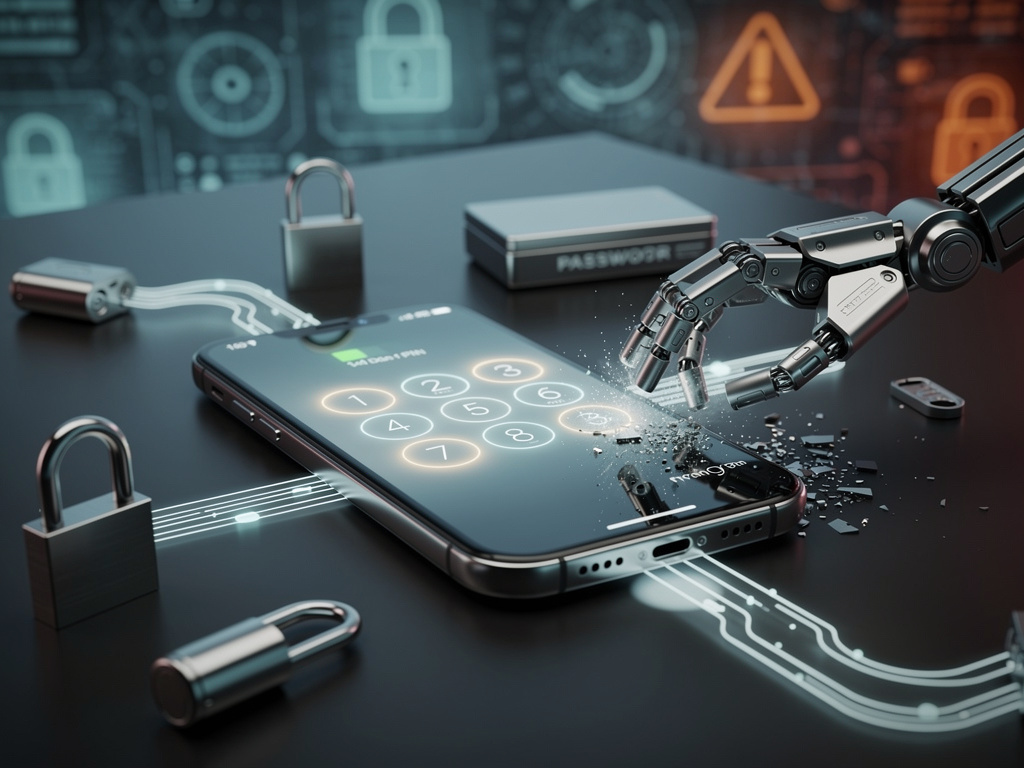
A thief grabs your phone from a cafe table. Or a hacker gains physical access during a break-in. Suddenly all those complex, unique passwords you crafted with care sit exposed. Not because a website got breached. But because your device unlock code consists of just four numbers.
That scenario plays out more often than security teams admit. Smartphones hold the keys to email, banking, corporate systems, and increasingly passkeys that replace traditional logins. Yet millions rely on simple PINs for daily convenience. Four digits. Ten thousand possibilities. A determined attacker cracks many in minutes with off-the-shelf tools.
MakeUseOf laid out the problem plainly in an article published today. Your phone often serves as the master key. Apple’s Passwords app and Google’s Password Manager tie directly to the device passcode. Biometrics fail in rain, with dirty hands, or behind sunglasses. The fallback? That short PIN. Enter it correctly once and the entire password library opens.
Passkeys promised better security. Cryptographic keys stay on the device. No shared secrets cross the internet. Yet they still require authorization through the phone’s unlock mechanism. A weak device code renders the theoretical strength meaningless. The private key never leaves the phone, true. But if the phone itself falls so easily, the advantage disappears.
Short. That’s the word. Four digits equal convenience. They also equal vulnerability. Pattern locks fare little better. Six-digit PINs improve the odds somewhat. Eight or more push the combinations into territory where brute force slows dramatically. Alphanumeric codes raise the bar higher still.
But users resist. Muscle memory favors quick entry. Biometrics spoiled us with speed. When those sensors flake out, frustration mounts. So people pick birthdays. Or 1234. Or the same four numbers they use for their bank card. Public information and shoulder surfing do the rest.
Recent data paints a grim picture. Huntress reported in March that 35% of hacking victims blame weak passwords. Nearly 30% lost credentials through reuse. Those figures focus on accounts. Device locks compound the damage because phones aggregate everything.
Heimdal Security noted last December that 94% of passwords show duplication across sites. One breach, one weak link on the phone, and attackers move laterally with ease. In 2024, over 80% of data breaches involved stolen or weak credentials according to multiple analyses carried forward into 2026 reports.
Physical attacks add another vector. Forensic tools bypass rate limits on many Android devices through offline methods or hardware interfaces. Researchers demonstrated HID brute-force systems achieving success rates around 66% across tested phones. The attacks run via USB-OTG, automatically detecting unlocks and resuming without manual babysitting on some models.
Android’s attempt limits exist but prove inconsistent. Some devices impose delays after five failed tries. Others wipe after too many. Yet specialized modules extract data without triggering those defenses fully. iPhones add escalating delays and eventual data destruction options. Still, a four-digit code leaves little margin.
Switching to stronger device authentication changes the equation.
Android users head to Settings, then Security, and adjust screen lock options. They can select longer numeric codes or full alphanumeric passwords. iOS offers similar controls under Face ID & Passcode, with options for custom lengths. Eight digits multiply possibilities by a factor of 100 over four. Sixteen characters with mixed symbols make exhaustive search impractical without massive resources.
Third-party password managers add separation. They require their own master credential independent of the device code. An attacker needs both. That extra step buys time and raises complexity. Bitwarden, 1Password and competitors have pushed this model for years.
Yet adoption lags. Convenience wins daily arguments. People forget that phones contain more than social media. Health records. Work documents. Financial apps. Two-factor codes arrive there first. Lose the device unlock and the rest follows.
Biometrics help until they don’t. Law enforcement can sometimes compel fingerprints or faces. Courts debate passwords differently. Security experts on X repeatedly advise PINs or passphrases over biometrics for this reason. One post noted warrants target biometrics more readily than forcing someone to reveal a code.
Passkeys gained traction in 2025 and 2026. Major sites rolled them out. They resist phishing because no password travels. But again, device security anchors the system. A compromised phone hands over authorization for every linked account.
The numbers don’t lie. Ten thousand combinations for four digits. Modern hardware tests thousands per second even with delays. Tools available to law enforcement and sophisticated criminals shrink the window further. Eight digits jump to 100 million. Time required stretches into hours or days depending on throttling.
Organizations face similar issues with employee phones. Corporate data lives in apps protected by device locks. A lost phone with a weak PIN hands over access. Policies mandating longer codes or full passwords exist in high-security environments. They should spread.
Users can start small. Change the PIN today. Pick something unrelated to personal dates. Enable full-disk encryption if not already active. Use a password manager that stands alone. Treat the device code as the primary vault key rather than an afterthought.
Security improves through layers. Strong account passwords matter. Unique ones matter more. Yet none survive if the phone opens with minimal effort. That four-digit habit undermines every other defense. Break it. The effort pays off the first time someone tries and fails.
Industry reports from 2026 show no slowdown in credential-based attacks. AI tools guess common patterns faster than ever. Reuse remains rampant. Phones sit at the center of personal digital lives. Their locks deserve the same scrutiny given to bank logins.
Brady Snyder wrote the MakeUseOf piece with clear examples from daily use. Sunglasses blocking Face ID. Wet hands defeating fingerprint readers. Those moments happen constantly. The fallback must hold.
So does the math. Four digits invite attack. Longer codes deter it. The choice sits in settings menus waiting for attention. Ignore it and even the best password hygiene fails at the first physical breach.


 WebProNews is an iEntry Publication