
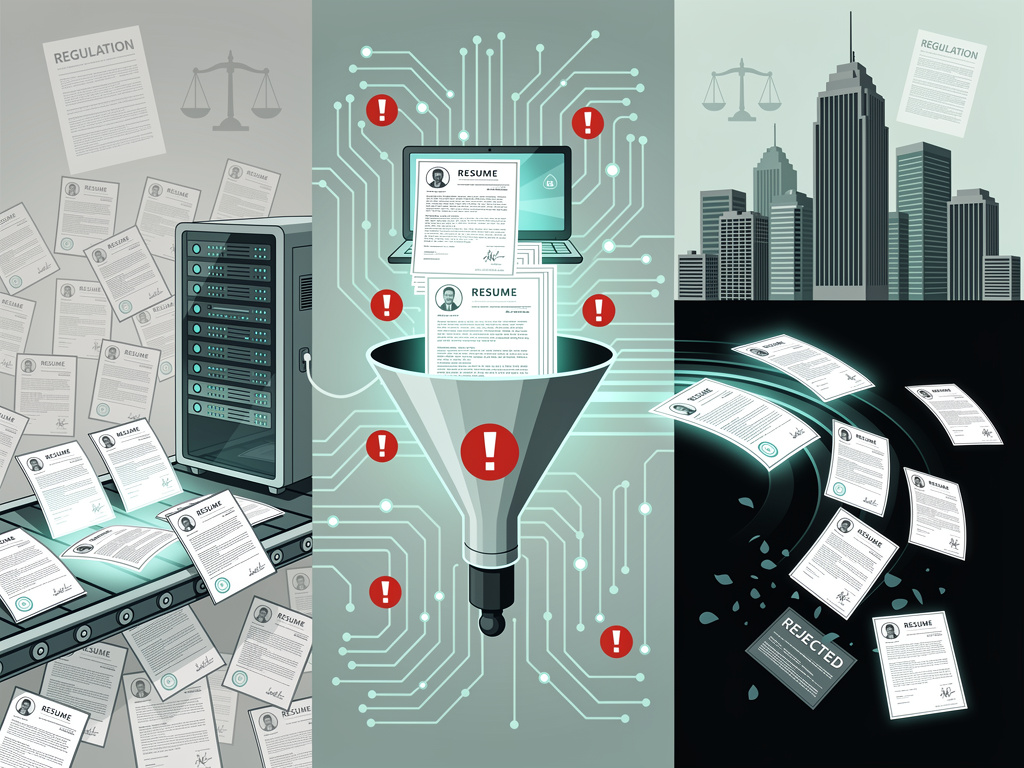
For decades, the hiring process followed a familiar rhythm: a candidate submitted a résumé, a human recruiter scanned it, and a decision was made — sometimes fairly, sometimes not. Now, a growing number of companies are handing that first critical screening to artificial intelligence systems, and the consequences for job seekers are becoming impossible to ignore. According to recent reporting and industry data, AI-powered applicant tracking systems are filtering out qualified candidates at alarming rates, raising serious questions about whether automation is solving the hiring problem or simply creating a new one.
A recent report from Mashable laid bare the scope of the issue: AI tools used to screen job applications are now ubiquitous among large employers, with an estimated 99% of Fortune 500 companies using some form of automated applicant tracking system (ATS). These systems are designed to reduce the burden on human recruiters who may receive hundreds or even thousands of applications for a single position. But the technology’s blunt-force approach to filtering candidates has sparked a backlash among job seekers, career coaches, and even some hiring managers who worry that good talent is being systematically excluded.
The Rise of the Algorithmic Gatekeeper
The logic behind AI-powered hiring tools is straightforward enough. When a company posts a job opening, it can be inundated with applications within hours. Human recruiters simply cannot read every résumé in detail, so companies have turned to software that scans documents for keywords, qualifications, and formatting cues. Candidates whose résumés don’t match the algorithm’s criteria are rejected automatically — often without any human ever seeing their application.
The problem, as Mashable reported, is that these systems are far from perfect. Studies have shown that qualified candidates are routinely screened out because their résumés don’t contain the exact phrasing the algorithm is looking for, or because their formatting confuses the software. A Harvard Business School study found that automated screening systems reject more than 10 million workers per year who would otherwise be qualified for the roles they applied to. The study described these individuals as “hidden workers” — people with the skills and experience to do the job, but who are invisible to the machines making the first cut.
How Keywords Became King — and Why That’s a Problem
The keyword-matching approach that underpins most ATS platforms has created a strange new dynamic in the labor market. Job seekers are now advised by career coaches to tailor their résumés obsessively to each job posting, stuffing their documents with specific terms pulled directly from the listing. An entire cottage industry of résumé optimization services has sprung up, promising to help candidates “beat the bots.” Some services charge hundreds of dollars to reformat and rewrite résumés so they are more likely to pass through automated filters.
This arms race between applicants and algorithms has produced absurd outcomes. Some candidates have resorted to hiding keywords in white text on their résumés — invisible to the human eye but readable by machines. Others have reported being rejected from jobs for which they are overqualified, simply because they used a slightly different job title or described their experience in a way the software didn’t recognize. The situation has become so pervasive that it has fueled widespread frustration on platforms like LinkedIn and X (formerly Twitter), where job seekers regularly share stories of applying to dozens or even hundreds of positions without receiving a single response.
Bias Baked Into the Code
Beyond the keyword problem, there are deeper concerns about bias embedded in AI hiring tools. Because these systems are often trained on historical hiring data, they can perpetuate and even amplify existing patterns of discrimination. Amazon famously scrapped an internal AI recruiting tool in 2018 after discovering it systematically downgraded résumés from women. The system had been trained on a decade of hiring data that reflected the company’s historically male-dominated workforce, and it learned to penalize résumés that included words like “women’s” — as in “women’s chess club captain.”
The Amazon case was a high-profile example, but researchers say the problem is widespread. A 2024 report from the Brookings Institution noted that AI hiring tools can discriminate based on race, gender, age, and disability status in ways that are difficult to detect and even harder to challenge. Because the algorithms operate as black boxes, candidates who are rejected rarely know why, and they have limited recourse to appeal. The Equal Employment Opportunity Commission (EEOC) has signaled increased scrutiny of AI in hiring, but regulatory frameworks remain patchy and largely untested in court.
The Job Seeker’s Mounting Frustration
The human toll of automated screening is significant. According to data cited by multiple outlets, the average corporate job posting now attracts around 250 applications, and the average applicant sends out dozens of résumés before landing an interview. For many workers — particularly those re-entering the workforce, changing careers, or coming from non-traditional backgrounds — the AI filter has become an almost impenetrable barrier.
Career coaches and workforce development experts have begun sounding alarms. The issue is not just that qualified people are being rejected; it’s that the rejection is silent. Most ATS platforms send generic “we’ve decided to move forward with other candidates” emails, if they send anything at all. Job seekers are left in a void, unable to determine whether their application was reviewed by a person, flagged by an algorithm, or simply lost in a digital queue. This opacity breeds cynicism and disengagement, particularly among younger workers who are entering the job market for the first time and finding it bewilderingly unresponsive.
Companies Are Starting to Reconsider
Some employers are beginning to acknowledge that their reliance on AI screening may be costing them talent. A growing number of mid-sized firms have started experimenting with alternative approaches, including skills-based assessments, structured interviews conducted earlier in the process, and even returning to more human-intensive initial reviews for critical roles. The logic is simple: if the automated filter is rejecting 75% of applicants before a recruiter ever sees them, the company may be losing access to the very candidates it needs most.
There is also a growing movement among HR technology vendors to build more nuanced AI tools. Some newer platforms claim to evaluate candidates based on skills and potential rather than keyword matching alone, using natural language processing to understand the substance of a résumé rather than just scanning for specific terms. Whether these next-generation tools will meaningfully improve outcomes remains to be seen, but the market demand for better solutions is clear.
Regulation Lags Behind the Technology
Governments are slowly waking up to the implications of AI in hiring. New York City implemented Local Law 144 in 2023, which requires employers using automated employment decision tools to conduct annual bias audits and notify candidates when AI is being used to evaluate them. The European Union’s AI Act, which is being phased in through 2026, classifies AI systems used in employment as “high-risk” and imposes strict transparency and accountability requirements. Illinois and Maryland have also passed laws restricting certain uses of AI in hiring, particularly the use of AI-analyzed video interviews.
But enforcement remains a challenge. Many companies are unsure how to comply with the new rules, and the technology is evolving faster than regulators can keep up. Legal experts say it may take years of litigation before clear standards emerge for what constitutes lawful use of AI in employment decisions. In the meantime, millions of job seekers are left to contend with a system that was designed to make hiring more efficient but may, in practice, be making it less fair.
What Job Seekers Can Do Right Now
While the systemic issues are unlikely to be resolved quickly, career experts offer practical advice for candidates trying to get past the AI gatekeepers. First, they recommend using standard résumé formats — no tables, columns, headers, footers, or graphics that might confuse parsing software. Second, candidates should mirror the language of the job posting as closely as possible, incorporating specific terms and phrases that the ATS is likely programmed to detect. Third, networking remains the single most effective way to bypass automated screening entirely; a referral from an existing employee can move a résumé directly to a hiring manager’s desk.
The broader question, though, is whether a hiring system that requires candidates to game an algorithm just to be seen by a human being is one that serves anyone well — employers included. As the labor market tightens in certain sectors and companies struggle to fill skilled positions, the cost of over-reliance on automated screening is becoming harder to ignore. The machines were supposed to find the best candidates faster. Instead, they may be ensuring that the best candidates never get found at all.


 WebProNews is an iEntry Publication