
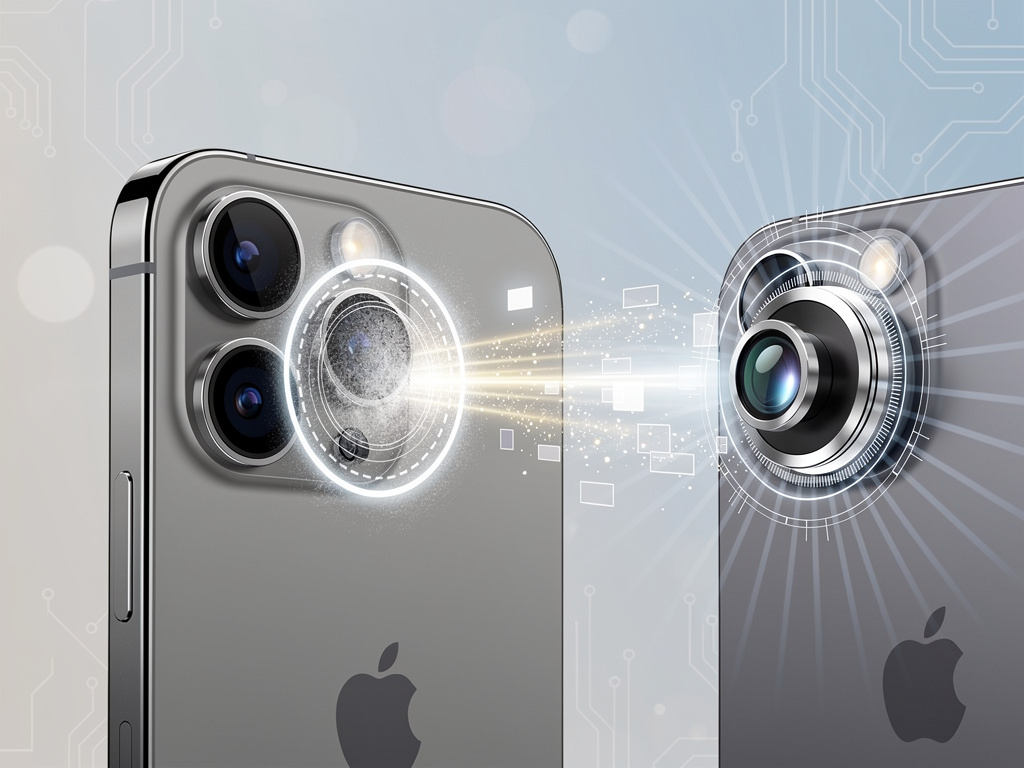
Apple has never been shy about telling its users what to do. Charge your battery. Update your software. Stand up and move around. Now, with iOS 18.4, the company has added a new kind of nudge to its repertoire: your iPhone will alert you when your camera lens is dirty, smudged, or obstructed before you take a photo.
It sounds almost comically mundane. A trillion-dollar company engineering a feature to tell you to wipe your phone. But beneath the surface lies a calculated move that reflects Apple’s deepening investment in computational photography, its obsession with perceived image quality, and its quiet campaign to make the iPhone camera the only camera most people will ever need.
A Smudge Too Far: How the Feature Actually Works
According to CNET, the feature operates within the native Camera app on iPhones running iOS 18.4. When the system detects that a lens is dirty, fogged up, or partially blocked — say, by a finger creeping over the edge — it displays a small alert at the top of the viewfinder. The notification reads something to the effect of “Clean your lens for better photos” or warns that the lens appears obstructed.
It doesn’t force you to stop. You can still tap the shutter button and take the shot. Apple isn’t locking you out of your own camera. But the message is clear: we noticed, and you should too.
The detection appears to rely on a combination of image analysis and the phone’s existing sensor array. Apple hasn’t published a detailed technical breakdown of the mechanism, which is typical for the company. But the logic isn’t hard to infer. Modern iPhone cameras already perform extensive pre-capture analysis — evaluating exposure, white balance, depth information, and scene type in the fraction of a second before you press the shutter. Adding a check for optical obstructions or haze patterns on the lens surface is a natural extension of that pipeline.
The feature works across the rear camera system, including wide, ultrawide, and telephoto lenses on models that have them. It’s less clear whether the front-facing camera triggers the same alerts, though CNET’s reporting suggests the functionality is primarily aimed at the rear cameras where image quality expectations are highest.
And it’s not just for professional photographers or pixel-peepers. The target audience is everyone. The person snapping a birthday cake photo with a greasy thumb half-covering the lens. The parent recording a school play through a fog of pocket lint residue. Apple wants to catch those moments before they become blurry regrets in someone’s photo library.
So why now? Apple has shipped cameras on iPhones for seventeen years. The lenses have always gotten dirty. What changed?
Part of the answer is computational photography itself. Over the past several iOS generations, Apple has layered increasingly sophisticated processing onto every image the iPhone captures. Smart HDR, Deep Fusion, Photonic Engine — these systems analyze and composite multiple frames to produce a single photo with optimized detail, dynamic range, and noise reduction. But all that processing assumes clean optical input. A smudged lens introduces diffused light, reduced contrast, and artifacts that even the best algorithms struggle to correct. The smarter the camera software gets, the more a dirty lens becomes the weakest link in the chain.
There’s also the competitive angle. Samsung, Google, and others have been in an escalating arms race over smartphone camera quality. Google’s Pixel phones have long been praised for their computational photography prowess. Samsung’s latest Galaxy S series pushes aggressive zoom capabilities. In this environment, Apple can’t afford to have users blaming the iPhone for poor image quality when the real culprit is a thumbprint.
The Broader Pattern: Apple as Your Personal Coach
This lens-cleaning prompt fits neatly into a broader Apple philosophy that has been building for years. The company increasingly positions its devices not just as tools but as advisors — sometimes welcome, sometimes not.
Consider the precedents. Apple Watch tells you to breathe. It tells you to stand. It alerts you to irregular heart rhythms and loud environmental noise. iPhone already warns you about screen time habits, suggests you enable Focus modes, and nudges you toward enabling two-factor authentication. The entire Health app is essentially a persistent, polite lecture about your lifestyle choices.
The dirty lens alert is cut from the same cloth. It’s paternalistic, yes. But it’s also genuinely useful in a way that many of Apple’s notifications are not. Most people don’t think to check their camera lens before taking a photo. They just open the app and shoot. By the time they notice the haze or the soft focus, the moment has passed.
There’s a design subtlety here too. Apple could have built this as a post-capture warning — flagging photos after they’ve been taken, perhaps in the Photos app’s review interface. Instead, the company chose to intervene at the point of capture. That’s a deliberate choice. It prioritizes prevention over correction, which aligns with Apple’s long-standing preference for getting things right the first time rather than offering cleanup tools after the fact.
Not everyone loves this approach. Online reactions have been mixed, with some users on social media platforms calling the feature helpful and others describing it as yet another example of Apple treating adults like children. The tension between helpfulness and condescension is real, and Apple walks that line with virtually every proactive notification it ships.
But here’s the thing: Apple has data. Enormous amounts of it. The company knows, through crash reports, support tickets, Genius Bar interactions, and anonymized usage analytics, exactly how often users complain about photo quality issues that trace back to simple lens obstructions. If they built this feature, the problem is almost certainly widespread enough to justify the engineering effort.
The timing also coincides with Apple’s continued push into spatial computing and mixed reality. The Vision Pro relies heavily on camera passthrough for its augmented reality capabilities. Clean optics aren’t just a nice-to-have in that context — they’re fundamental to the experience. Training users to think about lens cleanliness on their iPhones could pay dividends as Apple expands its hardware lineup into categories where optical quality is even more critical.
iOS 18.4 shipped in spring 2025 with a range of other updates, but the lens alert has drawn outsized attention precisely because of its simplicity. In a release that includes AI-powered notification summaries, updated Siri capabilities, and new accessibility features, a “wipe your lens” reminder feels almost quaint. Almost.
What This Tells Us About Where Apple Camera Tech Is Headed
If you zoom out — no pun intended — the dirty lens detection feature is a small but telling indicator of where Apple’s camera development is going. The company is increasingly focused on the total imaging pipeline, from the physical condition of the optics to the final processed output. Every variable matters. Every potential point of degradation is a target for optimization.
Apple’s recent patent filings and hiring patterns suggest continued investment in sensor technology, lens coatings, and on-device image processing. The company has been exploring advanced anti-reflective and oleophobic coatings for years, trying to make lenses that resist fingerprints and smudges in the first place. But coatings degrade. Pockets are dirty. People touch things. A software backstop makes sense as a complement to hardware improvements.
There’s also the AI angle. Apple Intelligence, the company’s branded on-device AI framework, is being woven into more and more system functions. The lens detection feature likely benefits from machine learning models trained to distinguish between a dirty lens and, say, an intentionally soft or hazy scene. That’s not a trivial distinction. Fog, backlight flare, and artistic bokeh can all produce visual signatures that superficially resemble a smudged lens. Getting the detection right without flooding users with false positives requires sophisticated image classification — the kind of work Apple’s machine learning teams have been doing for years in service of features like Visual Look Up and scene recognition in Photos.
For professional and prosumer photographers who use iPhones as secondary or even primary cameras, the feature is a minor but welcome addition. For the vast majority of iPhone users — people who just want their photos to look good without thinking about it — it could meaningfully reduce the number of disappointing shots in their camera rolls.
A small feature. A simple alert. But it speaks volumes about how Apple thinks about the relationship between hardware, software, and the humans who use both. The company doesn’t just want to sell you a great camera. It wants to make sure you’re holding up your end of the deal.
Even if that means telling you, politely but firmly, to clean your lens.


 WebProNews is an iEntry Publication