
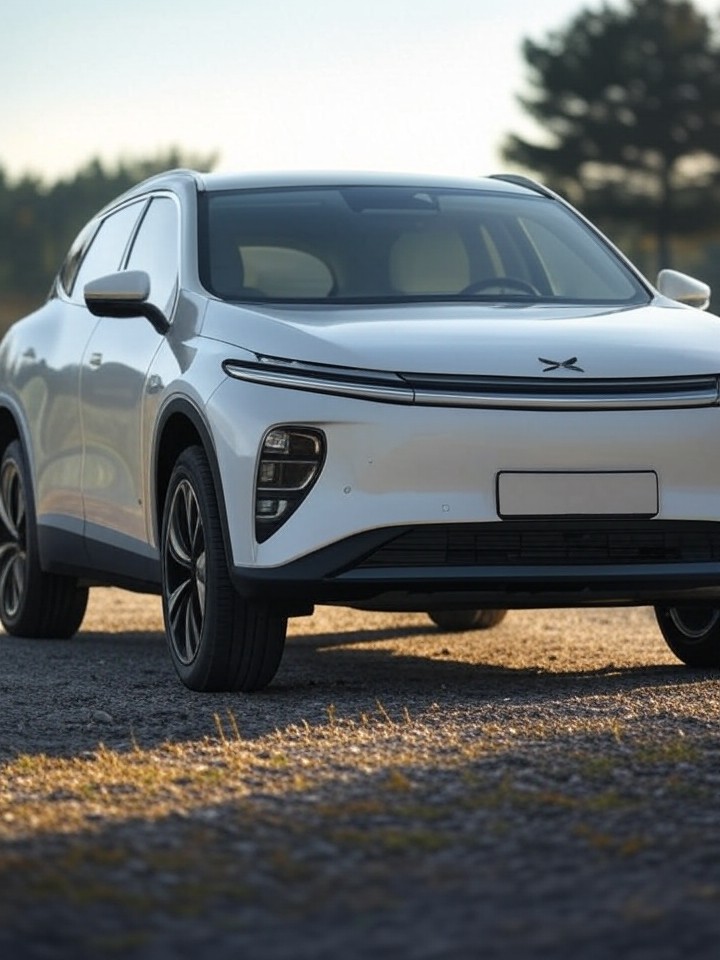
China’s Marathon Machine: How Xpeng’s Ultra-Range SUV is Redefining Electric Mobility and Rattling Tesla
In the bustling arena of electric vehicles, where range anxiety has long been a thorn in the side of adoption, a new contender from China is making waves. Xpeng Motors, a rising star in the EV sector, has unveiled its G7 hybrid SUV, boasting an astonishing 1,058 miles of range on a single tank and charge. This isn’t just a incremental improvement; it’s a bold leap that could reshape consumer expectations and intensify competition in one of the world’s largest auto markets.
The G7’s hybrid system combines a gasoline engine with electric propulsion, allowing it to achieve this record-breaking distance under China’s CLTC testing cycle. According to reports, the vehicle can travel over 1,000 miles without refueling or recharging, a feat that addresses one of the most persistent concerns for potential EV buyers. This development comes at a time when global automakers are pushing the boundaries of battery technology and hybrid solutions to capture market share.
Xpeng’s announcement has sparked discussions about the future of pure electric vehicles versus hybrids, especially in regions with varying infrastructure. While pure EVs like those from Tesla have dominated headlines, hybrids offer a bridge for consumers wary of charging limitations. The G7’s debut underscores China’s aggressive innovation in the sector, where domestic brands are increasingly challenging international giants.
Xpeng’s Technological Edge
At the heart of the G7 is an advanced extended-range electric vehicle (EREV) setup, which uses a small gasoline engine to generate electricity for the battery, extending the driving range far beyond traditional EVs. Sources indicate that the SUV features a 430 km pure-electric range, supplemented by the hybrid system to reach the full 1,704 km under optimal conditions. This dual approach not only mitigates range concerns but also provides flexibility in areas where charging stations are sparse.
Industry analysts note that Xpeng’s engineering focuses on efficiency, with rapid charging capabilities that allow a 10-minute top-up for significant mileage. This is particularly appealing in China’s vast territories, where long-distance travel is common. The vehicle’s design incorporates cutting-edge battery management and aerodynamics, contributing to its impressive performance metrics.
Comparisons are inevitable with Tesla’s offerings, such as the Model Y Long Range RWD, which achieves 821 km on the same CLTC cycle in China. While Tesla’s variant is priced competitively at around 288,500 yuan, Xpeng’s G7 positions itself as a premium option with superior range, potentially drawing buyers seeking worry-free journeys. As reported in TechRadar, this launch has Tesla executives on alert, given the direct threat to their market dominance.
Market Dynamics in China’s Auto Sector
China’s automotive market is a hotbed of innovation, with local manufacturers like Xpeng, BYD, and NIO vying for supremacy. The G7’s introduction aligns with Xpeng’s global expansion ambitions, as highlighted in coverage from the South China Morning Post. The company is not just content with domestic success; it’s eyeing international markets where range-extended vehicles could appeal to skeptical consumers.
Recent data shows that hybrid and extended-range vehicles are gaining traction in China, outpacing pure EV growth in some segments. This shift is driven by practical considerations, including the country’s expansive geography and varying levels of electrification infrastructure. Xpeng’s G7 taps into this trend, offering a vehicle that promises Seattle-to-LA distances without a stop, as noted in social media buzz on platforms like X.
Competitors are responding swiftly. Volkswagen, for instance, has introduced its ID. Era 9X, a massive range-extender SUV tailored for affluent Chinese buyers, comparable in size to luxury models like the Bentley Bentayga. Details from Autoblog suggest this move is part of a broader strategy by Western automakers to adapt to local preferences, emphasizing extended range and opulence.
Tesla’s Response and Competitive Pressures
Tesla, long the pacesetter in electric mobility, now faces a multifaceted challenge from Chinese innovators. Posts on X from users like Sawyer Merritt highlight Tesla’s recent launches, such as the Model Y with 821 km range, aimed at bolstering its position in China. However, Xpeng’s G7 surpasses this by a wide margin, prompting questions about whether Tesla needs to accelerate its hybrid explorations or enhance battery tech.
Elon Musk’s company has traditionally shunned hybrids, betting big on all-electric futures supported by expansive Supercharger networks. Yet, in markets like China, where hybrid adoption is surging, this purist approach might leave vulnerabilities. Industry insiders speculate that Tesla could introduce range-extended variants or partner with battery suppliers to close the gap, drawing from sentiments echoed in various X discussions.
Moreover, the pricing strategy plays a crucial role. Xpeng’s G7 is positioned as a high-end offering, but its value proposition—unmatched range combined with smart features like advanced driver assistance—could erode Tesla’s premium appeal. As per insights from Interesting Engineering, the G7’s claim of 1,058 miles sets a new benchmark, forcing rivals to innovate or risk obsolescence.
Innovation in Battery and Hybrid Systems
Delving deeper into the technology, Xpeng’s G7 employs a sophisticated powertrain that integrates a high-efficiency gasoline generator with a large battery pack. This setup allows for seamless switching between electric and hybrid modes, optimizing fuel consumption and emissions. Reports indicate that even in harsh conditions, such as -20°C temperatures, the vehicle maintains over 1,000 km of range, a testament to its robust engineering.
Battery advancements are key here. While not specifying the exact chemistry, the G7 likely uses next-generation cells that offer higher energy density and faster charging. This mirrors broader trends in China, where companies are investing heavily in solid-state batteries and other breakthroughs to extend ranges without increasing vehicle weight significantly.
In contrast, Tesla’s reliance on lithium-ion batteries, while advanced, faces limitations in extreme scenarios. The G7’s hybrid nature provides a safety net, appealing to buyers in rural or underdeveloped areas. Coverage in NotebookCheck.net notes that on the more stringent EPA cycle, the G7 equates to over 700 miles, still impressive and competitive globally.
Global Implications and Consumer Shifts
The ripple effects of Xpeng’s launch extend beyond China. As the company pushes for international sales, vehicles like the G7 could influence standards in Europe and North America, where range anxiety persists despite improving infrastructure. This might pressure regulators to harmonize testing cycles, as CLTC figures often appear more generous than EPA or WLTP equivalents.
Consumer behavior is evolving too. Surveys and social media sentiment on X suggest that buyers are increasingly prioritizing practicality over ideological purity in electrification. Hybrids like the G7 offer a compromise, reducing dependence on fossil fuels while providing peace of mind for long trips.
Furthermore, this development highlights China’s lead in EV innovation. With state support and massive R&D investments, brands like Xpeng are not just catching up but setting paces. Tesla, once the undisputed leader, must now navigate a field where local players leverage home advantages to challenge globally.
Strategic Moves by Industry Players
Xpeng’s go-global strategy includes partnerships and expansions into markets like Europe and Southeast Asia. The G7’s launch is a cornerstone of this push, showcasing technology that could appeal to diverse consumers. As detailed in the South China Morning Post article previously referenced, this intensifies rivalry with Tesla and BYD, both of which are ramping up their hybrid offerings.
BYD, another Chinese powerhouse, has its own extended-range models, but Xpeng’s focus on SUVs taps into the booming segment. Market data from December 2025, as reported in ChinaEVHome, shows large NEV SUVs like NIO’s ES8 leading sales, indicating strong demand for vehicles in this category.
Tesla’s countermeasures might involve software updates for better efficiency or new models with enhanced ranges. X posts from Tesla enthusiasts reveal excitement over recent filings for longer-range variants, but the G7’s hybrid advantage remains a differentiator.
Future Horizons for Electric Travel
Looking ahead, the G7 could catalyze a hybrid renaissance, blending the best of electric and internal combustion technologies. This hybrid surge might delay the full transition to pure EVs, but it accelerates overall decarbonization by encouraging more drivers to adopt partially electric vehicles.
Challenges remain, including supply chain dependencies and geopolitical tensions affecting battery materials. Xpeng must navigate these while scaling production to meet demand. Success here could position it as a formidable global player, much like how Tesla disrupted the industry a decade ago.
Ultimately, the G7’s arrival signals a maturing market where innovation thrives on competition. For Tesla, it’s a wake-up call to evolve, ensuring that the electric revolution continues unabated. As the sector advances, consumers stand to benefit from ever-improving options that make sustainable travel more accessible and reliable than ever before.


 WebProNews is an iEntry Publication