
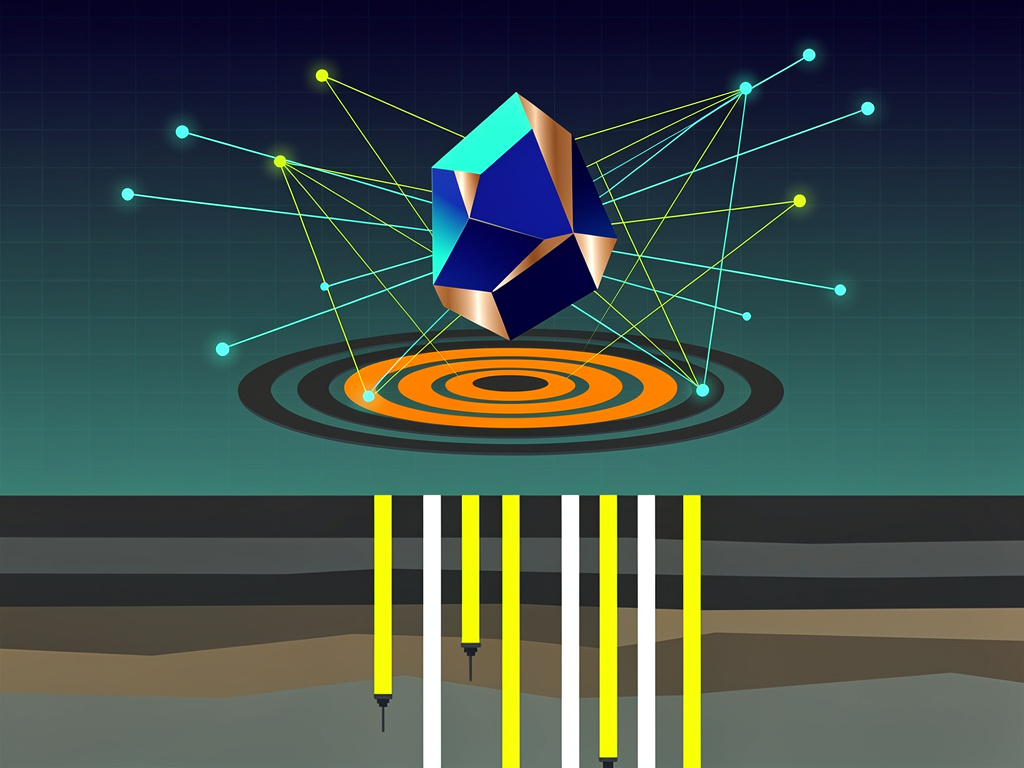
A company most people have never heard of just raised $130 million to point artificial intelligence at the ground beneath our feet — and some of the biggest names in venture capital think it could reshape how humanity discovers critical minerals.
Xoople, formerly known as Earth AI, closed its Series B round at a valuation that signals deep confidence in its approach to mineral exploration, a sector that has historically relied on geological intuition, expensive drilling campaigns, and a staggering amount of luck. The round was led by Radical Ventures, with participation from Felicis Ventures and several returning investors, according to The Next Web. For an industry where the discovery rate for economically viable deposits has been declining for decades, the capital infusion represents one of the largest venture bets ever placed on AI-driven mineral exploration.
The timing isn’t accidental.
Global demand for copper, lithium, nickel, and rare earth elements is surging as governments and corporations race to electrify transportation, expand renewable energy infrastructure, and build out data centers to power the AI boom itself. The International Energy Agency has warned repeatedly that current mining output and exploration pipelines are insufficient to meet projected demand for the energy transition. Yet the traditional exploration model — geologists studying surface outcrops, analyzing geochemical surveys, and making educated guesses about what lies kilometers underground — finds fewer and fewer deposits each year. The easy-to-find ones, the deposits near the surface with obvious geological signatures, were largely discovered in the 20th century. What remains is deeper, subtler, and harder to locate.
This is the problem Xoople was built to solve. Founded in 2017 in Sydney by Roman Teslyuk, the company developed a machine learning platform that ingests vast quantities of geological, geophysical, and geochemical data — satellite imagery, magnetic surveys, gravity measurements, historical drilling records, soil samples — and uses proprietary algorithms to predict where mineral deposits are most likely to exist underground. The AI doesn’t replace geologists. It augments them, narrowing down search areas from thousands of square kilometers to specific drill targets measured in meters.
Teslyuk, who serves as CEO, has described the conventional approach to mineral exploration as fundamentally broken. The industry spends roughly $13 billion a year on exploration globally, according to S&P Global, but the success rate for greenfield discoveries — finding entirely new deposits rather than expanding known ones — has plummeted. In the 1990s, the industry discovered major new deposits at a reasonable clip. Over the past decade, that pace has slowed dramatically even as spending has remained elevated. More money. Fewer finds.
Xoople’s pitch is that machine learning can reverse this trend by identifying patterns in geological data that human analysts miss. The company claims its models have already demonstrated the ability to identify prospective drill targets with significantly higher accuracy than traditional methods. And it doesn’t just sell software. Xoople operates an integrated model: it identifies targets using its AI, then deploys its own drilling rigs to test those predictions. This vertical integration is unusual in the mining technology space, where most startups position themselves as software providers to established mining companies. Xoople instead takes on exploration risk directly, acquiring mineral tenements and drilling them based on its own AI-generated predictions.
That model has attracted attention — and skepticism.
Mining is a notoriously conservative industry. Geologists with decades of field experience don’t always welcome Silicon Valley-style disruption narratives, particularly from companies that frame centuries of geological expertise as a problem to be optimized away by algorithms. But Xoople has tried to build credibility through results. The company has conducted drilling programs across multiple sites in Australia and has reported discovery of mineralization at several targets identified by its AI. The details of those discoveries — their grade, tonnage, and economic viability — are less publicly documented, which is typical for a private company at this stage but also makes independent verification difficult.
The $130 million Series B will accelerate Xoople’s expansion. The company has signaled plans to move beyond Australia and pursue exploration targets in North America and other jurisdictions with favorable mining regulations and high geological prospectivity. The rebranding from Earth AI to Xoople, which the company completed recently, appears designed to position it as a broader technology platform rather than a single-geography exploration outfit. The name is unusual — memorable, perhaps, though it carries none of the geological gravitas that mining executives tend to favor.
Radical Ventures, the Toronto-based firm that led the round, has a portfolio heavily weighted toward foundational AI companies. The firm was an early backer of Geoffrey Hinton’s work and has invested in companies applying machine learning to drug discovery, materials science, and robotics. Its bet on Xoople fits a thesis that AI’s most transformative applications will come not in consumer technology but in physical industries where data has been abundant but underutilized. Jordan Jacobs, co-founder and managing partner of Radical Ventures, has spoken publicly about the opportunity to apply AI to industries that have been slow to adopt it.
Felicis Ventures, the other named investor in the round, brings a different pedigree. The firm, founded by Aydin Senkut, has historically focused on enterprise software and consumer internet companies but has increasingly moved into climate technology and industrial applications. Its participation suggests that Xoople’s value proposition resonated beyond the specialist mining-tech investor community.
So what does $130 million buy in mineral exploration?
Drilling is expensive. A single diamond drill hole can cost anywhere from $100,000 to over $1 million depending on depth, location, and rock conditions. An exploration program testing dozens of targets across multiple sites can burn through tens of millions of dollars in a single season. Xoople’s argument is that its AI dramatically improves the hit rate — the percentage of holes that intersect meaningful mineralization — which in turn reduces the cost per discovery. If the company can demonstrate a consistently higher hit rate than industry averages, the economic case becomes compelling. The industry average for greenfield exploration success is often cited at below 1%. Even a modest improvement on that figure, applied across a large portfolio of targets, could generate enormous value.
But there are risks that no algorithm can fully mitigate. Geological complexity is real. The subsurface is not a neatly organized database; it’s a three-dimensional puzzle shaped by billions of years of tectonic activity, erosion, metamorphism, and fluid flow. Machine learning models are only as good as the data they’re trained on, and geological datasets are notoriously incomplete, inconsistent, and biased toward areas that have already been explored. Predicting mineralization in truly frontier areas — places with little historical data — remains extraordinarily difficult regardless of the computational power applied.
There’s also the question of what happens after discovery. Finding a mineral deposit is only the first step in a process that can take 10 to 20 years and billions of dollars to bring a mine into production. Permitting, environmental review, community engagement, infrastructure development, metallurgical testing, feasibility studies — the list is long and each stage carries its own risks. Xoople’s current model focuses on the discovery phase, which is the highest-risk, highest-reward segment of the mining value chain. Whether the company eventually develops its own discoveries, partners with major mining companies, or sells assets remains to be seen.
The competitive field is growing. KoBold Metals, backed by Bill Gates and Jeff Bezos among others, has raised over $500 million and pursues a similar AI-driven exploration model, with a particular focus on battery metals. KoBold has secured exploration rights in Zambia, Canada, Australia, and elsewhere, and has partnered with major miners including BHP. Other startups like Minerva Intelligence and Ideon Technologies are applying machine learning and muon tomography, respectively, to subsurface exploration. Even established mining companies are building internal AI capabilities — BHP, Rio Tinto, and Vale have all invested in machine learning teams and data infrastructure.
What distinguishes Xoople, at least on paper, is the integration of prediction and drilling under one roof. Most AI exploration companies generate targets and then rely on partners or clients to test them. Xoople drills its own holes, which means it captures the full value of successful predictions rather than licensing its technology for a fraction of the upside. It also means the company bears the full cost of failures. That integrated approach requires more capital — which explains the size of the Series B — but could generate asymmetric returns if the AI performs as advertised.
The broader context matters. Governments in the United States, European Union, Canada, and Australia have all enacted or proposed legislation to secure domestic supplies of critical minerals, reduce dependence on Chinese processing and refining, and accelerate permitting for new mining projects. The U.S. Inflation Reduction Act and the EU Critical Raw Materials Act both include provisions aimed at stimulating exploration and development of strategic minerals. This policy environment creates tailwinds for companies like Xoople that promise to accelerate the discovery timeline.
And the AI infrastructure buildout itself is creating demand for the very minerals these companies are trying to find. Data centers require enormous quantities of copper for wiring and electrical systems. Battery storage installations need lithium, cobalt, and nickel. Wind turbines consume rare earth elements for their permanent magnets. The irony is sharp: the AI revolution depends on physical materials that must be dug out of the ground, and finding those materials may in turn depend on AI.
Whether Xoople can deliver on its promise remains an open question. The company is private, its geological results are not fully public, and the mining industry has seen no shortage of technology companies that promised transformation and delivered incremental improvement at best. But $130 million from sophisticated investors suggests the evidence, at least what’s been shared in data rooms and due diligence sessions, is persuasive enough to justify a significant bet.
The minerals are down there. The question is whether an algorithm can find them faster, cheaper, and more reliably than a geologist with a rock hammer and a hunch. Xoople is wagering $130 million that it can. The world’s energy transition may depend on whether that wager pays off.


 WebProNews is an iEntry Publication