
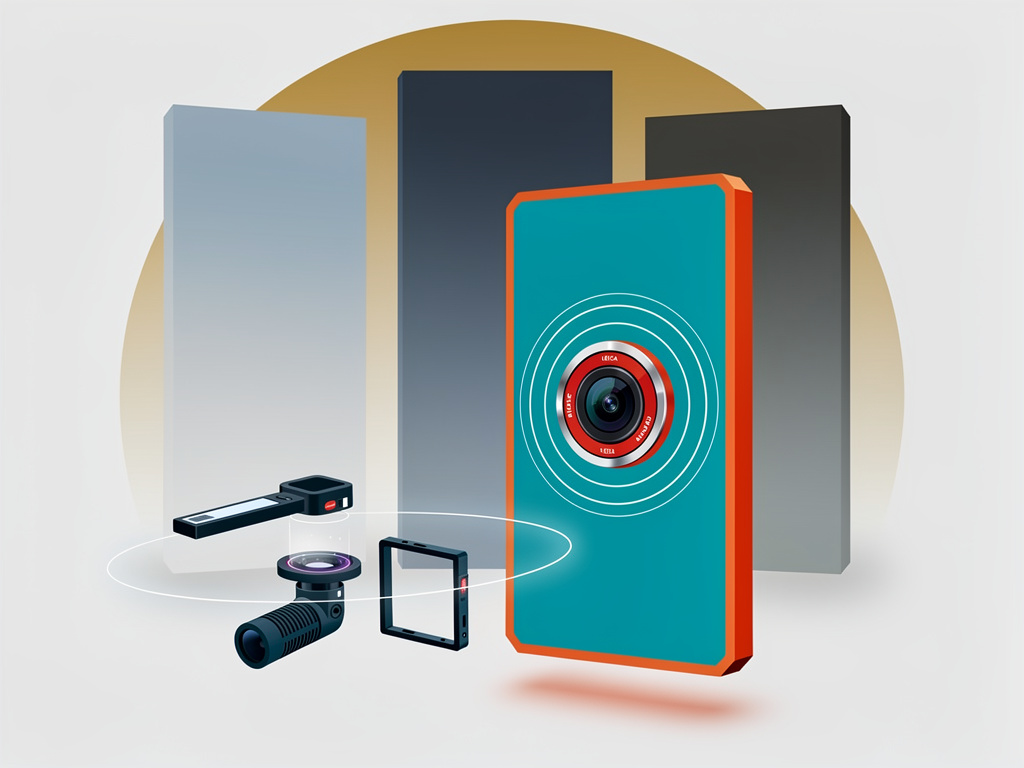
The smartphone camera wars have entered a strange new phase. Not strange because the technology is advancing — that’s expected. Strange because the company pushing hardest isn’t Apple, isn’t Samsung, and isn’t Google. It’s Xiaomi, a Chinese electronics maker that most American consumers still can’t pronounce, and it just shipped a phone that treats photography with the seriousness of a dedicated Leica rangefinder.
The Xiaomi 17 Ultra, released in early April 2026, is the company’s most ambitious handset to date. It carries four rear cameras co-engineered with Leica, a one-inch primary sensor, and an optional Photography Kit Pro accessory that transforms the device into something resembling a compact mirrorless camera. The phone starts at $1,299 globally. That price puts it squarely in flagship territory alongside the iPhone 17 Pro Max and Samsung Galaxy S26 Ultra, a deliberate positioning that signals Xiaomi’s intent to compete not just on specs but on prestige.
TechCrunch’s detailed review of the device calls the camera system “the most capable ever put in a smartphone,” a bold claim but one supported by the publication’s extensive testing across portrait, landscape, low-light, and macro photography scenarios. The review notes that Xiaomi has moved well beyond the gimmicky Leica branding of earlier partnerships — the kind of badge engineering that slaps a luxury name on mediocre hardware. This time, the collaboration appears genuine. Leica’s Summilux optical design influences the lens coatings and element arrangements across all four cameras, and the color science has been tuned in partnership with Leica’s imaging engineers in Wetzlar, Germany.
That matters more than it sounds.
Color science — the way a camera interprets and renders colors from raw sensor data — is arguably the single most important differentiator between smartphone cameras today. Hardware has largely converged. Most flagships use Sony’s IMX series sensors. Most employ computational photography pipelines powered by neural networks. The thing that makes an iPhone photo look like an iPhone photo, or a Pixel shot feel like a Pixel shot, is color science. And Xiaomi, by tapping Leica’s century-plus of optical expertise, has developed a rendering pipeline that produces images with a distinctly different character: warmer midtones, controlled highlight rolloff, and a film-like quality to skin tones that professional photographers have already noticed.
The primary camera uses a 1-inch Type sensor — the Sony IMX9-series, according to specifications shared by Xiaomi — paired with a variable aperture lens that shifts between f/1.63 and f/4.0. Variable aperture in smartphones isn’t new; Samsung introduced it years ago. But Xiaomi’s implementation uses a six-blade mechanical iris rather than a simple two-position toggle, allowing for finer exposure control and genuine depth-of-field variation at close focusing distances. The ultrawide camera carries a 50-megapixel sensor with autofocus, the 3x telephoto uses a 50-megapixel periscope design, and the 5x telephoto — the longest reach in the system — uses a 50-megapixel folded optic with optical image stabilization.
Four cameras. All 50 megapixels or above. All with autofocus. That’s the kind of spec sheet that reads like overkill until you actually use it.
And according to TechCrunch, the results hold up. The publication’s reviewer spent two weeks shooting with the device across multiple cities and lighting conditions, concluding that the 17 Ultra produces “the most consistently excellent images” of any phone tested this year. Low-light performance, long a weakness of Xiaomi’s cameras relative to Apple and Google, has improved dramatically. Night mode processing is faster, noise reduction is more intelligent, and the large primary sensor simply gathers more light than the smaller sensors in competing devices.
But here’s where things get interesting — and a little weird.
The Photography Kit Pro is an optional accessory, sold separately for $199, that attaches to the Xiaomi 17 Ultra via a bayonet-style mount around the rear camera module. It adds a physical shutter button with half-press autofocus, a textured grip that mimics the feel of a dedicated camera body, a cold shoe mount for accessories like external microphones or LED panels, and a 67mm filter thread adapter. That last detail is significant. It means photographers can attach standard circular polarizers, ND filters, and UV filters to a smartphone. The implications for landscape and architectural photography are real.
Xiaomi isn’t the first company to attempt this kind of hybrid device. Sony tried something similar with the Xperia Pro-I series. It didn’t sell well. The difference, though, is execution and timing. Sony’s attempt came before computational photography had matured enough to complement large-sensor hardware. Xiaomi’s arrives at a moment when the software is finally good enough to make the hardware sing.
The phone runs on Qualcomm’s Snapdragon 8 Elite Gen 2 processor with 16GB of RAM in the base configuration and 24GB in the top tier. Storage options run from 256GB to 1TB. The display is a 6.83-inch LTPO AMOLED panel with 3200×1440 resolution, 1-120Hz adaptive refresh rate, and a peak brightness of 4,500 nits — bright enough to remain visible in direct sunlight, which matters enormously for using the phone as a camera viewfinder outdoors.
Battery capacity is 6,100 mAh. Charging speeds hit 90W wired and 80W wireless. Xiaomi claims a full charge in under 35 minutes via cable. Those numbers are competitive with the fastest-charging phones on the market, and they significantly outpace Apple’s charging speeds.
So who is this phone for?
The honest answer: not most people. Not yet, anyway. Xiaomi’s brand recognition outside of China, India, and parts of Europe remains limited. In the United States, the company doesn’t sell through major carriers, and its devices lack the tight integration with American digital services that iPhone and Galaxy users take for granted. There’s no iMessage equivalent. No deep Google Assistant integration. The software, HyperOS 3.0, is capable but unfamiliar to Western users accustomed to iOS or Samsung’s One UI.
But for a specific audience — enthusiast photographers, content creators, mobile journalists, and tech-forward consumers who prioritize camera quality above all else — the Xiaomi 17 Ultra represents something genuinely compelling. It’s a phone that takes the “best camera is the one you have with you” maxim and pushes it to its logical extreme. If the best camera is always in your pocket, why shouldn’t it be as capable as possible?
The broader industry implications deserve attention. Apple’s iPhone camera improvements have been incremental in recent generations. Good, yes. Excellent, even. But incremental. The iPhone 17 Pro, expected later this year, is rumored to focus on design changes and processing speed rather than dramatic camera upgrades. Samsung’s Galaxy S26 Ultra improved its zoom capabilities but didn’t fundamentally alter its imaging approach. Google’s Pixel 10 Pro leans heavily on computational photography but uses a smaller primary sensor than the Xiaomi.
Xiaomi is spending money. Real money. The company’s R&D expenditure hit $3.2 billion in 2025, according to its annual report, with a significant portion directed toward imaging technology. The Leica partnership, now in its fourth year, has deepened from a licensing arrangement into a genuine co-development relationship with shared engineering teams. And the Photography Kit Pro accessory line suggests Xiaomi sees a future where smartphones don’t just replace point-and-shoot cameras — they start encroaching on the enthusiast compact market that companies like Fujifilm, Ricoh, and Sony currently own.
That’s a big bet.
The camera industry has been contracting for over a decade. Dedicated camera shipments peaked around 2010 and have fallen steadily since, with smartphones absorbing the casual and prosumer segments almost entirely. What remains is the professional and serious enthusiast market — people who buy $2,000 mirrorless bodies and $1,500 lenses. Xiaomi isn’t targeting those buyers. Not directly. But it’s targeting the next tier down: the photographer who carries a Fujifilm X100VI or a Sony RX100 VII as a daily companion because their phone camera isn’t quite good enough.
If the Xiaomi 17 Ultra is good enough — and early reviews suggest it might be — that’s a segment of the camera market that could erode further.
There are limitations. Physics still applies. A one-inch sensor in a phone, no matter how good, cannot match the low-light performance, dynamic range, or depth-of-field control of a full-frame or even APS-C sensor in a dedicated camera. Computational photography bridges some of that gap, but not all of it. Portrait bokeh from a phone, however improved, still looks computational to a trained eye. And the ergonomics of shooting with a phone — even with the Photography Kit Pro attached — don’t replicate the tactile satisfaction of a well-designed camera body with a proper viewfinder.
But for 90% of shooting scenarios that 90% of photographers encounter? The gap is closing fast. Uncomfortably fast, if you’re Nikon or Canon.
Xiaomi’s global ambitions extend beyond hardware. The company has been expanding its retail presence in Europe, opening flagship stores in London, Paris, Milan, and Berlin over the past 18 months. Its market share in Western Europe reached 14.8% in Q1 2026, according to Counterpoint Research, making it the third-largest smartphone vendor in the region behind Apple and Samsung. In India, Xiaomi remains the market leader. In Southeast Asia, it’s a top-three player.
The U.S. market remains the white whale. Xiaomi has made no public moves toward American carrier partnerships, and the geopolitical headwinds facing Chinese technology companies in the United States are well documented. Tariffs, security concerns, and the lingering effects of the Trump-era entity list restrictions (Xiaomi was briefly added in 2021 before successfully challenging the designation in court) all complicate any potential American expansion. But the company doesn’t need the U.S. to succeed. The rest of the world is a big market.
And the rest of the world is paying attention to the 17 Ultra.
Early sales data from China, where the phone launched two weeks before its global release, showed the device selling out within minutes during its initial flash sale, according to reporting from Xiaomi’s official Weibo account and corroborated by Chinese tech outlet MyDrivers. Xiaomi hasn’t released specific unit numbers, but the company’s stock price on the Hong Kong exchange ticked up 3.2% in the week following the launch — a modest but notable bump that analysts attributed partly to positive reception of the 17 Ultra and partly to broader optimism about Xiaomi’s premium strategy.
That premium strategy is the real story here. For years, Xiaomi was known primarily as a value brand — good specs at low prices, the “Apple of China” in aspiration if not in execution. The 17 Ultra, priced at $1,299, is a deliberate departure from that identity. Xiaomi is telling the market it can compete at the top. Not just on specifications, where it has arguably led for several generations, but on experience, on brand perception, on the intangible feeling a consumer gets when they hold a device and think, “This is worth what I paid.”
Whether that message lands with global consumers remains to be seen. Brand perception changes slowly. But the product itself — the hardware, the cameras, the Leica partnership, the Photography Kit Pro — makes the argument more convincingly than anything Xiaomi has shipped before.
I’ve been watching this company for years. Grew up in the Midwest tinkering with every piece of technology I could get my hands on, and I’ve seen plenty of ambitious hardware launches that promised more than they delivered. The Xiaomi 17 Ultra feels different. Not because it’s perfect — no phone is — but because it represents a level of intentionality and engineering focus that suggests Xiaomi isn’t just trying to sell phones. It’s trying to redefine what a phone camera can be.
The competition should be nervous. And photographers should be excited.


 WebProNews is an iEntry Publication