
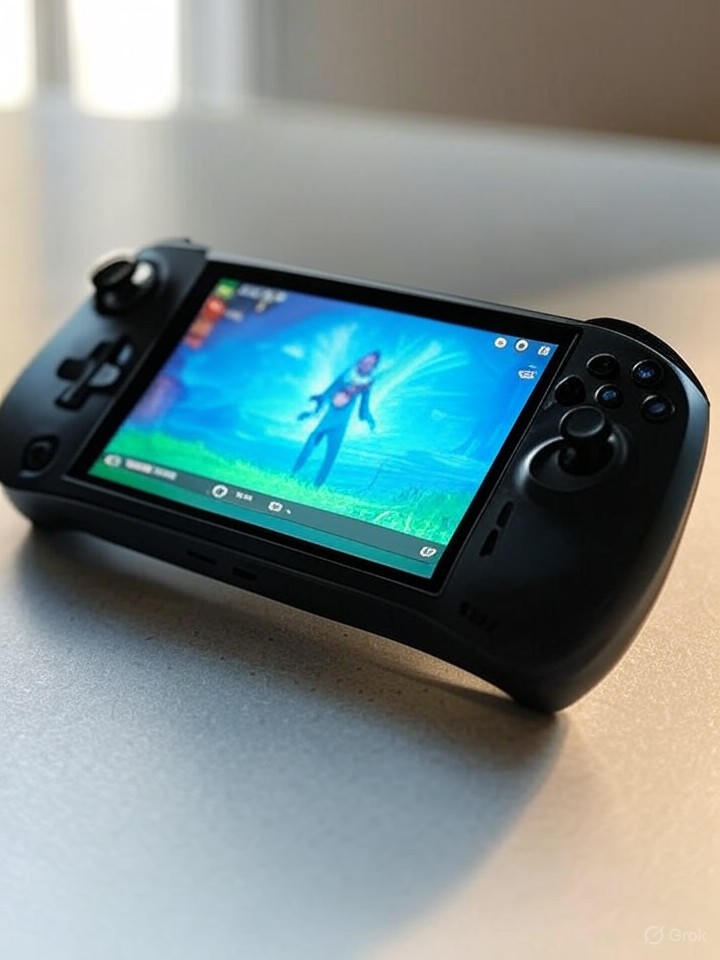
Microsoft is pushing the boundaries of Windows 11 for handheld gaming devices, with its Xbox Full Screen Experience (FSE) now rolling out to MSI Claw models. This move marks a significant step in Microsoft’s strategy to make Windows more console-like on portable hardware, challenging competitors like Valve’s SteamOS. The FSE, initially debuted on Asus ROG Ally devices, promises a controller-first interface that simplifies navigation and game launching without relying on touch or mouse inputs.
According to The Verge, the preview became available to Windows Insiders on October 31, 2025, allowing MSI Claw users to test this Xbox-inspired mode. Tom Warren, senior editor at The Verge, noted in a post on X that Microsoft plans to extend it to additional OEMs in the coming months, signaling broader adoption across the Windows handheld ecosystem.
From ROG Ally to Broader Horizons
The FSE builds on Microsoft’s earlier efforts to optimize Windows for handhelds. It features a dashboard reminiscent of the Xbox Series X interface, with quick access to games, settings, and cloud services. Users can jump into titles from Xbox Game Pass, Steam, or Epic Games Store seamlessly, using only the device’s built-in controls.
A Reddit thread on r/MSIClaw, as reported in search results, shows early testers praising the improved BIOS update that enables FSE on the MSI Claw 8 AI+. One user commented, ‘I’ve been testing the new Xbox Full Screen Experience on my MSI Claw 8 Ai+… it’s a game-changer for handheld usability,’ highlighting smoother performance after the update.
Technical Underpinnings and Challenges
Under the hood, the FSE leverages Windows 11’s Insider Preview builds, specifically in the Dev Channel. PC Gamer warns that installation might require tinkering, stating, ‘It clearly needs a tad more tinkering before it’s ready to roll.’ This reflects ongoing bugs in the preview phase, such as inconsistent controller mapping or battery drain issues.
Microsoft has confirmed compatibility with devices like the MSI Claw 8 AI+, Lenovo Legion Go S, and Asus ROG Ally X, per NotebookCheck.net. The update includes enhancements like better multitasking, idle battery life improvements, and performance boosts, as detailed in a post by Jez Corden on X: ‘New multitasking features, controller-only navigation, idle battery life improvements, performance boosts, and more.’
Comparisons to SteamOS Dominance
Despite these advancements, critics argue FSE falls short of SteamOS’s polished experience on devices like the Steam Deck. TechRadar reports, ‘In testing for the MSI Claw, but the FSE is still not enough just yet,’ with writer Jacob Ridley emphasizing that while FSE provides a console-style interface, it lacks the seamless integration and optimization of SteamOS.
Industry insiders point to SteamOS’s advantages in power management and game compatibility. A recent X post by Retro Game Corps described the MSI Claw’s hardware positively but implied software like FSE is crucial for competitiveness: ‘8” (1920×1200) 16:10 120Hz VRR screen, new Intel AI processor, improved ergonomics.’
Microsoft’s Broader Handheld Strategy
Microsoft’s push into handheld optimization isn’t isolated. The company has been enhancing Windows 11 for gaming since 2023, with early concepts like ‘Handheld Mode’ leaked by Windows Latest on X. This evolution aims to counter the fragmented nature of Windows on portables, where users often resort to third-party launchers.
Phandroid provides a how-to guide for enabling FSE on MSI Claw: ‘It provides a more console-style interface similar to what you’d find on the ROG Ally devices,’ crediting the Windows 11 Insider Preview build. This accessibility is key for early adopters, though Windows Forum notes practical limits and buggy preview plumbing.
Market Implications for Handheld Gaming
The expansion to MSI Claw could disrupt the market dominated by Steam Deck and Nintendo Switch. Video Games Chronicle states, ‘The mode has rolled out to Windows Insider users,’ positioning MSI as the first non-Asus device to receive it officially.
Business Standard highlights the competitive edge: ‘Microsoft expands its Xbox full-screen experience to the MSI Claw, in a move to bring console-style navigation to more Windows handhelds.’ This could attract Xbox Game Pass subscribers, boosting Microsoft’s cloud gaming ambitions.
User Feedback and Future Prospects
Early user sentiment on X, such as from Ray: ‘Windows 11’s new Full Screen Experience is available for MSI Claw handhelds, but I still wouldn’t choose it over SteamOS,’ mirrors broader skepticism. TechPulse Daily echoed this, noting Microsoft’s headway but the need for more refinements.
Looking ahead, Microsoft teased further OEM support. PC Gamer reports, ‘Getting all your games in one place is kinda neat,’ suggesting FSE’s unified library could be a selling point as it matures.
Ecosystem Integration and Challenges Ahead
Integration with Xbox services is a highlight, allowing seamless access to cloud saves and multiplayer. However, challenges remain in hardware-software synergy, especially with Intel-powered devices like the Claw, which MSI Gaming promoted on X for its ergonomic design and 120Hz display.
Analysts predict that for FSE to succeed, Microsoft must address performance parity with SteamOS. As Tom Warren stated on X, ‘Microsoft has started testing the Xbox full screen experience with MSI Claw models today,’ this is just the beginning of a potentially transformative phase for Windows handhelds.


 WebProNews is an iEntry Publication