
In a bold move toward transparency, Elon Musk’s X has open-sourced its revamped recommendation system, revealing the intricate machinery driving user feeds. Announced on January 20, 2026, via posts from X Engineering and Musk himself, the code at github.com/xai-org/x-algorithm leverages the transformer architecture underpinning xAI’s Grok model. This release, promised during Musk’s January 10 post, includes comprehensive developer notes and commits to updates every four weeks amid regulatory pressures on social feeds.
The disclosure arrives as X grapples with criticisms of its ‘dumb’ algorithm, as Musk admitted in a reply: ‘We know the algorithm is dumb and needs massive improvements, but at least you can see us struggle to make it better in real-time and with transparency.’ Unlike competitors, X offers public scrutiny, a point Musk emphasized: ‘No other social media companies do this.’
Early code reviews by developers on X highlight a shift to AI-driven predictions over rigid rules. As StockTwits reported, the repository details post recommendation logic, though experts note missing elements like trained model weights.
Transformer Core Drives Engagement Forecasts
At the heart lies a lightweight Grok variant using transformers to predict user reactions—likes, replies, reposts, bookmarks—across 100 million daily posts. X Engineering’s post confirms: ‘powered by the same transformer architecture as xAI’s Grok model.’ This replaces heuristics with machine learning, prioritizing content likely to spark interaction, per analyses from News9live.
Colin Charles, posting as @bytebot on X, dissected the code: ‘transformer based ranking via Grok, this prevents filter bubbles.’ In-network content from followed accounts gets priority, while out-of-network posts rely on ML predictions boosted by media like images and videos. Freshness weighs heavily, favoring recent uploads when audiences are active.
Author credibility factors in via engagement history, and posts from accounts followed by highly engaged users climb ranks. Yet, the code omits embedding tables, Phoenix retrieval details, and spam filters, signaling a partial reveal focused on core ranking.
Reply Chains and Dwell Time Dominate Signals
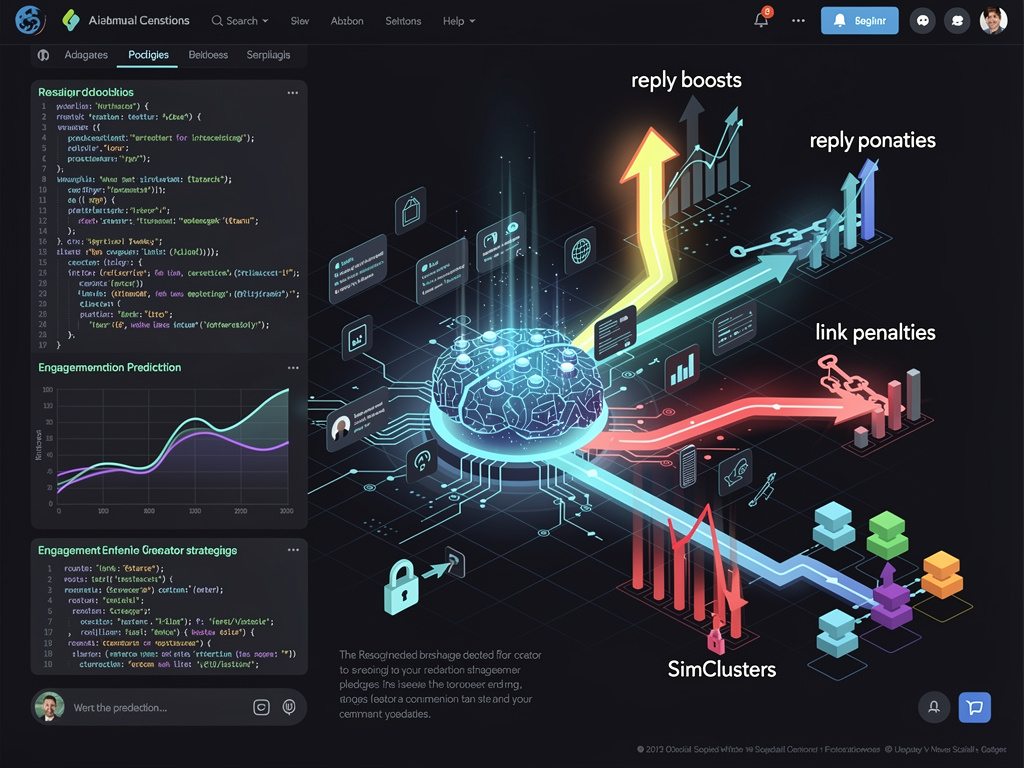
Replies emerge as the powerhouse signal. Bark (@barkmeta) summarized: ‘reply to your comments. the algo weighs “reply + author response” 75x higher than a like. ghosting comments = strangling reach.’ Shibo (@GodsBurnt) echoed: ‘The 75x Rule: A reply + your response is the strongest signal in the code.’
Bookmarks carry a 50x multiplier, rewarding reference-worthy content, while dwell time—measured by scrolls halted via videos or ‘Show More’ clicks—proves decisive. Videos and threads excel by capturing attention, as Charles noted: ‘watch time is king. if they scroll past, you lose.’
Negative signals hit hard: blocks and mutes inflict 10x damage over unfollows. Polarizing yet non-spammy content thrives, but annoyance tanks visibility.
Link Penalties and Niche Lock-In Reshape Posting
Outbound links trigger a ‘link tax,’ slashing reach by up to 400%, per Shibo: ‘Links kill visibility. put them in bio or pinned.’ Creators advise bio placements or auto-replies to retain users on-platform, aligning with the algorithm’s bias against exits.
SimClusters enforce topical fidelity. Bark warned: ‘stay in your lane… if you drift out of your niche (crypto, tech, etc), you get zero distribution.’ The system clusters users and content by themes, demoting off-topic drifts to preserve relevance.
These mechanics, drawn from the GitHub code, prioritize conversation over passive views. As Hypebeast covered, Musk pledged recurring updates amid scrutiny over feeds and Grok integration.
Creator Playbooks Emerge from Code Dive
Charlie Greenman (@razroo_chief) engineered a Claude prompt optimizing for multi-signal boosts: ‘TARGET SIGNALS TO MAXIMIZE: Dwell time… Replies… Retweets… Likes… Saves.’ It structures posts with counterintuitive leads, mechanistic explanations, and reframing insights in calm, systems-oriented voice—eschewing hype for educational depth on topics like tech systems or behavioral patterns.
Early engagement within the first hour amplifies predictions, hashtags remain viable, and media-rich formats dominate. Hashtags aid discoverability, but building engaged followers trumps tactics alone.
GodsBurnt’s viral guide stresses: ‘Bookmarks are Gold… Dwell Time: If they don’t click “Show More” or watch the video, you’re de-ranked.’ This democratizes virality, rewarding relational depth over shallow metrics.
Grok Evolution Fuels Algorithm Overhaul
Musk’s prior posts trace the shift: In May 2025, he announced Grok replacement for dramatic improvements; by October, it processed 100 million posts daily for quality-based matching. August trials with Grok 4 Mini demanded 20,000 GPUs, balancing latency for gains.
The Verge recalled Musk’s 2023 Twitter code drop, updated unevenly—contrasting this commitment. Reuters noted the January 10 promise for full organic and ad code in seven days.
News9live detailed Phoenix’s AI pivot from manual rules, forecasting reactions via transformers for replies over likes.
Transparency Push Meets Regulatory Heat
Musk’s transparency bid counters opacity charges, as TechSpot observed uneven past follow-through. ComputerWeekly highlighted inclusion of all recommendation code.
WebProNews reported promptable feeds via natural language, like ‘No politics, just AI innovations,’ extending Grok ties. This arrives amid EU and U.S. probes into algorithmic bias.
StockTwits urged expert review, affirming coverage of recommendation workings despite gaps.
Implications for Platforms and Creators
For insiders, this exposes prediction-heavy ranking: early replies snowball, media sustains attention, niches concentrate reach. Hypebeast tied releases to Grok scrutiny, promising full access with updates.
Creators must pivot: respond promptly, embed links externally, craft dwell-inducing formats. As Bark concluded: ‘talk to your audience, build relationships, keep people on the app.’
X’s model challenges rivals, blending xAI advances with open code to refine feeds iteratively under public gaze.


 WebProNews is an iEntry Publication