
The Subway Smasher: Privacy’s Unlikely Vanguard in the Age of Wearable Surveillance
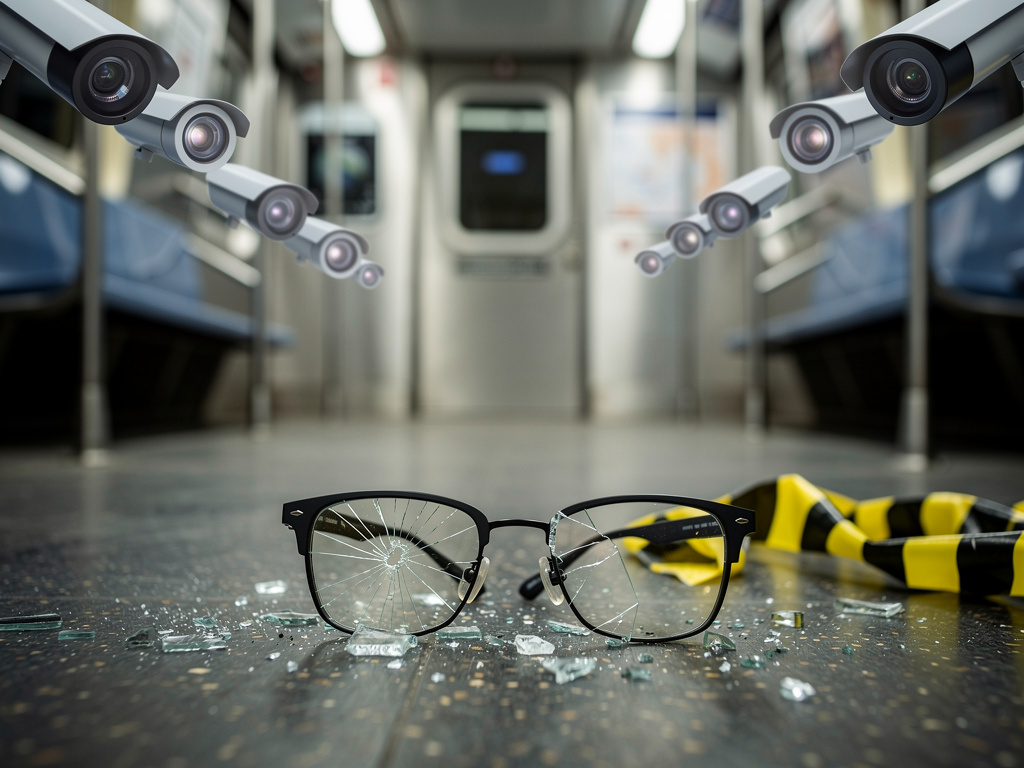
In the dim, rattling confines of a New York City subway car last October, an encounter unfolded that would ripple through tech circles and privacy debates alike. A woman, unidentified in initial reports, confronted a man wearing Meta’s Ray-Ban smart glasses, accusing him of surreptitiously recording her. What followed was a swift act of destruction: she snatched the glasses from his face and smashed them against the floor. The man, who later filed a police report claiming assault, described the incident as unprovoked. But online, the narrative flipped. Privacy advocates hailed her as a folk hero, a modern-day Luddite striking back against the encroaching eyes of augmented reality.
The episode, first detailed in a viral post and later picked up by outlets like the Daily Dot, underscores a growing unease with wearable tech that blends seamlessly into everyday life. Meta’s smart glasses, equipped with cameras, microphones, and AI capabilities, promise hands-free convenience—translating languages in real time, navigating streets, or even identifying objects. Yet, for many, they represent a stealthy invasion of personal space, capturing audio and video without explicit consent. The subway smasher’s actions, while legally dubious, tapped into a vein of frustration that’s been building since the glasses hit the market.
According to the man’s account, shared in the Yahoo News coverage, he was merely minding his business when the woman approached, demanding to know if he was filming. Her escalation to physical force resulted in a misdemeanor charge, but public sentiment leaned heavily in her favor. Posts on X (formerly Twitter) exploded with support, with users dubbing her “based” for challenging what they see as normalized surveillance. This incident isn’t isolated; it echoes broader concerns about how such devices erode the boundaries of public and private life.
Rising Tensions in Urban Surveillance
The New York subway, a microcosm of anonymous urban interactions, has become a flashpoint for these debates. In the wake of the smashing, discussions on platforms like X highlighted similar encounters, where wearers of smart glasses face suspicion or outright hostility. One post described a scenario where a user felt “watched” by someone donning the tech during a routine commute, amplifying fears of non-consensual recording. This sentiment aligns with expert analyses, such as those from Tom’s Guide, which questioned the expectations of privacy in an era where glasses can double as discreet cameras.
Meta, for its part, has emphasized that the glasses include indicators like LED lights to signal when recording is active, but critics argue these are insufficient in crowded, noisy environments like subways. The company’s push into augmented reality, led by CEO Mark Zuckerberg, aims to integrate AI seamlessly into daily wearables. However, live demos have faltered, as noted in Fox Business, where features like real-time assistance failed spectacularly on stage, raising doubts about reliability and user trust.
Beyond the subway incident, the glasses have been implicated in more sinister contexts. In the deadly New Orleans truck-ramming attack on New Year’s Day, the suspect was seen wearing Meta smart glasses to scout the scene, according to ABC News. This revelation, detailed further in CNN Business, intensified scrutiny on how such tech could aid malicious actors, blending innocuous appearance with powerful surveillance tools.
Privacy Backlash and Industry Ripples
The subway smasher’s story gained traction amid a series of privacy scandals involving Meta’s wearables. Earlier this year, an influencer recounted a disturbing experience during a Brazilian wax treatment, discovering her esthetician was wearing the glasses, potentially recording the intimate procedure. This was covered extensively in Daily Mail, sparking debates on consent in personal services. The incident, echoed in MethodShop, highlighted how the glasses’ subtle design makes it hard to detect their use, fueling calls for stricter regulations.
Industry insiders point to this as a tipping point. Tech analysts, drawing from BBC News reports on the New Orleans case, warn that without robust privacy safeguards, adoption could stall. Meta’s response has been to tout software updates that enhance transparency, but skeptics remain. On X, users have shared anecdotes of confronting glasses wearers in public spaces, with one viral thread describing a heated exchange on a train where a passenger demanded proof that no recording was occurring.
This backlash isn’t just anecdotal; it’s influencing policy discussions. Privacy groups are lobbying for laws mandating audible or visible alerts for recording devices in public. The subway incident, as framed in the original Futurism piece, positions the woman as a symbol of resistance, her act a visceral rejection of tech’s overreach. While some decry it as vigilantism, others see it as a necessary spark for change in an industry often criticized for prioritizing innovation over ethics.
Technological Evolution and Ethical Quandaries
Delving deeper into Meta’s ecosystem, the smart glasses are part of a broader augmented reality strategy. Launched in partnership with Ray-Ban, they integrate AI from Meta’s Llama models, enabling features like live translation or object recognition. Yet, as Yahoo Tech explores, the line between utility and intrusion blurs in everyday scenarios, such as spas or subways, where users expect a modicum of anonymity.
The New York incident also intersects with rising transit violence, though not directly linked. Reports from RVM News detail unrelated assaults, painting a picture of heightened tensions in public transport. In this context, the glasses-smashing feels like a symptom of broader anxieties—fear of being recorded adding to the stress of urban commuting. X posts reflect this, with users debating whether such acts deter potential abusers or escalate conflicts.
For tech executives, this poses a conundrum. Zuckerberg’s vision, as faltered in that Fox Business-reported demo, hinges on seamless integration, but public pushback could force redesigns. Competitors like Google, with its own history of Glass failures, watch closely, learning from Meta’s missteps.
Public Sentiment and Future Implications
Online discourse, particularly on X, reveals a polarized view. Supporters of the smasher argue she’s a privacy warrior, with posts praising her for highlighting risks in a surveillance-saturated world. Detractors, including the victim who spoke to Yahoo News, emphasize property rights and legal recourse. This divide mirrors larger societal rifts over technology’s role in daily life.
Looking ahead, incidents like this could accelerate regulatory scrutiny. In Europe, GDPR already imposes strict data collection rules, and U.S. lawmakers are eyeing similar measures. The CNN Business analysis of the New Orleans attack underscores how misuse amplifies calls for accountability, potentially leading to bans in sensitive areas like subways or healthcare settings.
Meta’s challenge is to rebuild trust. By addressing privacy head-on—perhaps through more prominent indicators or opt-in sharing features—the company might mitigate backlash. Yet, as the subway smasher’s legend grows, it serves as a reminder that technology’s advance must contend with human instincts for autonomy.
Balancing Innovation with Individual Rights
The broader implications extend to the wearable tech sector as a whole. Analysts predict that without addressing these concerns, market growth could falter. Sales of smart glasses have surged, but so have returns driven by privacy fears. Drawing from Tom’s Guide, the question remains: in a world of constant connectivity, what privacy can one reasonably expect?
Incidents like the waxing scandal, as reported in Daily Mail, illustrate the intimate violations possible. They prompt a reevaluation of consent in the digital age, where a glance could capture more than meets the eye.
Ultimately, the subway smasher’s act, while extreme, catalyzes essential conversations. It forces tech giants to confront the human element, ensuring that progress doesn’t come at the cost of personal sanctity. As debates rage on X and beyond, one thing is clear: the era of unchecked surveillance is facing its reckoning.


 WebProNews is an iEntry Publication