
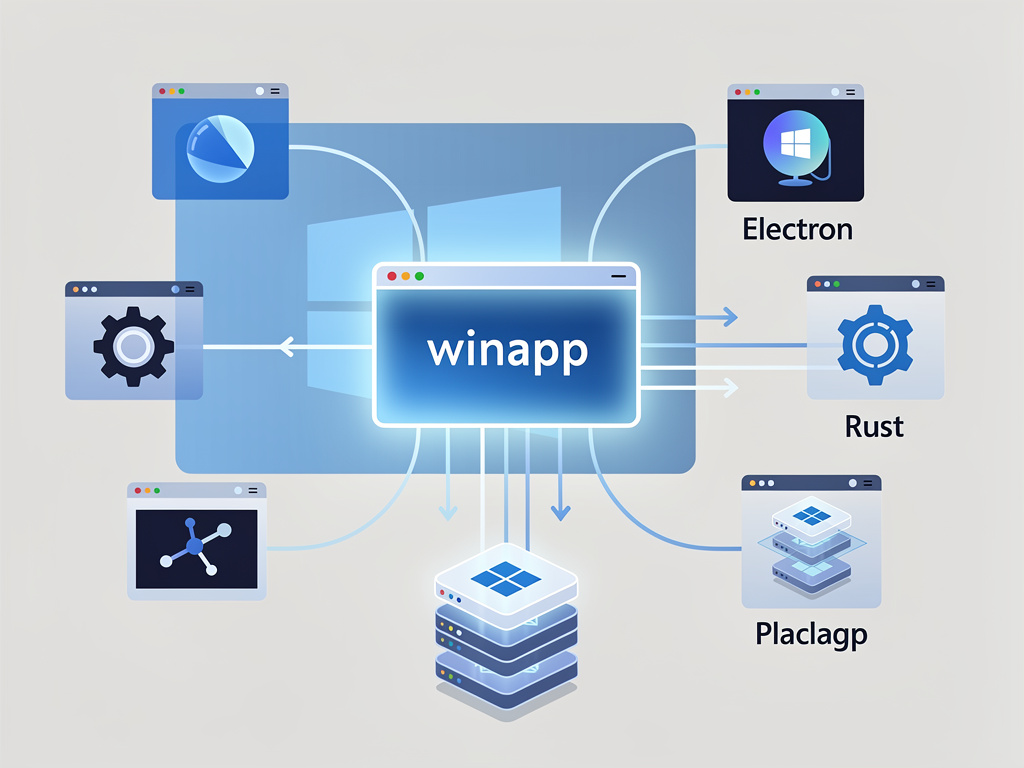
Microsoft has unveiled winapp, an open-source command-line tool poised to overhaul how developers build applications for Windows, particularly those shunning Visual Studio or MSBuild in favor of cross-platform stacks. Announced on January 22, 2026, by Nikola Metulev, product manager for Windows Platform & Developer, the tool promises to automate the drudgery of SDK management, manifest creation, certificate generation, and MSIX packaging. “Windows development often involves managing multiple SDKs, creating and editing multiple manifests, generating certificates and navigating intricate packaging requirements. The goal of this project is to unify these tasks into a single CLI, letting you focus on building great apps rather than fighting with configuration,” Metulev wrote in the Windows Developer Blog.
Targeted at frameworks like Electron, C++, .NET, Rust, and Dart, winapp enters public preview amid Microsoft’s push to lure developers from web and mobile ecosystems to native Windows features, including AI APIs and security tools. The GitHub repository at microsoft/WinAppCli has already garnered 408 stars and 31 issues since launch, signaling early interest. Installation is straightforward via WinGet—winget install Microsoft.winappcli—or npm for Electron users.
Developers can bootstrap a full environment with winapp init, which downloads SDKs, generates C++/WinRT projections, creates manifests, assets, and certificates. The winapp restore command recreates setups across machines or CI/CD pipelines, integrating seamlessly with GitHub Actions and Azure DevOps via a dedicated setup action.
Streamlining Debug Cycles
A standout feature is winapp create-debug-identity, which injects package identity into executables for testing APIs like Windows AI, notifications, and security features without full packaging. This sidesteps the tedious package-install-test loop, as highlighted in TechRepublic, where Aminu Abdullahi noted it enables “instant testing” for newcomers to Windows development.
Manifest management is equally automated: winapp manifest update-assets refreshes images from a single source, while winapp cert generate produces self-signed certificates for sideloading. For final deployment, winapp pack bundles and signs apps into store-ready MSIX packages from build outputs.
Electron gets special treatment as an npm package, scaffolding C++ or C# native addons pre-configured with Windows App SDK. Commands like winapp node add-electron-debug-identity add identity to running processes, and experimental packages like @microsoft/winapp-windows-ai expose APIs such as LanguageModel directly in JavaScript.
Framework Versatility in Action
The GitHub repo includes samples for Electron (with WinML image classification), C++ (CMake Win32), .NET (console and WPF), Rust, and Tauri, plus guides for each. Recent commits post-announcement, like version 0.1.11 on January 23 and fixes for Electron debugging, show active iteration. Contributors including Metulev and Rafael Rivera have addressed issues like asset updates and MSIX improvements.
Help Net Security emphasized winapp’s fit for terminal workflows, supporting project scaffolding, dependency management, and WinUI integration for repeatable CI/CD use. It pairs with VS Code or Visual Studio, focusing on scriptable tasks to foster team consistency.
Industry observers see this as Microsoft’s response to developer friction, especially with AI booming. TechRepublic pointed to Phi Silica integration in Electron apps, easing local AI model deployment. On X, the official @windowsdev post drew 1,608 likes and 167,444 views, with Metulev’s announcement echoing the excitement.
Community Pulse and Early Feedback
X reactions mix enthusiasm and critique. Japanese developer @public_ai000ya praised Electron-Store potential, speculating on Nuxt/Next.js compatibility. @elhackernet shared Spanish coverage, while Reddit’s r/programming thread on the announcement debated naming (“Winapp” evoking Winamp) and Visual Studio necessity, with 225 votes. Some dismissed it as PowerShell reinvented, but defenders clarified its scaffolding role.
Microsoft urges feedback via GitHub issues or [email protected], with an experimental GUI in releases for tasks like signing. Thurrott.com called it a “command-line utility for Windows app developers,” underscoring its non-Visual Studio focus, as echoed in Winaero.
While in early days, winapp’s MIT-licensed code and rapid updates position it to reduce barriers. As Metulev noted, “We’re sharing this public preview now to learn from real usage, gather feedback and feature requests, and focus our investments on the areas that matter most to developers.” For insiders, this CLI could finally make Windows a first-class citizen in polyglot toolchains.
Strategic Implications for DevOps
CI/CD gains from deterministic restores and actions, vital for teams scaling Windows apps. Neowin.net reported the launch, noting broad toolchain support. With Windows 11’s native features like shell integrations demanding package identity, winapp lowers entry for Rust or Dart ports seeking Store distribution.
Potential expansions loom: GitHub docs hint at Python experiments and more SDK modes (stable, preview, experimental). As stars climb and issues flow, Microsoft’s open-source pivot could swell the Store’s native app roster, challenging web wrappers.


 WebProNews is an iEntry Publication