
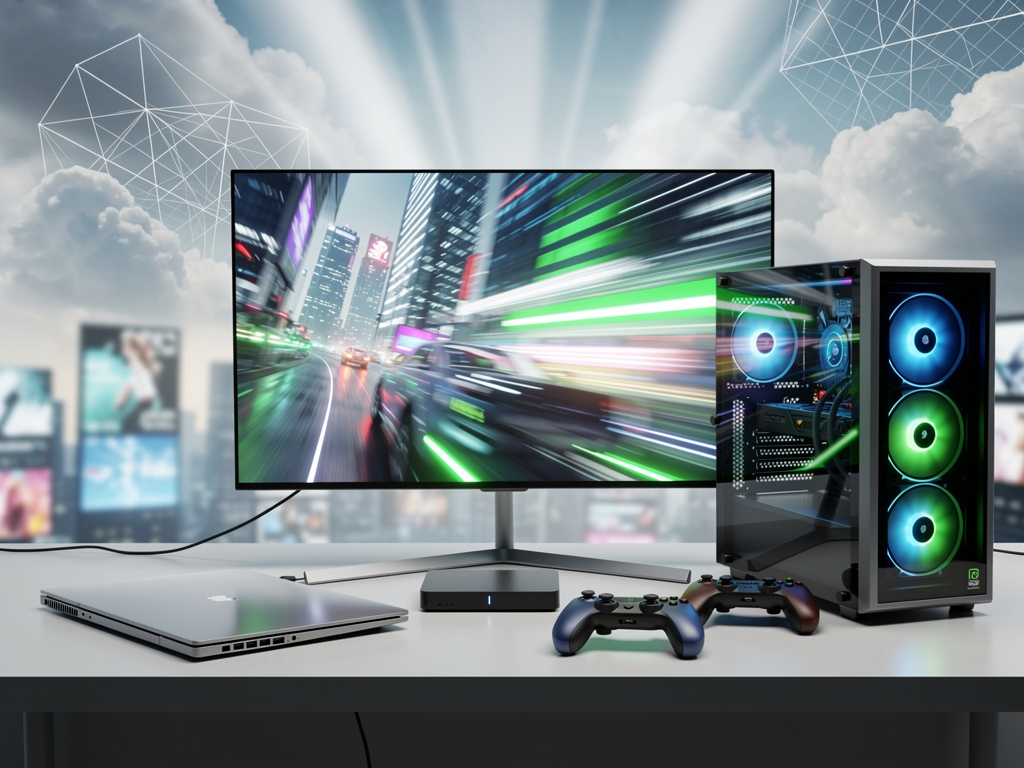
Dave Meikleham shelled out over $3,200 for an Asus ROG Zephyrus G14 laptop just over a year ago. Now? He wishes he hadn’t. Cloud gaming hooked him hard. “I love Nvidia GeForce Now. And I say that as someone who paid over $3,000 for an Asus ROG Zephyrus G14 a little over a year ago,” he wrote in a MakeUseOf article. His turnaround came courtesy of GeForce Now’s Ultimate tier, packing RTX 5080-level power for $20 a month. No fan roar. No heat blast. Just smooth frames on titles like Pragmata, Indiana Jones and the Great Circle, and Resident Evil Requiem with path tracing cranked.
Meikleham’s story isn’t isolated. Hardware prices spiked in 2026, thanks to AI data center demands gobbling RAM and GPUs. A secondhand RTX 5080 alone fetches $1,200. Build a full rig? Forget it. Cloud steps in. GeForce Now Ultimate delivers up to 120 FPS at 4K, 240 FPS at 1440p, or 360 FPS at 1080p. Nvidia’s DLSS 4.0 boosts frames via AI. Latency hovers around 30 milliseconds—lower than some native setups on high-end PCs, Meikleham notes. His 1GB fiber connection makes it fly. Minimum needed: 45 Mbps for 4K/120. But there’s a catch. 100 hours per month max. About 22 hours a week.
Quiet operation sold him. Native play on the G14 hits 52 decibels in turbo mode. Noise-canceling headphones mandatory. Cloud? Whisper-silent. “Compared to playing games natively on a high-end laptop that can consistently deliver 120 FPS without sacrificing image quality much, I can scarcely tell the difference in visuals,” he reports. Input feels snappier than on an RTX 5090 desktop that costs more than his car.
And the upgrades keep coming. At GDC 2026, Nvidia announced Blackwell RTX servers for Ultimate members starting September, promising 2.8 times the frame rates over prior gens—outrunning even the PS5 Pro by over three times in some cases, per Nvidia’s blog. VR streaming jumps to 90 FPS from 60. Install-to-Play expands the library by 2,200 Steam titles for paid users, though big installs over 100GB cost extra. Link Xbox Game Pass or Ubisoft+ accounts right in-app; labels flag playable games instantly. Windows Central covered the push, noting GeForce Now as the go-to for top performance against Xbox Cloud Gaming.
Tom’s Guide echoed the regret theme. Meikleham again: “2026 will be the year of cloud gaming—and we may not even have a choice.” GeForce Now shames PS5 Pro and Xbox Series X in benchmarks. Rising costs make local upgrades painful. “GeForce Now is so good, you probably shouldn’t buy a new GPU,” he argues in a January piece. Xbox Cloud Gaming trails in resolution and frames—1080p standard, now testing 1440p for Ultimate subs at $29.99 monthly via Game Pass. Rumors swirl of hourly caps on cheaper tiers, mimicking GeForce Now’s limits, as leaked in a NotebookCheck report.
Latency barriers crumble. Sub-30ms for GeForce Now users near data centers—within 300km—matches mid-range local rigs for 70% of genres: RPGs, strategy, sports. Competitive shooters? Trickier. Still, iBuidl Research calls it “genuinely playable for most,” in a March analysis. Xbox expanded to 45 countries, but catalog depth lags PC offerings.
Amazon Luna refreshed its UI and bundle with Prime Video, per Wirecutter’s 2026 update in The New York Times. No Stadia successor yet, despite whispers of Google’s beta with AI upscaling. Reddit threads buzz with mixed takes. One user laments a gaming laptop buy amid RAM shortages: “I kinda regret buying gaming laptop instead of small gaming PC few months ago.” Another praises GeForce Now on handhelds: no lag, max settings. But caps irk. “Stressing having a time limit… Kills the mood.”
Xbox pushes day-one releases and third-party hits via browser. GeForce Now integrates them too now. Hardware independence shines. Stream to Steam Deck, laptops, even Fire TV with native Linux support from CES 2026 demos. Portability rules. No more lugging beasts or battling thermals.
Costs stack up favorably long-term. $20 monthly versus $3,000 upfront plus power bills. But internet rules all. Fiber or bust for peak. Rural? Tough. Multiplayer latency adds hops. Single-player bliss, though.
Industry shifts. Publishers incentivize cloud with exclusives. Platforms blend streaming into subs. Windows Central predicts takeover: “Rising hardware costs, publisher incentives, and platform strategy shifts all point to 2026 becoming the year cloud gaming takes over—whether players want it or not,” in a December forecast. Tech4Gamers agrees: skyrocketing prices push toward services like GeForce Now and Xbox Cloud.
Meikleham’s all in. “Nvidia has completely sold me on the future (and present) of cloud gaming on a laptop.” Skeptics linger. Physics caps latency. Ownership feels safer. Yet for many, the math works. Regrets mount among recent hardware buyers. Cloud won them over. Fast.


 WebProNews is an iEntry Publication