
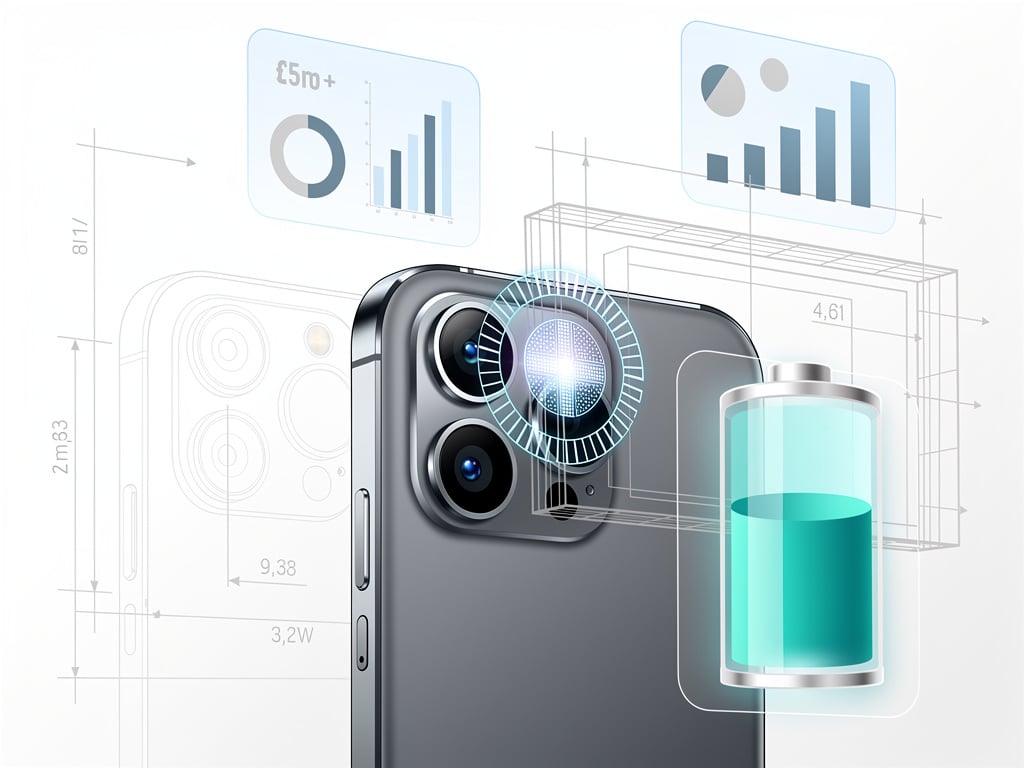
Apple’s iPhone 18 Pro models will arrive this fall with the same basic footprint as their predecessors. One part stands out. The camera plateau grows noticeably thicker.
Measurements from dummy units tell the story. The iPhone 18 Pro Max reaches 13.77 mm thick when measured to the top of its lenses. That compares with 12.92 mm on the iPhone 17 Pro Max. The body itself thickens too, from 11.23 mm to 11.54 mm excluding the bump. Weight climbs roughly seven grams to about 240 grams. (Gadget Hacks, published two days ago)
Most of the added bulk comes from the cameras. The aluminum plateau itself also gains some thickness. But the real driver sits inside those larger modules. A new 48-megapixel main sensor described as ultra-large. A variable aperture mechanism never before seen on an iPhone. And upgrades to the telephoto lens that demand more space.
The Hardware Trade-offs Behind the Protrusion
Leaker Digital Chat Station posted on Weibo that the iPhone 18 Pro series features a 48MP ultra-large sensor with a variable aperture. The statement, translated from Chinese, highlights sensor size as a key factor in overall device thickness. (9to5Mac)
Variable aperture lets the lens open and close like a DSLR iris. More light reaches the sensor in dark scenes. A narrower setting creates shallower depth of field for portraits. Yet the mechanism adds complexity. Supply chain analyst Ming-Chi Kuo reports the new lens assembly costs Apple roughly 50 percent more than the current fixed-aperture module. Apple absorbs much of that expense rather than raise prices sharply. Sunny Optical takes on a larger share of production, between 40 and 50 percent of orders. (Notebookcheck, May 29, 2026)
YouTuber Vadir Yuryev, also known as Vadim Yuryev of Max Tech, handled physical dummy models in April. His hands-on video showed the taller camera plateau and thicker individual lenses compared with last year’s device. The difference appears obvious from the side. (9to5Mac)
But the camera does not explain every extra millimeter. Rumors point to a larger battery inside the Pro Max. Those two changes reinforce each other. More camera hardware leaves less internal room. So the battery grows and the chassis adjusts. The result feels heavier in the hand. Some buyers will notice. Others may not care if photos improve. (Gadget Hacks)
Apple has enlarged iPhone camera lenses steadily for years. Each generation brought bigger sensors or more glass elements. This time the jump looks more dramatic. The 48MP main sensor carries a larger physical area, reported around 1/1.12-inch format according to additional Weibo tips. That demands deeper optics. Variable aperture blades require space to move. Telephoto improvements, possibly a wider aperture, add their own volume. So the plateau expands. The lenses protrude farther. Cases designed for the iPhone 17 Pro may still fit, but the visual change stands out. (MacRumors, April 11, 2026)
Early reactions split. Some industry watchers call the thicker bump a necessary compromise for genuine photography gains. Low-light performance should rise. Portrait shots gain better subject separation. Video could benefit from more controlled exposure. Yet the added weight and altered balance draw criticism from those who prefer slimmer phones. Dummy units already spark online debate about aesthetics.
Production realities add pressure. The variable aperture actuator raises defect risk during assembly. Factories in South Korea accelerate timelines to test yields ahead of the normal schedule. LG Innotek prepares full module integration. These steps suggest Apple commits serious resources despite higher costs. Ming-Chi Kuo first flagged the feature in late 2024. Multiple sources have since backed the details. The consensus holds.
And the software side matters too. A rumored pro-grade camera app in iOS 27 could expose manual aperture control. Or Apple might keep adjustments automatic for most users. Either path requires the physical hardware first. Without the larger sensor and moving iris, those options stay off the table.
Look back at Samsung. The Galaxy S9 and S10 carried variable aperture in 2018 and 2019. The company dropped it in 2020 citing thickness and cost. Apple now walks the same path years later with presumably better execution. The payoff could justify the bulk. Professional photographers and serious enthusiasts stand to gain most. Casual users might simply enjoy brighter night shots without thinking about the mechanics.
Thickness alone does not tell the full story. The iPhone 18 Pro keeps the same 6.3-inch and 6.9-inch display sizes. Overall length and width change little. Only that rear camera section grows. The design choice signals Apple’s priority. Image quality and new shooting modes outweigh slimness this cycle. Whether buyers accept the compromise will show up in sales data months after launch.
Supply chain leaks continue to surface. Recent reports confirm Sunny Optical’s expanded role and the 50 percent cost increase. No major contradictions have appeared. The picture grows clearer with each week. A bigger camera bump. More expensive components. Measurable gains in photography. The iPhone 18 Pro trades a bit of pocket comfort for photographic ambition.
That bargain feels familiar. Apple rarely chases the thinnest device on the market. It chases capability. This year the camera department receives the investment. The visible result sits right on the back. Larger. Thicker. And, if the leaks prove accurate, noticeably more capable.


 WebProNews is an iEntry Publication