
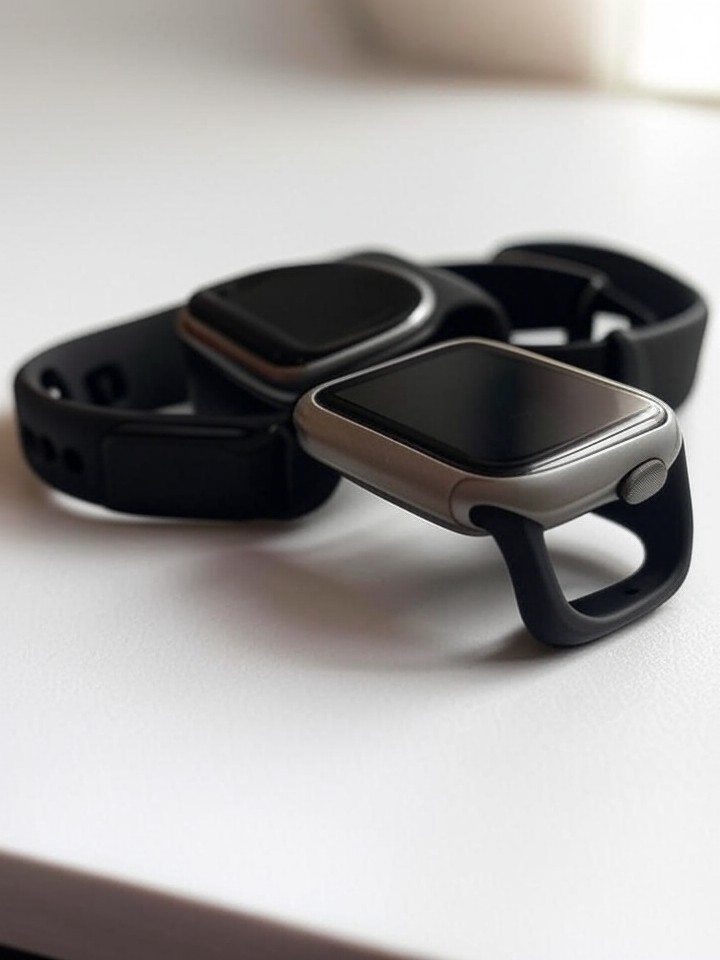
In the bustling world of wearable technology, smartwatches have evolved from simple timepieces into purported guardians of our well-being, promising to quantify everything from steps to sleep—and increasingly, stress. Devices like the Apple Watch, Garmin, and Fitbit now boast features that claim to gauge your stress levels in real time, often through metrics like heart rate variability (HRV). But beneath the sleek interfaces and motivational notifications lies a more nuanced reality: these gadgets may not be as insightful as they seem. Recent studies and expert analyses reveal significant gaps in their ability to truly capture the complexities of human stress, raising questions for consumers, developers, and health professionals alike.
At the core of most smartwatch stress-tracking systems is HRV, a measure of the variation in time between heartbeats. When you’re relaxed, your heart rate shows more variability; under stress, it becomes more uniform. Companies like Garmin and Whoop use this data to generate “stress scores,” often presented on a scale from low to high, sometimes accompanied by suggestions like breathing exercises. However, as highlighted in a recent article from Lifehacker, these scores can be misleading because they fail to distinguish between different types of arousal—be it the adrenaline rush from a thrilling movie or the chronic strain of a demanding job.
This limitation stems from the physiological underpinnings of stress. Stress isn’t a monolithic state; it encompasses emotional, physical, and cognitive dimensions. Smartwatches primarily rely on autonomic nervous system signals, but they can’t contextualize them. For instance, an elevated heart rate might indicate excitement rather than distress, a point underscored by researchers in a 2025 study published in The Guardian, where academics found devices struggled to differentiate overwork from positive stimulation.
The Science Behind the Sensors
To understand these shortcomings, it’s essential to delve into the technology itself. Most wearables employ photoplethysmography (PPG) sensors—optical tools that shine light into the skin to detect blood flow changes and derive heart rate data. From there, algorithms compute HRV. A 2023 paper in PMC explains that while this provides useful snapshots for activity and sleep tracking, its application to stress management is hampered by factors like individual variability and environmental influences. Someone with a naturally low HRV baseline might always appear “stressed” on the device, regardless of their actual state.
Industry testing further illuminates these issues. In long-term evaluations by Wareable, devices such as Oura and Whoop were praised for emerging accuracy in stress tracking, but even these top performers admitted to limitations in real-world scenarios. Motion artifacts, skin tone variations, and even wrist placement can skew readings, leading to inconsistent data. Samsung’s Galaxy Watch series, as detailed in an Android Authority explainer, uses similar PPG tech combined with user-inputted data, yet user forums like Reddit’s GalaxyWatch community abound with anecdotes questioning reliability—posts from as far back as 2023 note discrepancies between felt stress and device readings.
Beyond hardware, the algorithms interpreting this data are proprietary black boxes. A systematic review in MDPI from 2025 analyzed smartwatch features for mental health, finding that while heart rate monitoring influences positive behaviors, stress-related metrics often lack robust validation. The review called for more transparent evaluations, echoing concerns that without standardized benchmarks, users might misinterpret scores as medical advice.
Real-World Implications for Users
For everyday wearers, these inaccuracies can have tangible effects. Imagine a professional relying on their Fitbit Charge 6—lauded in a Business Insider review for reliable health tracking—to signal when to take a break. If the device confuses caffeine-induced jitters for chronic stress, it could prompt unnecessary interventions or, worse, ignore genuine burnout. Social media platforms like X (formerly Twitter) are rife with user sentiments reflecting this frustration; recent posts highlight skepticism, with one user noting how their Whoop band’s stress score spiked during exciting events, not just stressful ones, underscoring the tech’s inability to parse context.
Health experts emphasize that stress is subjective. A 2023 MDPI study, available at this link, praises smartwatches for promoting self-awareness but warns of pitfalls like over-reliance on potentially flawed data. Individual differences in HRV— influenced by age, fitness level, and even genetics—mean that what’s “high stress” for one person might be normal for another. This variability is compounded by external factors; for example, poor sleep or dehydration can mimic stress signals, as discussed in X posts from fitness enthusiasts comparing device outputs to professional medical readings.
Moreover, the integration of AI in newer models aims to personalize insights, but it often falls short. Garmin’s stress tracking, for instance, incorporates respiratory rate and movement data, yet a recent Lifehacker piece points out that without cortisol measurements—the gold standard hormone for stress—these are educated guesses at best. Users on X have shared experiments, like comparing smartwatch data to lab tests, revealing inconsistencies that erode trust.
Regulatory and Ethical Considerations
As wearables inch toward medical-grade status, regulatory bodies are taking notice. The FDA’s recent stance, as reported in Technowize, offers relief for fitness tech by not classifying general wellness devices as medical tools, but this leniency raises ethical questions. If a smartwatch prompts a user to seek help based on erroneous stress data, who bears responsibility? Industry insiders argue for clearer disclaimers, especially since a 2026 CNET article on sleep trackers, found here, notes similar overestimations in related metrics like rest quality.
Innovation continues, with some companies exploring advanced sensors. Fitbit’s Sense, introduced in 2020 as per a Verge post on X, added skin temperature tracking to bolster stress detection, but accuracy remains debated. A 2019 IEEE Xplore tweet referenced Stanford research on wearable cortisol monitoring, hinting at future possibilities, yet current devices lag behind. Posts on X from 2025, like those from BitDoctor.ai, discuss HRV-based mental stress indices on a five-point scale, but they acknowledge the non-invasive method’s limitations in capturing nuanced psychological states.
For developers, these challenges present opportunities. A Telegraph review of 2026 fitness trackers, accessible online, tested models like Garmin and Oura, finding them strong in activity tracking but weaker in stress interpretation. To bridge gaps, experts suggest hybrid approaches: combining wearable data with user journals or app-based mood logging, as seen in emerging features from Whoop.
Industry Responses and Future Directions
Manufacturers are responding, albeit gradually. Apple, for example, has refined its HRV algorithms in recent Watch OS updates, but critics argue more transparency is needed. A SlashGear post on X from early 2026 critiqued how smartwatches overestimate rest through breathing analysis, calling for AI coaching that’s grounded in better science. Similarly, a Lifehacker tweet from January 2026 advised users to view stress scores as tools, not truths, urging calibration with personal experiences.
Looking ahead, integration with other biometrics could enhance reliability. Research from Ashesi University, shared on X in 2024, showcased student-led innovations in health-monitoring smartwatches, emphasizing user control. Yet, as a 2025 PMC article reiterates, contextual interpretation remains key—stress perception is subjective, and tech must account for that.
Experts like those in the MDPI review advocate for interdisciplinary collaboration: merging wearable data with psychological assessments. This could lead to more actionable insights, such as tailored interventions for high-stress professions. Meanwhile, consumer education is crucial; resources like Wareable’s 2025 guide encourage viewing these devices as companions, not diagnosticians.
Navigating the Hype in Wearable Health
Amid the hype, discerning users are turning to comparative testing. Reddit threads from 2023, still relevant today, question Galaxy Watch accuracy, with users reporting that stress measurements didn’t align with their feelings. Recent X discussions echo this, with one post from 2026 highlighting a Whoop 5.0’s comprehensive tracking—including HRV and respiratory rate—but noting its stress metrics’ contextual blind spots.
The broader ecosystem of health tech must evolve too. As a Business Insider review of the Fitbit Charge 6 affirms, these devices excel in basics like heart rate and activity, providing value despite stress-tracking flaws. For insiders, the takeaway is clear: invest in validation studies and user-centric design to build trust.
Ultimately, while smartwatches offer a window into physiological signals, they don’t hold the full picture of stress. By acknowledging limitations and pushing for advancements, the industry can move toward tools that genuinely empower users, blending technology with human insight for better well-being.


 WebProNews is an iEntry Publication