
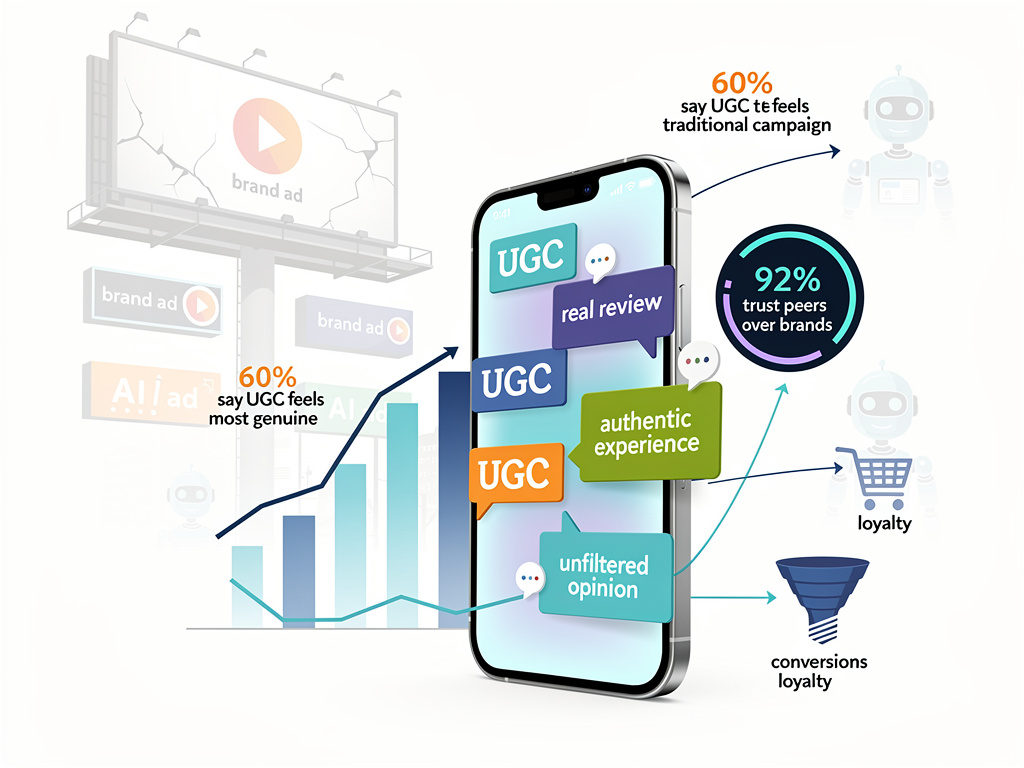
Audiences are ditching polished ads and AI creations for raw user-generated content, with authenticity emerging as the battleground for consumer loyalty. New research underscores this shift, revealing that 60% of consumers view user-generated content—or UGC—as the most genuine form of advertising, far outpacing traditional campaigns. This preference stems from a deep-seated craving for relatability in an era flooded by synthetic media.
Gen Z leads the charge, with 70% reporting UGC as highly influential in their buying journeys, according to a dcdx report cited by Inside Radio. Meanwhile, AI ads provoke backlash: over 30% of U.S. adults shun brands using them, 37% hold negative views, and nearly two-thirds feel uneasy. Marketers echo this, with 78% prioritizing UGC in social strategies—36% calling it extremely important—versus just 28% for AI content.
UGC’s edge lies in its organic origins, created by everyday users rather than brands or agencies. This peer-driven material fosters community and boosts perceived trustworthiness, researchers note. As AI tools proliferate, brands face a stark choice: chase efficiency at the cost of credibility or harness real voices for enduring connections.
AI’s Trust Penalty Exposed
Disclosure of AI involvement often tanks performance. A 2025 study from the Nuremberg Institute for Market Decisions found labeling ads as AI-generated renders them less natural and useful, slashing ad attitudes and purchase intent, as detailed by KO Insights. Similarly, Smartly.io research shows only 13% trust fully AI-crafted ads, versus 48% for human-AI hybrids.
NIQ’s 2025 probe confirms consumers detect inauthenticity subconsciously, urging caution amid rapid AI adoption in creatives. IAB’s latest survey reveals 83% of ad executives now deploy AI in production—up from 60%—yet Gen Z and millennials remain skeptical, perceiving less positivity than execs assume, per IAB.
Even high-profile AI ads from Kalshi, Volvo, and Coca-Cola draw scrutiny, highlighting a creativity-authenticity rift. Bob Pittman, iHeartMedia’s CEO, warns, “We’re not going to have AI masquerading as humans… The one thing we value more than anything else is trust—and you lose that, you’re dead,” as quoted in Inside Radio.
UGC’s Measurable Supremacy
Statistics paint a clear picture: 92% of consumers trust peer recommendations over brand messaging, driving 29% higher conversions for UGC campaigns, reports inBeat Agency. Ads with UGC boast four times the click-through rates and 50% lower cost-per-click. Three in five consumers deem UGC the most authentic format, eclipsing influencers and experts.
84% of Gen Z trust brands more when ads feature real customers, with UGC yielding 4.5% better conversions than traditional ads. The UGC platform market surges from $9.85 billion in 2025 to $35.44 billion by 2030, signaling a structural pivot, according to Archive.com.
Brands like Airbnb and GoPro thrive by amplifying customer stories, proving UGC’s power to humanize marketing. Its cost-effectiveness—minimal spend beyond incentives—democratizes access for smaller players, while building engagement that polished ads can’t match.
Marketer Strategies Evolve
78% of global marketers rate UGC vital for social media, valuing its relatability over AI’s scalability. AI shines in backend roles like sentiment analysis and distribution, but not as content creator. iHeartMedia’s “Guaranteed Human” pledge exemplifies this: tech saves $150 million yearly, yet human talent remains sacred.
California Management Review notes UGC’s double-edged nature but affirms its authenticity trumps traditional ads, enhanced by AI curation without replacement. Platforms like Instagram see UGC posts garner 70% more engagement, fueling organic reach.
To capitalize, brands incentivize shares, curate ethically, and blend with branded content. Transparency rules—like the EU AI Act mandating disclosures—further tilt toward verifiable human input, as explored in California Management Review.
Real-World Wins and Pitfalls
Hallow app rocketed to No. 1 over Netflix via UGC engines scaling trust through habit-driven stories, amassing 20 million downloads. X discussions echo this: users note UGC converts better as it mimics recommendations, not pitches.
Yet pitfalls loom—sponsored posts erode trust if undisclosed, demanding 5x compensation. AI clones risk backlash; undisclosed AI ads outperform by 19% in clicks but plummet 32% upon reveal, per X insights. Females trust UGC more, especially for non-gendered products.
Forward-thinking execs prioritize hybrid models: AI for ops, UGC for frontlines. As Ramon Melgarejo of NIQ states, “Brands… need to be cautious, as our study reveals that consumers are quite sensitive to the authenticity of ad creatives,” via NielsenIQ.
Navigating Regulations and Futures
EU mandates and Meta’s policies require AI labels, amplifying trust gaps. 75% of consumers favor disclosures, yet they often heighten suspicion. Studies show AI ads rate lower on authenticity and trustworthiness versus human-made.
UGC mitigates this, with 90% of consumers prioritizing authenticity in brand choices. Its viral potential—79% say it sways purchases—positions it as indispensable. Brands fostering communities reap loyalty, turning users into advocates.
The verdict is unequivocal: in ad trust battles, real voices prevail. Marketers ignoring UGC risk obsolescence amid rising AI fatigue and demands for genuineness.


 WebProNews is an iEntry Publication