
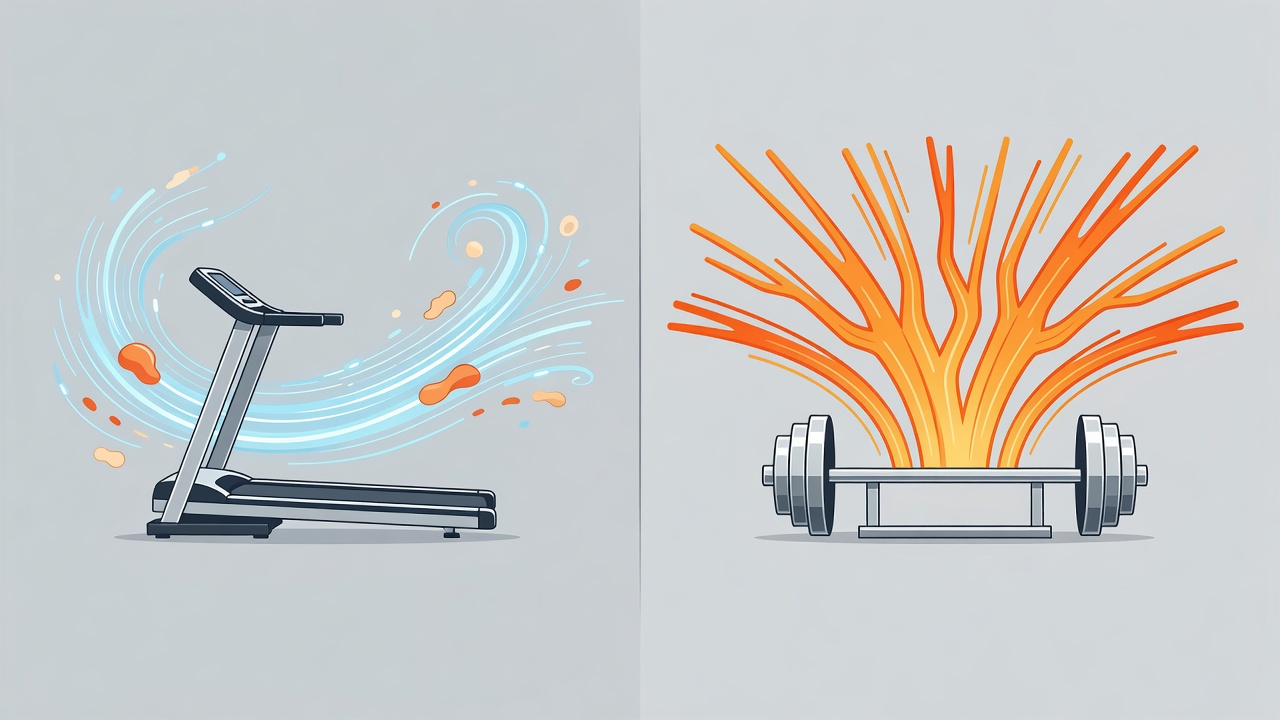
Scientists at Virginia Tech have uncovered evidence that challenges long-held assumptions about the best forms of exercise for metabolic health. In a study published last fall, resistance training showed clear advantages over endurance work in mice prone to obesity and diabetes. The findings, from the Fralin Biomedical Research Institute at VTC, suggest weightlifting triggers distinct pathways that improve insulin sensitivity more effectively than running.
Zhen Yan led the research. He directs the Center for Exercise Medicine Research. “We all want to live a long, healthy life,” Yan said. “There is plenty of evidence in humans that both endurance exercise, such as running, and resistance exercise, such as weightlifting, are effective in promoting insulin sensitivity.” Yet direct comparisons remained scarce. His team set out to change that.
The experiment used mice fed a high-fat diet. This model mimics human obesity, high blood sugar and Type 2 diabetes. One group had access to running wheels. Another performed a custom weightlifting routine. Researchers built special cages where mice lifted a weighted lid to reach food. The setup forced squat-like movements. Loads increased over time. It replicated progressive resistance training. Sedentary controls rounded out the groups.
Eight weeks later, results stood out. Both exercise types cut abdominal and subcutaneous fat. Both improved blood glucose control and insulin signaling in muscle. But weightlifting delivered superior outcomes. It reduced fat more. It boosted glucose tolerance further. It lowered insulin resistance to a greater degree. “Importantly, weightlifting outperforms running in these health benefits,” Yan reported in the Virginia Tech News article.
The benefits appeared independent of added muscle mass or better exercise capacity. Something else was at work. Unique metabolic shifts in skeletal muscle. The study, published Oct. 30, 2025, in the Journal of Sport and Health Science, points to specific signaling changes. These could guide future therapies. And the news extends beyond the lab.
“The findings also bring good news for people who, for any number of reasons, cannot engage in endurance-type exercise,” Yan added. “Weight training has equal, if not better, anti-diabetes benefits.” Millions struggle with joint pain, breathing issues or time constraints that limit running. For them, lifting offers a practical alternative. Or a powerful complement.
Yan drives home a balanced view. “The take-home message is that you should do both endurance and resistance exercise, if possible, to get the most health benefit.” His work, supported by the National Institutes of Health and the Red Gates Foundation, adds to decades of evidence on exercise and aging.
Sarcopenia, the age-related loss of muscle, accelerates after 30. It drives frailty, falls and metabolic decline. Resistance training counters it directly. A 2022 review in Age and Ageing positions it as the first-line treatment. Two sessions weekly. Upper and lower body moves. Six to 12 reps at high effort. Gains in strength, function and muscle size follow. Even in adults well into their 80s.
Recent data reinforces the point. A 2026 analysis in the British Journal of Sports Medicine tied moderate resistance training — about 120 minutes weekly — to lower all-cause mortality. Risks dropped and then leveled off. The same pattern holds for cardiovascular death and cancer. Pairing it with aerobic activity amplifies the effect. But strength work stands on its own.
Older adults with Type 2 diabetes see particular gains. A 2025 meta-analysis in Diabetes Research and Clinical Practice reviewed 19 trials. Resistance programs improved muscle strength, lean mass and waist size. Blood lipids moved in a favorable direction. Triglycerides, total cholesterol and LDL all declined. These changes matter. They reduce vascular strain and support daily independence.
Brain health enters the picture too. A 2026 randomized trial summarized in the European Medical Journal found regular moderate to heavy lifting slowed brain aging. Neuroimaging showed participants’ brains appeared up to 2.3 years younger. Connectivity improved across networks tied to attention and decision-making. The effect spanned the whole brain. Not just isolated regions. Strength training, it seems, builds cognitive reserve alongside physical power.
Yet questions remain. How do these mouse findings translate to humans? The Virginia Tech model offers clues. Mice in the weightlifting group didn’t just get stronger. Their muscles handled glucose better at a molecular level. Insulin pathways activated more robustly. Autophagy and mTOR signaling showed coordinated changes. These processes clear damaged components and promote growth. Balance between them appears key.
Pharmaceutical options have surged. GLP-1 agonists help many manage weight and blood sugar. Yan cautions against overreliance. Drugs don’t replicate exercise’s full spectrum of effects. They miss the mechanical loading, the neural adaptations, the full-body coordination. “While popular drug interventions like GLP-1 agonists can help with diabetes management and weight loss, they do not replace the unique, accessible, and comprehensive benefits of a well-balanced exercise program,” he noted.
Practical application follows. Start simple. Bodyweight squats. Dumbbell presses. Resistance bands for those new to training. Focus on proper form. Progressive overload over months yields results. Two or three sessions per week suffice for most. Combine with daily movement. The synergy matters. Endurance builds cardiovascular fitness. Resistance fortifies muscle and bone. Together they combat the metabolic slowdown that accompanies age.
Public health implications loom large. Diabetes rates continue climbing. Obesity affects all demographics. Sedentary behavior compounds both. Guidelines already endorse mixed training. This research sharpens the rationale. For those limited by orthopedic issues, weightlifting may prove the smarter starting point. It delivers metabolic punch without the repetitive impact of running.
Recent trials explore combinations. Protein supplementation paired with strength and balance work improves mobility in older adults, according to a February 2026 report shared on Verywell. Creatine plus resistance training boosts strength in older women, per discussions on X. These approaches target multiple systems at once. Muscle. Bone. Mitochondria. Even the brain.
One 2025 pilot study in Frontiers in Physiology tested progressive multimodal resistance in women with osteopenia. Varied movements and ranges of motion supported bone density. Functional gains followed. Such programs address the interconnected losses of aging. Muscle decline. Bone weakening. Balance erosion. A single intervention touches them all.
Back at Virginia Tech, the team continues probing mechanisms. Ryan Montalvo and collaborators from the University of Virginia contributed to the original work. Their custom cage system opens new research avenues. Future studies may test different loads, frequencies and durations. They may examine sex differences or genetic factors. The goal stays consistent. Pinpoint how exercise reprograms metabolism at the deepest levels.
Individuals can act now. Assess current routines. Add resistance elements if missing. Consult professionals when needed. The evidence grows clearer each year. Strength training isn’t optional for healthy aging. It forms a foundation. It protects against diabetes. It preserves function. It may even keep the mind sharp longer.
Yan captured the spirit. Both modalities help. But one edges ahead in key metabolic markers. Weightlifting deserves more attention in fitness prescriptions. Especially for populations at metabolic risk. The mice proved it. Human trials build on that base. And the message spreads. Lift. Build. Sustain. The payoff extends far beyond the gym floor.


 WebProNews is an iEntry Publication