
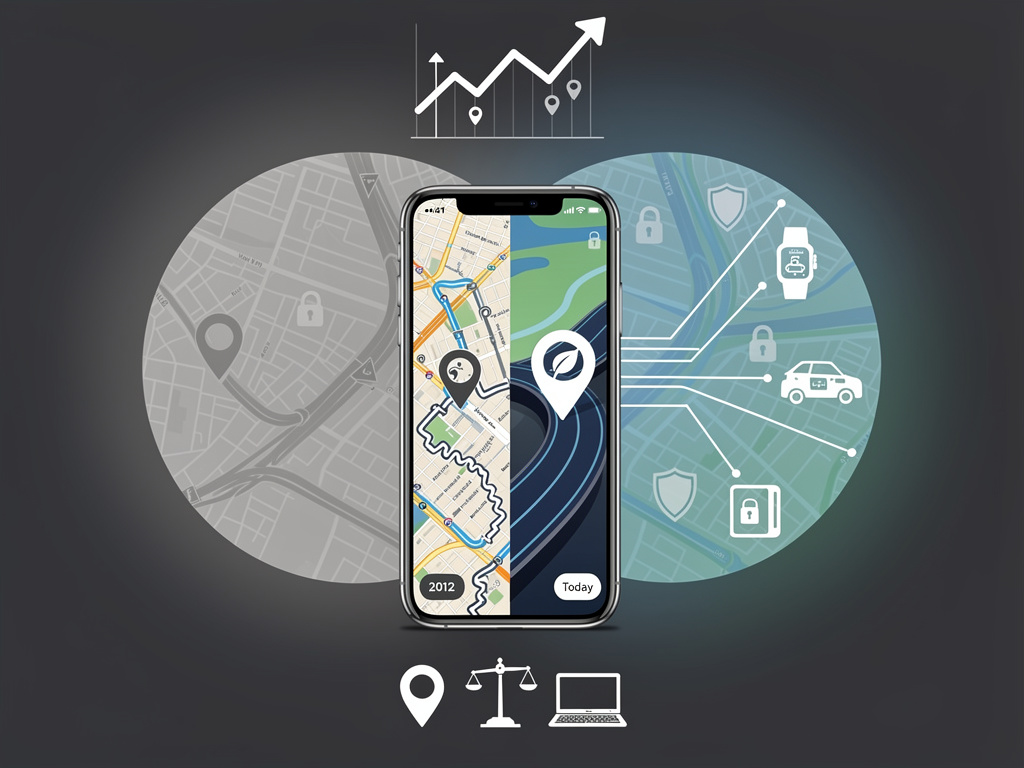
For more than a decade, Google Maps has been the undisputed king of digital navigation. It was the app that iPhone users downloaded first, the default recommendation from tech enthusiasts, and the gold standard against which every competitor was measured. But a quiet revolution is underway, and it’s coming from the most unlikely of places: Apple Maps, the very application that was once a punchline in Silicon Valley after its disastrous 2012 launch. A growing chorus of technology writers and power users are now declaring that Apple’s navigation tool has not only caught up with Google Maps — it may have surpassed it in several critical areas.
The latest salvo in this shifting narrative comes from MakeUseOf, where technology writer Shaan Khan published a detailed account of his experience switching from Google Maps to Apple Maps — and his subsequent refusal to switch back. Khan’s piece is not a casual endorsement; it’s a systematic breakdown of the features, design philosophy, and real-world performance differences between the two platforms. His verdict is unambiguous: Apple Maps has evolved into a superior product for everyday navigation, particularly for users embedded in the Apple ecosystem.
The Fall and Rise of Apple Maps: From Laughingstock to Legitimate Contender
When Apple Maps launched alongside iOS 6 in September 2012, it was immediately savaged by critics and users alike. Misplaced landmarks, distorted satellite imagery, and directions that led drivers onto airport runways made headlines worldwide. The debacle was so severe that Apple CEO Tim Cook issued a rare public apology and reportedly fired Scott Forstall, the executive who had overseen the Maps rollout. For years afterward, the conventional wisdom was clear: use Google Maps on your iPhone and pretend Apple Maps doesn’t exist.
But Apple, with its characteristic long-game approach and deep financial reserves, never abandoned the project. The company invested billions of dollars in rebuilding its mapping data from the ground up, deploying fleets of vehicles equipped with LiDAR sensors and high-resolution cameras to survey roads across the globe. Apple also recruited top cartography and machine learning talent, and methodically added features that users had come to expect from Google’s offering. By 2020, Apple had completed its rebuilt map data for the United States, and the improvements were impossible to ignore. The question was no longer whether Apple Maps was usable — it was whether it could genuinely compete.
Design Philosophy: Where Apple Maps Pulls Ahead
According to Khan’s analysis in MakeUseOf, one of the most compelling reasons to prefer Apple Maps is its cleaner, more intuitive interface. Google Maps, over the years, has become increasingly cluttered with sponsored listings, promotional content, and advertising integrations that can make the simple act of finding directions feel like navigating a commercial marketplace. Apple Maps, by contrast, maintains a minimalist design ethos that prioritizes the user’s immediate need: getting from point A to point B without visual noise.
This design difference is not merely cosmetic. When you’re driving at highway speeds and glancing at your phone mount, the clarity of the information presented on screen becomes a safety issue. Apple Maps presents turn-by-turn directions with large, readable text, well-timed audio prompts, and a color palette that reduces eye strain during nighttime driving. The app’s integration with CarPlay is also notably smoother than Google Maps’ equivalent experience with Android Auto or its CarPlay implementation, owing to Apple’s control over both the hardware and software ecosystems. For users who own an iPhone, Apple Watch, and Mac, the seamless handoff of directions between devices is a feature that Google simply cannot replicate with the same level of polish.
Privacy as a Differentiator in the Navigation Market
Perhaps the most significant philosophical divide between the two services lies in their approach to user data. Google’s entire business model is built on data collection and targeted advertising. Google Maps is no exception — the app tracks location history, builds profiles of frequently visited places, and uses this information to serve ads both within the app and across Google’s broader advertising network. For users who are increasingly conscious of digital privacy, this represents a meaningful concern.
Apple has positioned privacy as a core brand value, and Apple Maps reflects this commitment. The company has stated that it does not build user profiles based on Maps data, does not sell location information to third parties, and processes as much data as possible on-device rather than in the cloud. Location data associated with Apple Maps is anonymized and tied to random identifiers rather than Apple IDs. For privacy-conscious professionals — particularly those in industries like law, finance, and healthcare where location data could be sensitive — this distinction alone may justify the switch. Khan highlighted this privacy advantage as one of the decisive factors in his decision to stay with Apple Maps permanently.
Feature Parity and the Closing of the Gap
Critics of Apple Maps have long pointed to Google’s superior feature set as the reason to stick with the incumbent. Google Maps offers Street View, a feature that has been available since 2007 and covers vast stretches of the globe. It provides detailed transit information for hundreds of cities, real-time traffic data sourced from the enormous pool of Android users worldwide, and a business listing database that is unrivaled in its depth and accuracy. These are legitimate advantages that took Google years and billions of dollars to build.
However, Apple has been closing these gaps with remarkable speed. Apple Maps now offers “Look Around,” its own street-level imagery feature, which many users argue provides higher-resolution, more visually appealing imagery than Google Street View. The coverage of Look Around has expanded significantly since its 2019 debut and now includes major metropolitan areas across the United States, Europe, and parts of Asia. Apple has also dramatically improved its transit directions, cycling routes, and walking navigation. The addition of detailed 3D city experiences for select cities — including London, New York, San Francisco, and Los Angeles — provides a level of visual immersion that Google Maps has only recently begun to match with its own Immersive View feature.
Where Google Maps Still Holds the Crown
It would be intellectually dishonest to suggest that Apple Maps has overtaken Google Maps in every category. Google’s platform remains superior in several important respects. Its database of business listings, reviews, and user-generated content is vastly more comprehensive. If you’re searching for a specific restaurant’s hours, reading recent customer reviews, or looking for photos of a venue before visiting, Google Maps remains the more reliable resource. The integration with Google’s broader search infrastructure means that queries within Maps benefit from the same powerful algorithms that drive the world’s dominant search engine.
Google Maps also maintains a significant advantage in international coverage. While Apple Maps has made impressive strides in the United States and Western Europe, its data quality in parts of Asia, Africa, and South America still lags behind Google’s. For frequent international travelers, this gap can be a dealbreaker. Google’s real-time traffic data, powered by the sheer volume of Android devices reporting location information worldwide, also tends to be more granular and accurate in many regions. These are areas where Apple’s smaller market share in certain geographies puts it at a structural disadvantage in data collection.
The Ecosystem Effect and What Comes Next
The broader context for this shift extends beyond the merits of any single feature. Apple’s strategy has always been to create an integrated ecosystem where each product and service enhances the value of the others. Apple Maps is deeply woven into this fabric — it powers location services in Messages, Safari, Siri, Calendar, and countless third-party apps. When an iPhone user receives a calendar invite with an address, tapping it opens Apple Maps by default. When Siri is asked for directions, it routes through Apple Maps. This default advantage, combined with the app’s genuine quality improvements, creates a powerful flywheel effect that is difficult for Google to counteract on Apple’s own platform.
Apple’s forthcoming updates, previewed at recent developer conferences, suggest the company is far from finished. Enhanced integration with the Vision Pro spatial computing headset, improved offline maps capabilities, and expanded EV routing features all point to a roadmap designed to further erode Google’s advantages. Meanwhile, Google has responded by continuing to innovate — its AI-powered search within Maps, Immersive View for routes, and expanded indoor mapping capabilities demonstrate that the company is not ceding ground willingly.
A New Chapter in Digital Navigation
For industry observers, the real story here is not that one mapping app is definitively better than the other. It’s that meaningful competition has finally arrived in a category that Google dominated virtually unchallenged for over a decade. Competition benefits consumers through better features, improved privacy protections, and faster innovation cycles. Khan’s experience, as documented in his MakeUseOf piece, is emblematic of a broader trend: users who try Apple Maps with fresh eyes in 2024 and 2025 are discovering an application that bears almost no resemblance to the broken product that launched in 2012.
The navigation wars are far from over. Google’s data advantages, global reach, and advertising-driven investment model ensure it will remain a formidable competitor for years to come. But Apple has proven that patience, investment, and a relentless focus on user experience can transform even the most embarrassing product failure into a genuine market leader. For the millions of iPhone users who have never given Apple Maps a second chance, the message from early adopters like Khan is clear: it’s time to reconsider.


 WebProNews is an iEntry Publication