
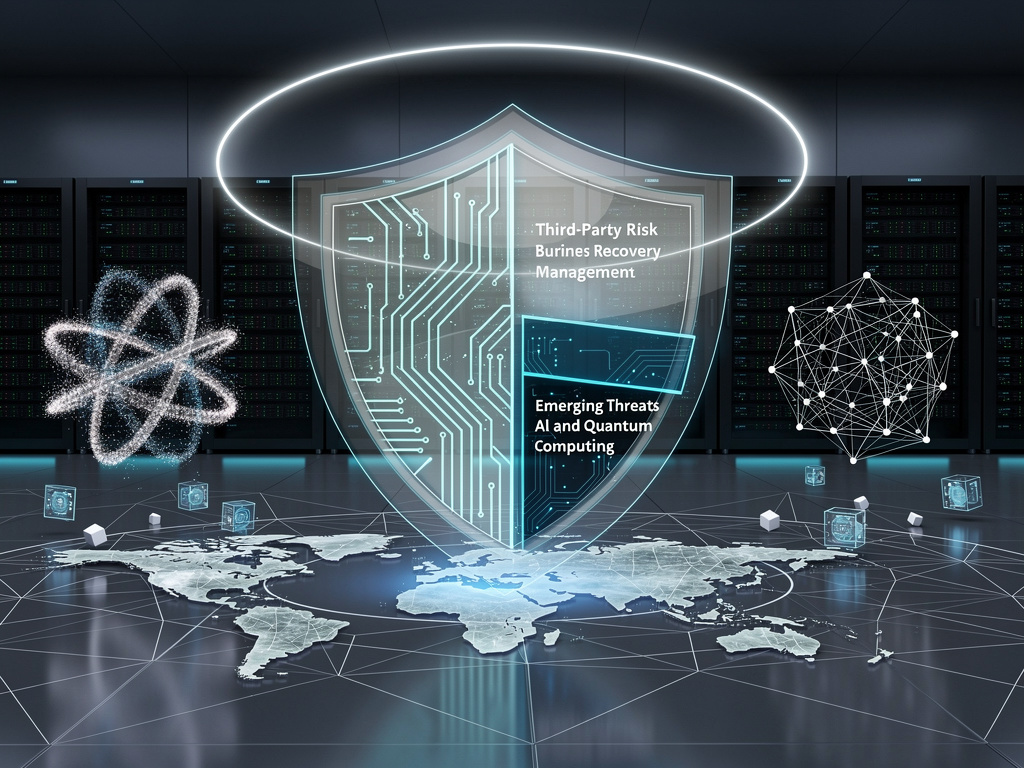
In an era where cyber threats evolve faster than defense mechanisms can adapt, chief information security officers face an existential challenge: protecting their organizations while enabling business growth. The traditional approach of building impenetrable walls around corporate networks has given way to a more nuanced strategy—one that acknowledges breaches are inevitable and focuses instead on rapid recovery and operational continuity. This shift represents a fundamental reimagining of cybersecurity’s role within the enterprise.
Shebani Baweja, a veteran CISO with extensive experience navigating complex security environments, recently shared insights that illuminate this transformation. Speaking with Help Net Security, Baweja outlined a practical framework for cyber resilience that moves beyond theoretical constructs to address the real-world pressures facing security leaders today. Her approach centers on three critical pillars: managing third-party risk, anticipating emerging threats, and aligning security initiatives with business objectives.
The conversation reflects a broader industry awakening to the reality that cybersecurity cannot function as an isolated technical discipline. Instead, it must integrate seamlessly with business strategy, supply chain management, and organizational culture. For CISOs navigating this complex terrain, the challenge lies not merely in deploying the latest security technologies but in building organizational resilience that can withstand and recover from inevitable disruptions.
The Third-Party Risk Paradox: Collaboration and Vulnerability
Modern enterprises operate within intricate ecosystems of vendors, partners, and service providers, each representing both an operational necessity and a potential security vulnerability. According to IBM’s 2024 Cost of a Data Breach Report, breaches involving third parties cost organizations an average of $4.88 million, highlighting the financial stakes of supply chain security. Baweja emphasizes that effective third-party risk management requires moving beyond checkbox compliance exercises to develop genuine partnerships with vendors around security expectations.
The challenge intensifies as organizations embrace cloud computing, software-as-a-service platforms, and complex integration architectures. Each new vendor relationship introduces additional attack surface, yet business demands often prioritize speed and functionality over security vetting. Baweja advocates for a risk-based approach that segments vendors according to their access to critical systems and data, applying more rigorous controls to high-risk relationships while streamlining processes for lower-risk engagements.
Building Vendor Accountability Through Transparency
Traditional vendor questionnaires and annual audits no longer suffice in a threat environment where vulnerabilities emerge daily. Gartner research indicates that by 2025, 60% of organizations will use cybersecurity risk as a primary determinant in conducting third-party transactions and business engagements. This shift demands continuous monitoring capabilities and real-time visibility into vendor security postures.
Baweja stresses the importance of establishing clear contractual obligations around incident notification, security controls, and audit rights. However, she cautions against creating adversarial relationships that discourage vendors from reporting problems. The goal should be fostering a collaborative security culture where vendors view the organization as a partner in risk management rather than a punitive overseer. This balance requires sophisticated relationship management skills that many security teams are still developing.
Emerging Threats: From Artificial Intelligence to Quantum Computing
The threat horizon continues expanding as adversaries leverage advanced technologies to enhance their capabilities. Artificial intelligence and machine learning now enable attackers to automate reconnaissance, personalize phishing campaigns, and identify vulnerabilities at unprecedented scale. According to Dark Reading, AI-powered attacks increased by 78% in 2024, with particularly sophisticated campaigns targeting financial services and healthcare organizations.
Baweja highlights the dual nature of AI in cybersecurity: while adversaries exploit these technologies for offensive purposes, defenders can leverage the same capabilities to enhance threat detection, automate response workflows, and predict attack patterns. The challenge lies in building AI security programs that remain explainable and auditable, avoiding the “black box” problem that can undermine trust in automated security decisions. Organizations must invest in both the technology and the talent capable of implementing AI-driven security effectively.
The Quantum Threat on the Horizon
Beyond immediate concerns, forward-thinking CISOs must prepare for quantum computing’s potential to break current encryption standards. The National Institute of Standards and Technology has already published post-quantum cryptographic standards, recognizing that adversaries may be harvesting encrypted data today for future decryption. Baweja emphasizes that organizations should begin inventorying their cryptographic assets and developing migration plans, even though practical quantum computing threats remain years away.
This long-term perspective exemplifies the strategic thinking required of modern CISOs. Security leaders must balance immediate operational demands with investments in future resilience, often without clear return-on-investment metrics. The challenge intensifies in organizations where security budgets face scrutiny and business leaders demand justification for every expenditure. Baweja argues that framing these investments in business terms—protecting revenue, maintaining customer trust, ensuring regulatory compliance—proves more effective than technical arguments about cryptographic vulnerabilities.
Translating Technical Risk into Business Language
Perhaps the most critical skill for contemporary CISOs involves communicating security concerns in terms business leaders understand and prioritize. Technical discussions about zero-day vulnerabilities and advanced persistent threats rarely resonate in boardrooms focused on market share, customer acquisition, and quarterly earnings. According to Forbes, CISOs who successfully align security initiatives with business objectives report 43% higher budget approval rates than those who maintain purely technical focus.
Baweja advocates for developing business impact analyses that quantify security risks in financial terms: potential revenue loss, regulatory penalties, customer churn, and reputational damage. This approach requires security leaders to deeply understand their organization’s business model, competitive positioning, and strategic priorities. The CISO must function as a business executive who happens to specialize in risk management rather than a technical specialist who occasionally interacts with business leadership.
Building Cross-Functional Security Champions
Effective cyber resilience cannot be achieved by security teams operating in isolation. Baweja emphasizes the importance of cultivating security awareness and accountability throughout the organization, from software developers implementing secure coding practices to customer service representatives recognizing social engineering attempts. CSO Online reports that organizations with comprehensive security awareness programs experience 70% fewer successful phishing attacks than those with minimal training.
However, traditional security awareness training—annual videos and checkbox compliance exercises—proves insufficient in dynamic threat environments. Modern approaches incorporate simulated phishing campaigns, gamified learning experiences, and role-specific training that addresses the unique risks different employees face. The goal shifts from mere awareness to behavioral change, embedding security considerations into daily workflows and decision-making processes across the organization.
Measuring Resilience: Beyond Traditional Security Metrics
Traditional security metrics—number of vulnerabilities patched, percentage of systems updated, time to detect threats—provide limited insight into organizational resilience. Baweja advocates for metrics that measure recovery capabilities: how quickly can critical systems be restored following an incident? How effectively can the organization maintain operations during a cyberattack? What percentage of employees can identify and report security concerns? According to SecurityWeek, organizations that measure resilience indicators demonstrate 52% faster recovery times following security incidents.
These metrics require different measurement approaches and data sources. Rather than relying solely on security tool outputs, resilience measurement incorporates business continuity testing, incident response exercises, and cross-functional coordination assessments. The CISO must work closely with business unit leaders to define acceptable recovery time objectives and establish realistic expectations around operational continuity during security events. This collaborative approach ensures security investments align with actual business needs rather than theoretical security ideals.
The Regulatory Compliance Imperative
Regulatory requirements continue expanding globally, with new frameworks emerging across jurisdictions and industries. The European Union’s Digital Operational Resilience Act, SEC cybersecurity disclosure rules, and state-level privacy regulations create complex compliance obligations that vary by geography and sector. JD Supra notes that organizations now navigate an average of 37 different cybersecurity and privacy regulations, up from 22 just five years ago.
Baweja emphasizes that compliance should be viewed as a baseline rather than a destination. Meeting regulatory requirements ensures legal protection and avoids penalties, but true cyber resilience demands investments beyond minimum standards. The most sophisticated organizations use regulatory frameworks as starting points, then enhance controls based on their specific risk profiles and threat intelligence. This approach requires security leaders to maintain current knowledge of evolving regulations while advocating for risk-based investments that may exceed compliance mandates.
Building Organizational Resilience Through Culture
Technology and processes provide necessary foundations for cyber resilience, but organizational culture ultimately determines success or failure. Baweja stresses that security must be embedded into corporate values and decision-making frameworks rather than treated as an afterthought or obstacle to business objectives. Harvard Business Review research indicates that organizations with strong security cultures experience 64% fewer successful breaches and recover 48% faster when incidents occur.
Creating this culture requires consistent messaging from senior leadership, appropriate incentive structures, and visible consequences for security failures. When executives publicly prioritize security, allocate adequate resources, and hold business units accountable for risk management, employees throughout the organization internalize these values. Conversely, when leadership treats security as a cost center or obstacle to innovation, even the most sophisticated technical controls prove insufficient. The CISO’s challenge involves influencing organizational culture while lacking direct authority over most employees—a leadership test that separates effective security executives from mere technical managers.
The Path Forward: Adaptive Security in Uncertain Times
The cybersecurity challenges facing organizations will intensify as threat actors become more sophisticated, attack surfaces expand, and business operations grow increasingly digital. Baweja’s framework for cyber resilience acknowledges these realities while providing practical guidance for security leaders navigating uncertain terrain. Success requires balancing competing demands: enabling business innovation while managing risk, investing in future capabilities while addressing immediate threats, and maintaining security rigor while fostering collaborative vendor relationships.
The most successful CISOs will be those who transcend traditional technical roles to become strategic business advisors, risk managers, and organizational leaders. They must communicate effectively with diverse stakeholders, from technical teams implementing controls to board members evaluating enterprise risk. They must balance short-term operational demands with long-term strategic investments, often without perfect information or adequate resources. And they must build resilient organizations capable of withstanding and recovering from inevitable security incidents while maintaining stakeholder trust and business continuity. This multifaceted challenge demands skills, perspectives, and leadership capabilities that extend far beyond traditional cybersecurity expertise—a reality that defines the modern CISO role and shapes the future of enterprise security.


 WebProNews is an iEntry Publication