
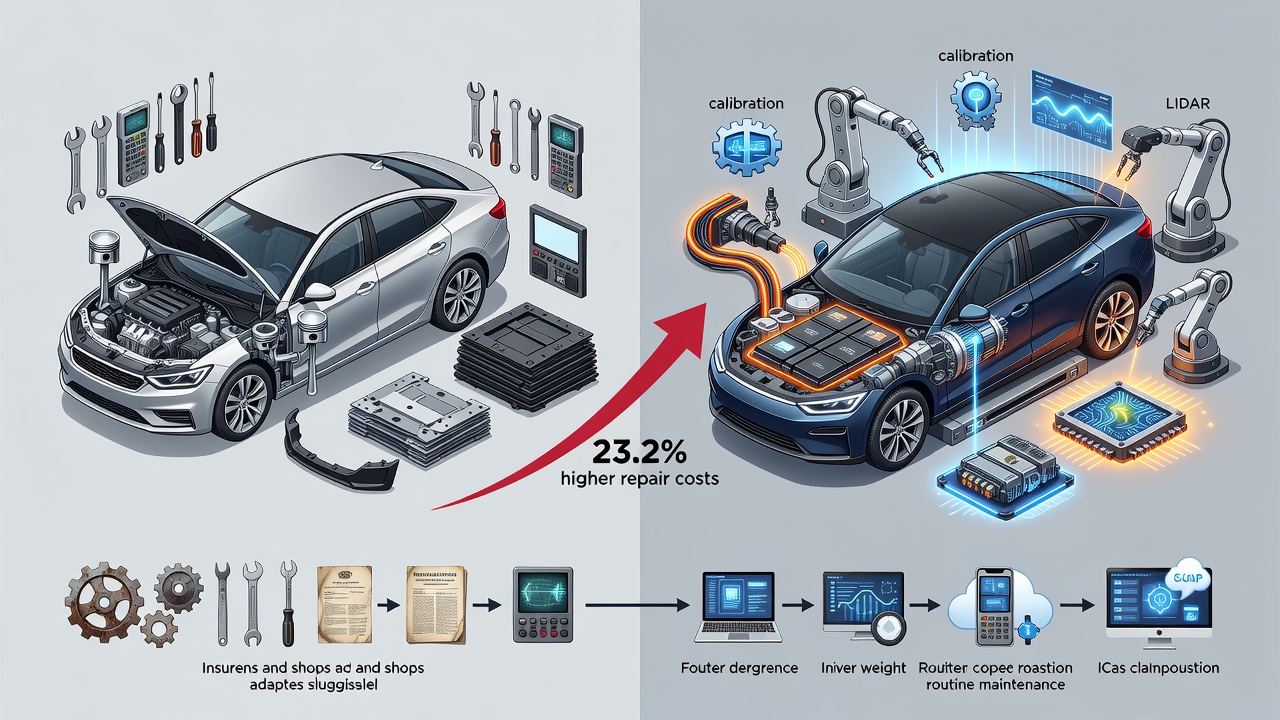
Electric vehicles promise lower running costs and fewer trips to the mechanic. Yet when they crash, the bill shocks owners and insurers alike. A new European analysis shows repairs for electrified cars now run 23.2% higher on average than for gasoline or diesel models. The gap has widened. And the reasons run deeper than most drivers suspect.
According to a report by BCA Expertise and Prim’Act based on 2.7 million expert assessments, the share of electrified vehicles in collision evaluations jumped from 5.7% in 2022 to 12.5% in 2025. The average extra repair cost climbed from 13.7% to 23.2% over the same period. Talk Android laid out the numbers this week. They point to labor, parts and vehicle weight as the main drivers.
Specialized workshops handle most EV repairs. They charge more. The study pegged the added labor at €13.20, about $14.30, per hour. That difference compounds fast on complex jobs. But the battery? Not the chief culprit here. The report stresses other factors dominate.
EVs carry more technology. Their spare parts cost more because the cars sit in higher-end segments and remain quite new. Average age of electrified vehicles in the assessments hit just 3.3 years. Gas and diesel models averaged 13 years. Older cars often get written off once repair estimates exceed their lower residual value. Newer EVs keep higher values, so shops fix them instead.
Weight plays a role too. Heavy battery packs mean greater force in collisions. That can damage more components even in moderate impacts. The collision repair industry now faces a structural shift. Insurers see higher severity on repairable claims. Parts sourcing stretches timelines. And the skills gap persists.
Recent data from Mitchell shows electric vehicle collision claims rose 14% in the U.S. last year even as new BEV sales slipped 2%. The share of repairable claims increased for plug-in hybrids and mild hybrids as well. “Due to their dense electrical architectures, software-driven systems and interconnected, sensor-heavy designs, these vehicles require additional diagnostic and calibration operations when damaged that can add cost, complexity and cycle time to each repair,” Mitchell noted in its February 2026 release.
BEVs averaged 1.70 calibrations per estimate in 2025 compared with 1.54 for internal combustion engine vehicles. Average severity for repairable BEVs fell modestly in the U.S. Yet the baseline stays elevated. CCC Intelligent Solutions reported in March 2026 that EV repairs still rely heavily on original equipment manufacturer parts. Aftermarket options remain scarce. That keeps costs up and cycle times long.
The Wall Street Journal highlighted the pattern years ago. EVs need roughly double the replacement parts on average after a crash compared with conventional cars. Exotic materials in vehicle bodies drive expenses higher. Long wait times for parts and trained technicians compound frustration. One Rivian R1T owner watched a minor dent under the taillamp trigger extensive work because technicians feared battery complications.
Insurance follows the risk. Rates for electric vehicles run 10% to 20% above comparable gas models in many markets. Insurify data from mid-2026 put the average annual EV insurance premium at $4,058, some 49% higher than for gas cars in certain analyses, though agents report the gap stabilizing. Battery assessment after even light damage often leads to total-loss declarations. Insurers would rather pay out the car’s value than risk hidden high-voltage issues.
Yet routine maintenance tells a different story. Consumer Reports analysis years back found EV owners spent about half as much annually on repairs and upkeep. Fewer moving parts. No oil changes. That advantage holds in 2026 fleet data. A July 2025 review from Zecar showed scheduled maintenance for battery electrics at roughly 6.1 cents per mile versus 10.1 cents for gas vehicles. Battery degradation averages under 2% per year. Warranties cover most packs for eight to 10 years.
The tension sits right there. Day-to-day ownership favors EVs. Crash repair does not. Hertz learned this lesson when it scaled back its electric fleet after insurance and repair bills soared. Rental companies and insurers now price the risk more carefully. Some shops hesitate to invest in high-voltage training and equipment when local EV volume stays low.
Progress appears. A German study released in August 2025 indicated repair costs are falling as adoption grows and repair networks mature. Economies of scale help. More certified technicians enter the field. Remanufactured battery modules from salvage packs offer cheaper alternatives in some cases. One recent X discussion noted that 92% of modules in certain “failed” packs still test fine, opening doors for lower-cost repairs.
Still, challenges remain. Up to 90% of EV collision parts come straight from the manufacturer. Advanced driver-assistance systems demand recalibration after almost any impact. Heavier curb weights increase the chance of airbag deployments. Luxury positioning of many early EVs means higher baseline part prices.
Automakers face pressure to design for easier repair. Experts warn that without changes, rising collision bills could offset gains from cheaper battery production. By 2027 some forecasts see post-crash repair costs climbing another 30% if current trends continue unchecked. That would push insurance premiums higher and discourage buyers.
Independent shops struggle most. Training costs run tens of thousands per technician. Equipment for safe high-voltage work adds more. In regions with thin EV penetration, owners drive long distances for qualified service. The result? Longer downtime. Higher bills. Growing skepticism among fleet operators.
The industry sits at a crossroads. EVs deliver clear wins on energy and maintenance in normal use. Their repair economics after accidents expose gaps in parts supply, technician readiness and vehicle architecture. As the fleet ages, those gaps may narrow. The newest data already shows slight improvement in severity for some repairable BEVs.
Buyers weighing an EV purchase should look beyond sticker price and fuel savings. Factor in local repair infrastructure. Check insurance quotes specific to the model. Understand that a fender bender might total a car that would have been fixed on a gasoline model. The promise of electric driving holds. The bill when things go wrong still surprises too many.


 WebProNews is an iEntry Publication