
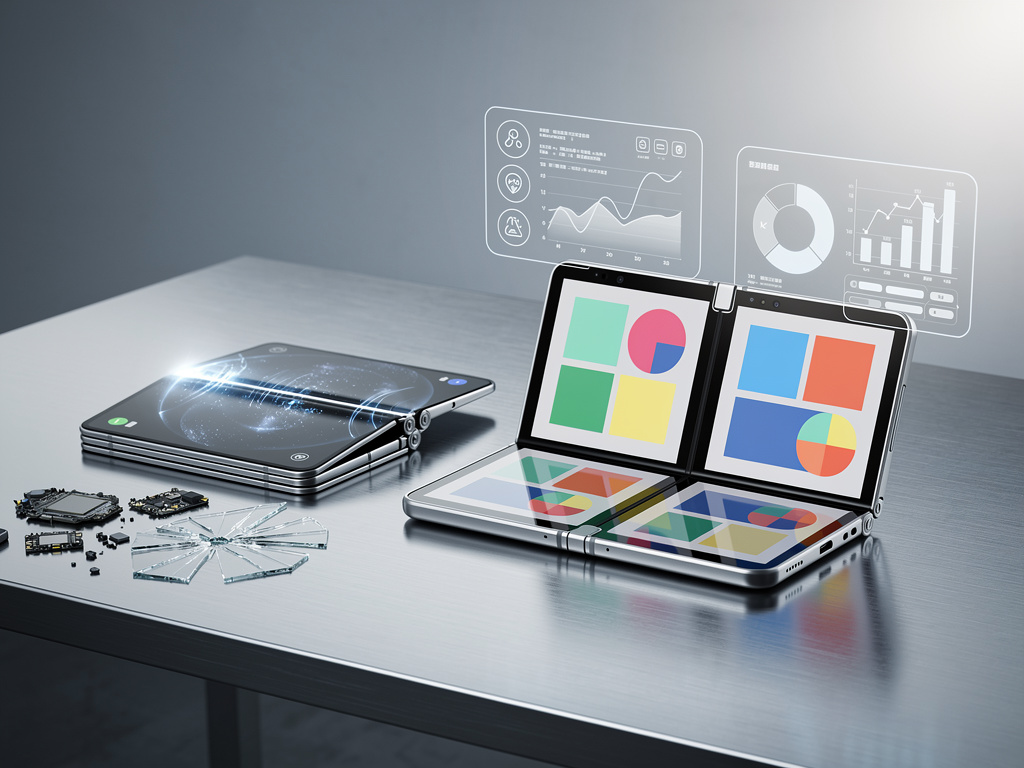
Folding Frontiers: Why Dual-Screen Gadgets Might Eclipse the Foldable Hype
In the ever-evolving realm of mobile technology, where innovation often hinges on bending the rules—quite literally—foldable phones have captured imaginations with their promise of versatile screens that fold like paper. Yet, a quieter contender, the dual-screen device, is gaining traction among tech enthusiasts and professionals who prioritize productivity over novelty. Devices like the Microsoft Surface Duo exemplify this approach, offering two separate displays connected by a hinge, allowing for true multitasking without the compromises of a single flexible panel. As we delve into this comparison, it’s clear that while foldables dazzle with their futuristic appeal, dual-screen setups might offer a more practical path forward for power users.
The allure of foldables lies in their ability to transform from compact phones into mini-tablets, providing a larger viewing area on demand. Models such as Samsung’s Galaxy Z Fold series have pushed boundaries, with recent iterations boasting improved durability and slimmer profiles. According to reviews from PCMag, these devices now fold seamlessly into pockets while unfolding to reveal expansive screens ideal for media consumption or light work. However, critics point out persistent issues like visible creases on the inner display and concerns over long-term wear, which can detract from the user experience.
Dual-screen devices, by contrast, sidestep many of these pitfalls by using two rigid screens rather than one bendable one. The Microsoft Surface Duo, as highlighted in an analysis by MakeUseOf, functions like a pocket-sized dual-monitor setup, enabling users to run apps side by side without the distortion or fragility associated with flexible displays. This design fosters genuine productivity, such as editing documents on one screen while referencing emails on the other, mimicking a desktop workflow in a portable form.
Evolution of Mobile Form Factors
Industry insiders note that foldables have come a long way since their debut, with advancements in materials science reducing the infamous screen crease to a mere whisper in models like the Google Pixel Fold. A recent roundup from Tom’s Guide praises the battery life and camera upgrades in 2025’s top foldables, suggesting they’re finally ready for mainstream adoption. Yet, the high cost—often exceeding $1,500—remains a barrier, compounded by repair challenges if the flexible screen fails.
On the dual-screen side, devices avoid the engineering complexities of bending glass, leading to potentially lower production costs and greater reliability. Posts on X from tech influencers, including discussions around Samsung’s experimental slidable displays, indicate a growing interest in hybrid forms that combine elements of both worlds. For instance, concepts like the Slidable Flex Duet expand from tablet to larger formats without folding, hinting at future evolutions that could blend dual-screen stability with foldable versatility.
However, dual-screen gadgets aren’t without drawbacks; their hinges can introduce bulk, and software optimization is crucial for seamless app spanning. Microsoft’s efforts with the Surface Duo have shown promise, but as noted in various X threads, adoption has been slow due to limited app support and competition from more polished foldables.
Productivity Paradigms in Play
For professionals in fields like finance or creative design, the ability to multitask efficiently is paramount. Foldables excel in scenarios requiring a single large canvas, such as video editing or gaming, where the unfolded screen provides immersion without bezels interrupting the flow. PhoneArena‘s latest picks emphasize how devices like the Motorola Razr offer clamshell convenience for quick checks, evolving into full-fledged tools when opened.
Dual-screen alternatives shine in split-view tasks, where maintaining two distinct workspaces prevents the visual clutter that can plague foldables during intensive use. The MakeUseOf piece argues convincingly that this setup is akin to having a portable dual-monitor rig, ideal for coders or analysts juggling multiple data streams. Recent news from Mark Ellis Reviews touches on how foldables are innovating, but it inadvertently underscores dual-screen strengths by noting persistent foldable compromises in battery efficiency during extended sessions.
Moreover, software ecosystems play a pivotal role. Android’s adaptability has allowed dual-screen devices to leverage custom modes, like Microsoft’s Duo for spanning apps across screens, which feels more intuitive than foldables’ sometimes awkward app scaling.
Durability and Daily Use Dynamics
Durability remains a hot topic, with foldables facing scrutiny over their susceptibility to dust and drops. Improvements in 2025 models, as detailed in PCMag UK, include better water resistance and tougher outer glass, yet the inner flexible layer still demands careful handling. X posts from users and analysts alike highlight real-world stories of creases deepening over time, raising questions about longevity for heavy users.
Dual-screen devices, built with traditional rigid panels, inherently offer superior robustness. They can incorporate standard Gorilla Glass protections on both screens, reducing the risk of catastrophic failure from a single bend point. A comparison in Stuff inadvertently bolsters this by praising foldable innovations while admitting dual-screen precursors like the LG Wing provided reliable alternatives without the foldable fragility.
Battery life is another battleground. Foldables often pack larger cells to power their expansive displays, but efficiency suffers when unfolded, leading to quicker drains during multitasking. Dual-screen options, by keeping screens separate, allow users to activate only what’s needed, potentially conserving power—a point echoed in X discussions about 2025 trends where users lament foldable compromises in endurance.
Innovation Trajectories and Market Trends
Looking ahead, the market is witnessing a surge in hybrid concepts. Samsung’s tri-fold prototypes, mentioned in X posts and news from TechRadar, promise even larger unfoldable areas, but they double down on the crease issue, potentially alienating users seeking seamless visuals. Industry sentiment on X suggests that while tri-folds excite, they may follow the path of earlier foldables—innovative but niche due to practicality concerns.
Dual-screen devices, meanwhile, are evolving quietly. Microsoft’s Surface line continues to refine the concept, with rumors of integrations that could make them indispensable for enterprise users. A piece from Wirecutter focuses on foldables but notes the multitasking edge of dual setups, implying a shift toward productivity-focused designs.
Cost considerations further tilt the scales. Foldables command premium prices for their tech wizardry, but dual-screen alternatives could democratize advanced multitasking if manufacturers like Lenovo or Asus expand their Yoga Book-like offerings, making them accessible to a broader audience.
User Sentiments and Adoption Barriers
Feedback from the tech community reveals mixed feelings. On X, posts from influencers like those discussing the Galaxy Z TriFold express annoyance at visible creases, even as they praise the concept’s ambition. This mirrors broader sentiments where foldables are seen as status symbols rather than everyday workhorses.
Dual-screen proponents argue for their understated utility. The MakeUseOf analysis positions them as superior for tasks requiring precision, such as photo editing or coding, where a foldable’s crease might distort critical details. Recent X threads also point to improving software, with Android updates enhancing dual-screen compatibility.
Adoption rates tell a story too. While foldables have seen sales growth, as per projections in older X posts anticipating 30% flagship market share by 2025, dual-screen devices lag in visibility but excel in niche professional circles.
Technological Trade-offs Explored
At the core of this debate are trade-offs in display technology. Foldables rely on OLED panels that bend, enabling compact designs but introducing potential weak points. Innovations like ultra-thin glass have mitigated some issues, yet as Tom’s Guide reviews suggest, even top 2025 models struggle with perfect flatness.
Dual-screen setups use proven LCD or OLED tech without bending, ensuring consistent quality across both panels. This reliability appeals to insiders wary of foldable experimentation, especially in high-stakes environments like field reporting or executive briefings.
Heat management differs too—foldables can overheat under load due to their thin builds, while dual-screens distribute components more evenly, potentially leading to cooler operation during prolonged use.
Future Horizons in Device Design
As 2025 unfolds, emerging trends point to convergence. Samsung’s slidable concepts, detailed in X posts from CES showcases, blend extension mechanisms with dual displays, possibly bridging the gap. This could render pure foldables obsolete if slidables offer crease-free expansion.
For dual-screen advocates, the path forward involves deeper OS integrations. Microsoft’s work on Windows for mobile hints at ecosystems where dual screens become extensions of desktop workflows, outpacing foldables’ phone-centric approach.
Market analysts on X speculate that Apple’s rumored entry into foldables might accelerate innovations, but until then, dual-screen devices hold an edge in practical, no-frills productivity.
Economic and Environmental Angles
Pricing dynamics influence choices significantly. Foldables’ high entry points limit them to enthusiasts, while dual-screen options, if scaled, could appeal to budget-conscious professionals. Environmental impacts also matter—foldables’ complex manufacturing generates more waste, whereas dual-screens use familiar production lines, potentially reducing e-waste.
Sustainability reports, echoed in tech discussions, urge manufacturers to prioritize repairability, an area where dual-screens often score higher due to modular designs.
In weighing these factors, it’s evident that while foldables push boundaries, dual-screen devices offer a grounded alternative for those valuing function over form.
Strategic Implications for Manufacturers
Tech giants like Samsung and Google dominate foldables, investing heavily in R&D to perfect the tech. However, as Cybernews outlines, pros like portability come with cons such as premium pricing, prompting some to explore dual-screen pivots.
Microsoft’s strategy with the Surface Duo positions it as a productivity leader, potentially carving a niche amid foldable saturation.
For insiders, the key is watching how consumer feedback shapes iterations—will foldables eliminate creases entirely, or will dual-screens evolve into the default for multitasking?
Real-World Applications and Case Studies
In creative industries, foldables aid on-the-go sketching with their large canvases. Yet, professionals like journalists prefer dual-screens for simultaneous note-taking and research, as per user anecdotes on X.
Case studies from enterprise deployments show dual-screen devices boosting efficiency in sales teams, where quick app switching is vital.
This practical edge could drive wider adoption as remote work persists.
Balancing Novelty with Necessity
Ultimately, the choice boils down to user needs. Foldables thrill with innovation, but dual-screens deliver reliability. As the sector matures, hybrids may emerge as victors.
Industry watchers anticipate 2026 breakthroughs, but for now, dual-screen understated prowess merits attention.
Tech evolves rapidly, and today’s underdog could redefine tomorrow’s standards.


 WebProNews is an iEntry Publication