
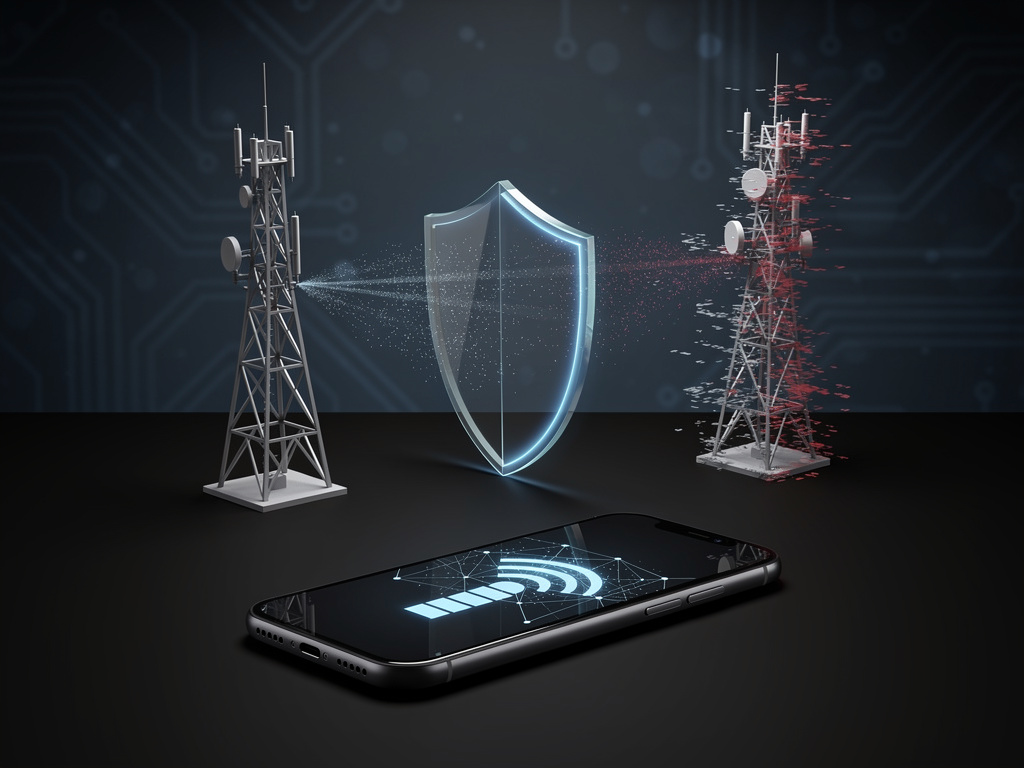
In an era where cybersecurity threats evolve at breakneck speed, one of the most effective protective measures available to smartphone users remains largely overlooked: disabling 2G connectivity. Security experts and telecommunications professionals are increasingly sounding the alarm about the outdated second-generation cellular network, which despite its obsolescence continues to pose significant risks to mobile device users worldwide. The vulnerability isn’t theoretical—it’s actively exploited by sophisticated attackers using readily available equipment.
According to MakeUseOf, the fundamental problem with 2G networks stems from their lack of mutual authentication between devices and cell towers. This architectural flaw, baked into the technology’s design decades ago, allows malicious actors to deploy fake base stations—commonly known as IMSI catchers or Stingray devices—that masquerade as legitimate cell towers. When a phone connects to these rogue stations, attackers can intercept calls, text messages, and even data transmissions, all without the user’s knowledge.
The persistence of 2G technology in modern smartphones isn’t accidental. Mobile devices are designed to fall back to older network generations when newer ones are unavailable, a feature intended to ensure connectivity in areas with limited infrastructure. However, this backward compatibility has become a liability. Attackers exploit this by jamming 4G and 5G signals, forcing phones to downgrade to the vulnerable 2G network where encryption is weak or nonexistent and authentication protocols are fundamentally flawed.
The Technical Vulnerabilities That Make 2G a Hacker’s Paradise
The security deficiencies of 2G networks are well-documented in telecommunications research. Unlike modern networks that employ mutual authentication—where both the phone and tower verify each other’s identity—2G only requires the phone to authenticate itself to the tower. This one-way authentication creates an opening for attackers to set up fake base stations that phones will trust implicitly. Once connected, these fraudulent towers can perform man-in-the-middle attacks, intercepting and potentially modifying communications in real-time.
The encryption standards used in 2G, when encryption is implemented at all, are woefully inadequate by contemporary standards. The A5/1 stream cipher, the strongest encryption algorithm used in GSM networks, has been broken for years. Security researchers have demonstrated that with modest computing resources, encrypted 2G communications can be decrypted in minutes. Even more concerning, many 2G implementations use weaker variants or no encryption whatsoever, leaving communications completely exposed to eavesdropping.
Real-World Exploitation and Government Surveillance
The threat isn’t merely academic. Law enforcement agencies worldwide have deployed IMSI catchers for surveillance operations, and the technology has trickled down to criminal organizations and even individual bad actors. The equipment required to set up a fake 2G base station has become increasingly affordable and accessible, with some devices available for purchase online for a few thousand dollars. This democratization of surveillance technology means that the threat extends far beyond nation-state actors to include corporate espionage, stalkers, and identity thieves.
Security researchers have documented numerous cases where 2G vulnerabilities have been exploited in the wild. From targeted surveillance of journalists and activists to mass data collection at public events, the exploitation of 2G networks represents a clear and present danger to privacy and security. The problem is particularly acute in regions where 2G networks remain prevalent, but even in countries with extensive 4G and 5G coverage, the vulnerability persists as long as devices maintain 2G compatibility.
The Industry Response and Carrier Shutdowns
Telecommunications carriers have begun addressing the 2G problem, but progress has been uneven. In the United States, major carriers including AT&T have already shut down their 2G networks, with AT&T completing its 2G sunset in 2017. T-Mobile followed suit, decommissioning its 2G network in 2020. However, globally, many carriers continue to operate 2G networks, particularly in developing markets where the technology still serves as a lifeline for basic voice and text services in areas lacking newer infrastructure.
The transition away from 2G faces economic and practical challenges. Millions of legacy devices, from older phones to IoT sensors and emergency call boxes, still rely on 2G connectivity. The cost of upgrading or replacing this installed base represents a significant barrier to complete 2G shutdown. Additionally, in rural and remote areas, 2G networks may provide the only available cellular coverage, creating a tension between security and connectivity that policymakers and carriers must navigate.
How to Disable 2G on Modern Smartphones
For users concerned about security, disabling 2G on their devices represents a straightforward and effective protective measure. The process varies by device and operating system, but most modern smartphones provide options to restrict network connectivity to newer generations. On Android devices, users can typically access these settings through the network preferences menu, where they can select preferred network types and explicitly exclude 2G. The exact path varies by manufacturer and Android version, but generally involves navigating to Settings, then Network & Internet or Connections, then Mobile Network, and finally selecting a network mode that excludes 2G.
Apple’s iOS has historically been more restrictive in allowing users to control network generation preferences, reflecting the company’s philosophy of simplifying user choices. However, with recent iOS versions, Apple has introduced options to disable 2G, though the feature may not be available on all devices or in all regions. Users of newer iPhone models can access these settings through the Cellular menu in Settings, where they may find options to limit connectivity to LTE and 5G networks only.
The Trade-offs and Considerations
Disabling 2G isn’t without consequences. Users who turn off 2G connectivity may experience reduced coverage in areas where only 2G networks are available. This is particularly relevant for international travelers visiting countries where 4G and 5G deployment is limited. In such scenarios, users must weigh the security benefits against the possibility of losing connectivity entirely. For most users in developed markets with extensive LTE and 5G coverage, the trade-off heavily favors security, as the likelihood of encountering 2G-only coverage areas is minimal.
Emergency services represent another consideration. In some jurisdictions, emergency calls may still rely on 2G networks for maximum coverage and reliability. However, modern smartphones are designed to temporarily enable all available network types when placing emergency calls, even if 2G is disabled for normal use. This ensures that users can still reach emergency services while maintaining enhanced security for routine communications.
The Future of Mobile Network Security
As the telecommunications industry continues its march toward 5G and eventually 6G networks, the complete elimination of 2G becomes increasingly feasible. The 3GPP, the standards body responsible for mobile telecommunications specifications, has incorporated lessons learned from 2G’s security failures into newer network generations. Both 4G LTE and 5G implement mutual authentication, stronger encryption, and additional security features designed to prevent the types of attacks that plague 2G networks.
However, the transition period presents ongoing risks. As long as devices maintain backward compatibility with 2G, they remain vulnerable to downgrade attacks. Security experts recommend that users proactively disable 2G rather than waiting for carriers to complete network shutdowns. This user-driven approach to security represents a shift in thinking about mobile device protection, placing responsibility on individuals to configure their devices for maximum security rather than relying solely on carrier and manufacturer defaults.
Enterprise and Organizational Implications
For businesses and organizations, the 2G vulnerability carries particular significance. Corporate devices that handle sensitive communications or access proprietary data represent attractive targets for industrial espionage. IT departments should implement policies requiring 2G to be disabled on all corporate devices, and mobile device management (MDM) solutions can enforce these settings across entire device fleets. The relatively simple step of disabling 2G can significantly reduce an organization’s attack surface and protect against sophisticated surveillance attempts.
The regulatory environment is also evolving to address 2G security concerns. Some government agencies and security-conscious organizations have already mandated the disabling of 2G on official devices. As awareness of the vulnerability grows, we may see broader regulatory requirements emerge, potentially including mandates for device manufacturers to ship products with 2G disabled by default or to provide clearer warnings about the security implications of enabling 2G connectivity.
Taking Action on Mobile Security
The persistence of 2G connectivity in modern smartphones represents a vestigial security vulnerability that users can and should address. The process of disabling 2G takes mere minutes but provides substantial protection against a range of sophisticated attacks. For the vast majority of users in areas with modern network coverage, the security benefits far outweigh any potential connectivity drawbacks. As cyber threats continue to evolve and surveillance technology becomes more accessible, taking proactive steps to eliminate known vulnerabilities becomes not just prudent but essential.
The broader lesson extends beyond 2G to the importance of understanding and managing the security features of our increasingly complex mobile devices. As smartphones become central to both personal and professional life, users must take an active role in configuring security settings rather than relying on default configurations that may prioritize connectivity and compatibility over protection. Disabling 2G represents one clear, actionable step in that direction—a simple change with outsized security benefits that every smartphone user should consider implementing today.


 WebProNews is an iEntry Publication