
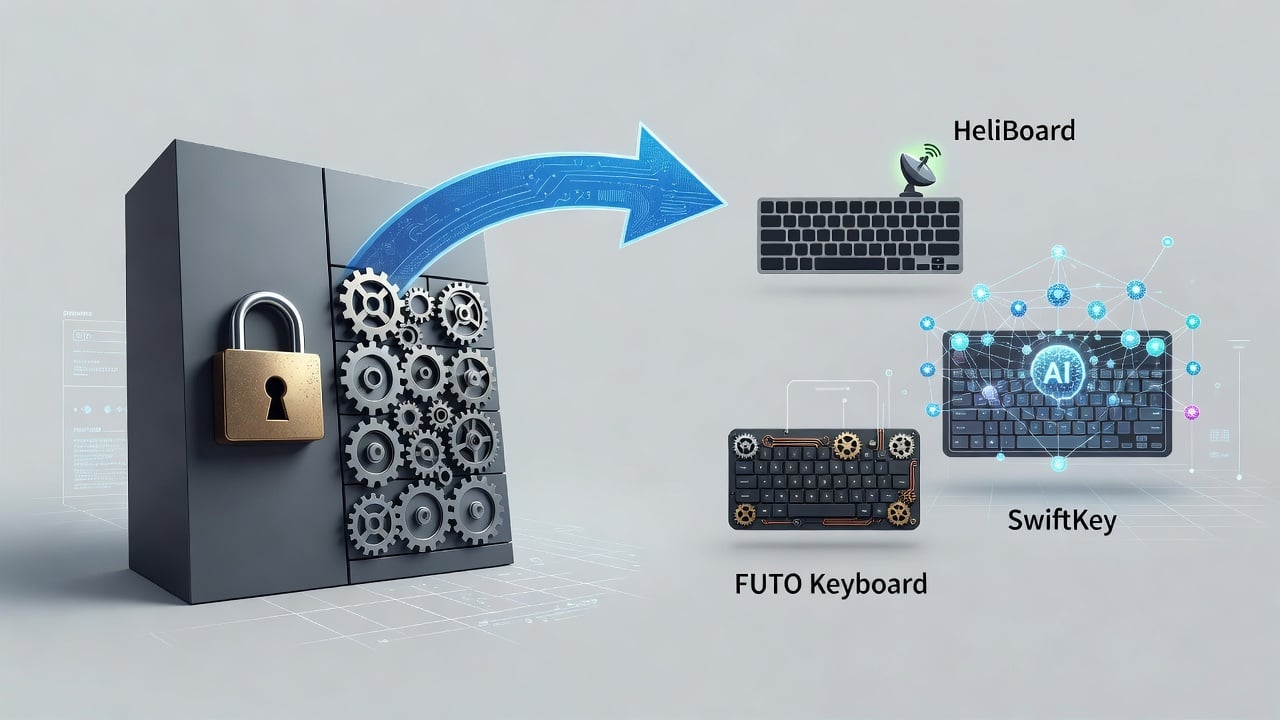
Google’s Gboard dominates Android keyboards. Billions tap on it daily for its reliable predictions, voice input and GIF suggestions. Yet cracks have appeared. Users complain about data collection habits, occasional bloat and a sense that the app knows too much. Developers have responded with credible challengers. Some promise total offline operation. Others pack AI tools or extreme customization. The result is a quiet migration.
Android Authority recently rounded up five strong options in a fresh piece. Android Authority noted that not everyone wants the same experience from a keyboard. Privacy seekers, customization fans and those hunting missing features all have choices now. The article, published just hours ago, reflects current tastes.
Microsoft SwiftKey stands out first. It matches Gboard on basics yet pulls ahead in personalization. Split layouts help on big phones. The built-in Copilot assistant rewrites messages for tone or fixes grammar with a tap. Clipboard history syncs to Windows machines sharing the same account. “SwiftKey is arguably the most popular Gboard alternative, and it’s not hard to see why,” the review states. It gets fundamentals right but excels where Google falls short for some.
Yet SwiftKey carries Microsoft’s own data practices. For those uneasy about both Google and Microsoft, open-source forks deliver relief. HeliBoard ranks high among them. A fork of OpenBoard, it runs entirely offline with zero internet permissions. Autocorrect, gesture typing and clipboard history work without phoning home. Customization runs deep. Users adjust padding, add custom text to the spacebar, pick fonts and set emoji tones.
Andy Walker at Android Authority tested it personally. He described the switch as “ditching a cushy SUV for a compact city runabout.” The lighter feel grew on him. No cloud dictionary or cross-device sync exists, but that trade-off protects privacy. Bugs remain. Emoji libraries sometimes break and certain toolbars vanish. Still, many stick with it. Walker has not returned to Gboard.
MakeUseOf went further. In November 2025 the site tested four open-source contenders. AnySoftKeyboard impressed most. It supports multiple layouts including Dvorak and Colemak. Users switch via spacebar swipe. Contact suggestions, voice input and extensive themes add utility. Gesture typing lags behind commercial rivals. The clipboard feels convoluted. Even so, the reviewer called it the most feature-rich open-source option and the closest match to Gboard overall.
HeliBoard appeared again in that test as lightweight and privacy-first. Smooth gestures and a number row stand out. No predictive text or autocorrect exists in the default setup, however. Simple Keyboard took minimalism to extremes. Under 1MB, it asks only for vibration permission. Light and dark themes plus height tweaks complete the package. No swipe, no spell check, no emojis. The developer promises the app will stay this way.
FlorisBoard showed promise with modern looks, smartbar and planned extensions. It still sits in testing. Voice and one-handed modes work but text suggestions stay absent. The piece concluded that open-source keyboards have matured. They force fewer compromises than before.
FUTO Keyboard tries to split the difference. Available on the Play Store, it copies Gboard’s flow while staying open source and offline. Offline voice typing relies on a local Whisper model. Users can download larger models for better accuracy, though storage and device power limit adoption on budget phones. Gesture typing remains in alpha and needs polish. Clean themes and solid autocorrect win praise. Android Police put it through a month-long test alongside Gboard and SwiftKey.
The author found SwiftKey superior at swipe typing, accurate even on sloppy input. Gboard placed second but needed more corrections. FUTO trailed in that area yet shone on privacy. Its data never leaves the device. Gboard delivered the most accurate voice-to-text and seamless multilingual detection. SwiftKey’s Copilot integration for rewriting text felt useful. Themes on SwiftKey looked dated compared with the others. The verdict? Personal preference decides. SwiftKey stayed the daily driver in that test.
Samsung Keyboard deserves mention for Galaxy owners. Pre-installed and tied to One UI, it taps Galaxy AI for message generation, summarization and table creation. Samsung Pass pulls passwords and addresses straight from the keyboard. Good Lock’s KeysCafe module unlocks extreme tweaks. Users rebuild layouts, change sounds and assign multi-finger gestures. Integration makes it tough to beat on those devices.
Unexpected Keyboard takes an entirely different path. It mixes taps with directional swipes to reach symbols fast. The approach feels odd at first. Some testers call it excellent for programmers or heavy symbol users. Android Authority highlighted it as underappreciated.
Recent coverage reinforces these trends. A March 2026 Android Police story praised an open-source keyboard that finally impressed after many Gboard replacements. Another piece from the same site in August 2025 detailed a full switch to HeliBoard after years of hopping between apps. The author cited comparable customization and offline reliability.
Privacy worries fuel much of the interest. X posts from recent months repeatedly recommend HeliBoard, AnySoftKeyboard and FUTO for users tired of telemetry. One June 2026 thread pointed to ZDNet France reporting on Gboard data collection and suggested the same open-source pair. Forums on Reddit echo the sentiment. Users in r/degoogle and r/androidapps debate autocorrect quality and search for replacements that avoid both Google and Microsoft ecosystems.
HowToGeek in late 2025 listed AnySoftKeyboard as the closest rival to Gboard among open-source apps. It praised multilingual packs, layouts and privacy. HeliBoard again earned marks for working completely offline with extensive options including an incognito mode that prevents learning from typing. Simple Keyboard stayed the choice for minimalists who want nothing but text entry.
LifeWire’s 2026 guide kept SwiftKey as the top Gboard alternative for its swipe quality and Copilot chatbot. Ginger Keyboard gained notice for heavy emoji and grammar tools. The variety shows fragmentation. No single replacement satisfies every user.
Developers continue iterating. FlorisBoard’s extension system could bring new modules soon. FUTO’s voice models improve with each update. HeliBoard fixes bugs steadily through its GitHub community. These projects lack Google’s resources yet move fast on user requests.
Power users mix keyboards. Some keep Gboard for voice accuracy and switch to HeliBoard for sensitive chats. Others use SwiftKey on tablets for its split layout and FUTO on phones for offline confidence. Android’s openness allows it. Switching takes seconds in settings.
The data question lingers. Gboard learns from typing to improve predictions. That feedback loop helps accuracy but raises eyebrows. Open-source alternatives learn locally or not at all. Trade-offs appear in cloud features and AI polish. For many the exchange feels worthwhile.
SwiftKey’s Copilot and Samsung’s Galaxy AI point to another future. Keyboards evolve from simple input tools into writing assistants. They suggest tone shifts, expand bullet points or draft replies. Gboard offers similar Writing Tools on select devices, but availability varies. The feature gap narrows yet privacy-focused options deliberately skip it.
Look at the numbers. Android Authority’s reader poll attached to its latest article showed Gboard still winning 54 percent of nearly 2,000 votes. SwiftKey took 39 percent. The rest split among open-source choices and others. Comments suggested the race feels tighter than numbers indicate. Many have tried alternatives and returned. Others never will.
Choice defines Android. The keyboard sits at the center of daily interaction. When the default no longer fits, users vote with installs. Gboard remains excellent. Its rivals have grown good enough, and in some areas better, to force a real decision. The next time you open settings to change input method, the list offers more than ever. Pick according to what matters. Speed. Privacy. Looks. AI help. The options exist.


 WebProNews is an iEntry Publication