
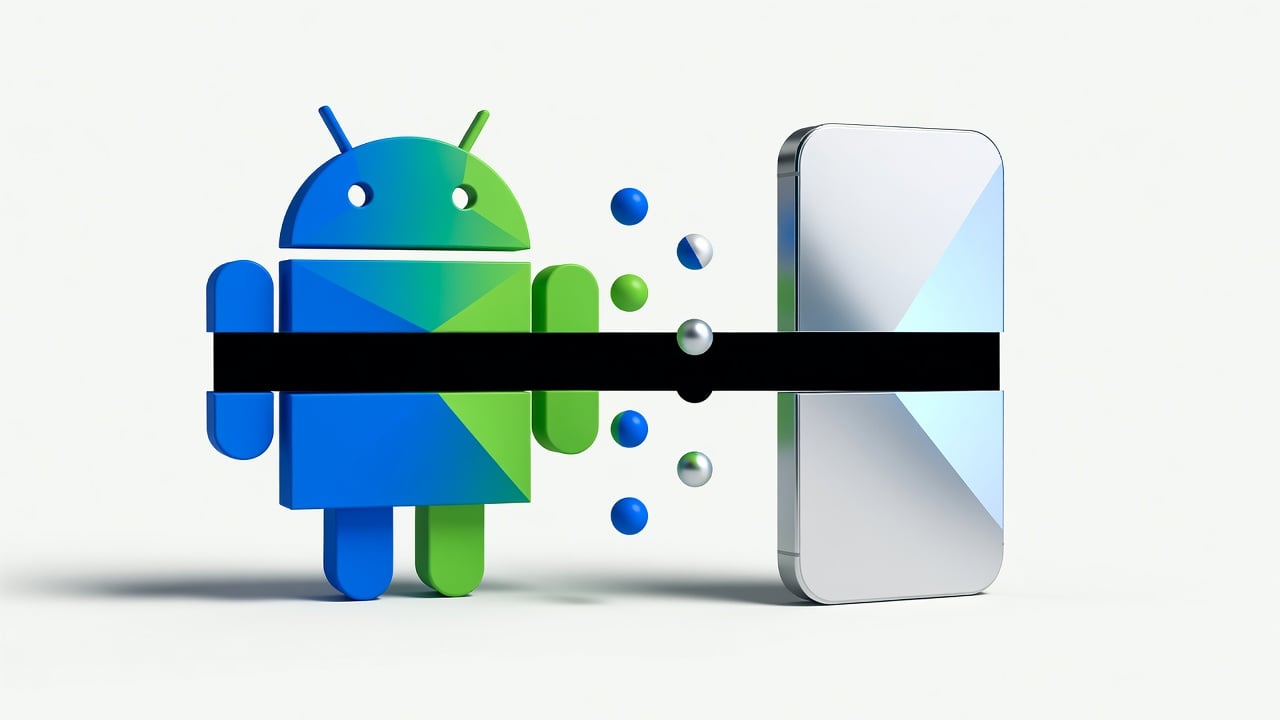
Android users have heard the pitch before. Apple rolls out flashy new features for its voice assistant. This time the hype centers on a vastly improved Siri powered by Apple Intelligence. Yet a fresh survey from Android Authority finds most remain unmoved.
Almost 60 percent of respondents said they would not switch from Android to iOS just for better AI capabilities. The hassle simply outweighs any gains. Another 14 percent described themselves as too deeply invested in their current platform to consider a move without a truly standout reason. Only 27 percent expressed openness to making the jump. Privacy concerns tipped the scale for many of them.
The poll, conducted while comparing the beta version of the updated Siri against Google’s Gemini, revealed telling details. Siri, even in its early stage, handled personal context from apps like Messages and Mail more effectively. It also pulled information across third-party services such as Gmail to plan a user’s day with surprising coherence. Those strengths come from a framework that borrows heavily from Gemini models. But the implementation differs in key ways.
One reader named Jason pointed to Apple’s approach as a deciding factor. “Apple’s focus on privacy and local processing is a major differentiator for me.” The company routes heavier AI tasks through Private Cloud Compute. Data gets processed without being stored. That setup stands in contrast to more cloud-reliant systems. And it resonated with nearly 18 percent of those surveyed who cited data handling as a potential trigger for change.
Yet debates flared in the comments. Some argued Google would always stay ahead. “As long as Google holds the keys, Gemini will always be better and have more features, with Apple getting last year’s features,” wrote one participant under the name GlitterGuru. Another countered that iPhone owners receive a customized version of Gemini integrated with Siri. “That’s more than enough up to date AI,” said Lamar.
These responses arrive against a backdrop of rising loyalty across both camps. A Smartphone Loyalty Survey 2026 from SellCell showed iPhone retention hitting 96.4 percent. That marks a sharp climb from 91.9 percent in 2021. Android loyalty stood at 86.4 percent. Still, Android users proved nearly four times more likely to consider switching. Only 3.6 percent of iPhone owners planned to defect. Of those Android users eyeing a change, 26.8 percent named the iPhone as their target.
Price and value drove more than half of potential iPhone switchers in the SellCell data. Technology ranked second. The survey of over 5,000 U.S. adults found smartphone users growing more locked in than ever. “Smartphone users are becoming increasingly locked into their chosen brand, with loyalty rising across both iPhone and Android and switching now at its lowest levels,” the report stated.
But the siren call of AI has grown louder this year. Apple introduced Siri AI in June as a profoundly more capable assistant. It understands personal context. It shows on-screen awareness. It performs cross-app actions with natural conversation flow. Early previews suggested it could surface relevant details from emails, photos, and messages while answering broad web queries. A dedicated app would let users revisit past conversations across devices.
Analysts took notice. One industry observer posted on X that the upgraded Siri “could go from Apple’s most obvious AI weakness to a real reason Android users switch to iPhone.” The irony runs thick. The system relies on distilled models from Google’s Gemini. Apple layers its own privacy architecture and on-device processing on top. Private Cloud Compute handles the rest without storing user data.
That privacy edge forms a core argument for some potential converts. A June article on Android Headlines outlined the case. “Giving it a much more privacy-forward implementation versus Google’s cloud-first approach,” the piece noted. Integration across Apple’s walled garden adds another pull. Siri AI works in tight coordination with Mac, iPad, Watch, and more. Shortcuts created through simple voice descriptions offer practical utility that many reviewers highlight as genuinely useful.
Counterarguments pile up quickly. Android phones, particularly Google Pixel models, already deliver on-screen awareness, cross-app actions, conversational context, and personal insights. “This is really more about the iPhone catching up to what Android has,” the Android Headlines report observed. The new Siri remains limited at launch. It requires specific hardware such as iPhone 15 Pro or later models. Initial availability targets English speakers only. Rollouts face delays in the European Union and China due to regulatory hurdles.
Learning a new operating system brings friction too. Apps differ. Habits must shift. For heavy Google service users the transition feels especially steep. And the software update cadence plays a role. Google pushes Android feature drops multiple times a year. Apple concentrates major changes into annual releases.
Historical patterns reinforce the inertia. Counterpoint Research found nearly 48 percent of current iPhone owners had previously used Android devices. Many switched during earlier waves of innovation. Yet recent data shows the flow slowing. SellCell’s figures indicate switching rates at multi-year lows even as AI dominates headlines.
So what would actually move the needle? The Android Authority poll suggests AI alone falls short for the majority. Users demand more than incremental gains in voice commands. They weigh ecosystem lock-in, app libraries, hardware familiarity, and long-term support. Privacy ranks high but rarely overrides everything else.
Comments from longtime Android owners echoed that calculation. Many praised Siri’s beta performance in specific tasks yet concluded the switch cost too high. Others noted that Google’s assistant had improved steadily. The gap no longer felt wide enough to justify upheaval.
Apple continues refining the experience. Developer betas of iOS 27 and related platforms began testing the new Siri AI capabilities in June. Consumer betas arrive later this year. Full features will expand beyond English over time. Whether those iterations convince more Android holdouts remains an open question.
Industry watchers point to broader trends. Smartphone replacement cycles have lengthened. Loyalty metrics keep climbing in both directions. The bar for a platform shift has risen. A smarter voice assistant might tempt some. But for most Android users the data says otherwise. They plan to stay put. At least until something truly compels them to reconsider.


 WebProNews is an iEntry Publication